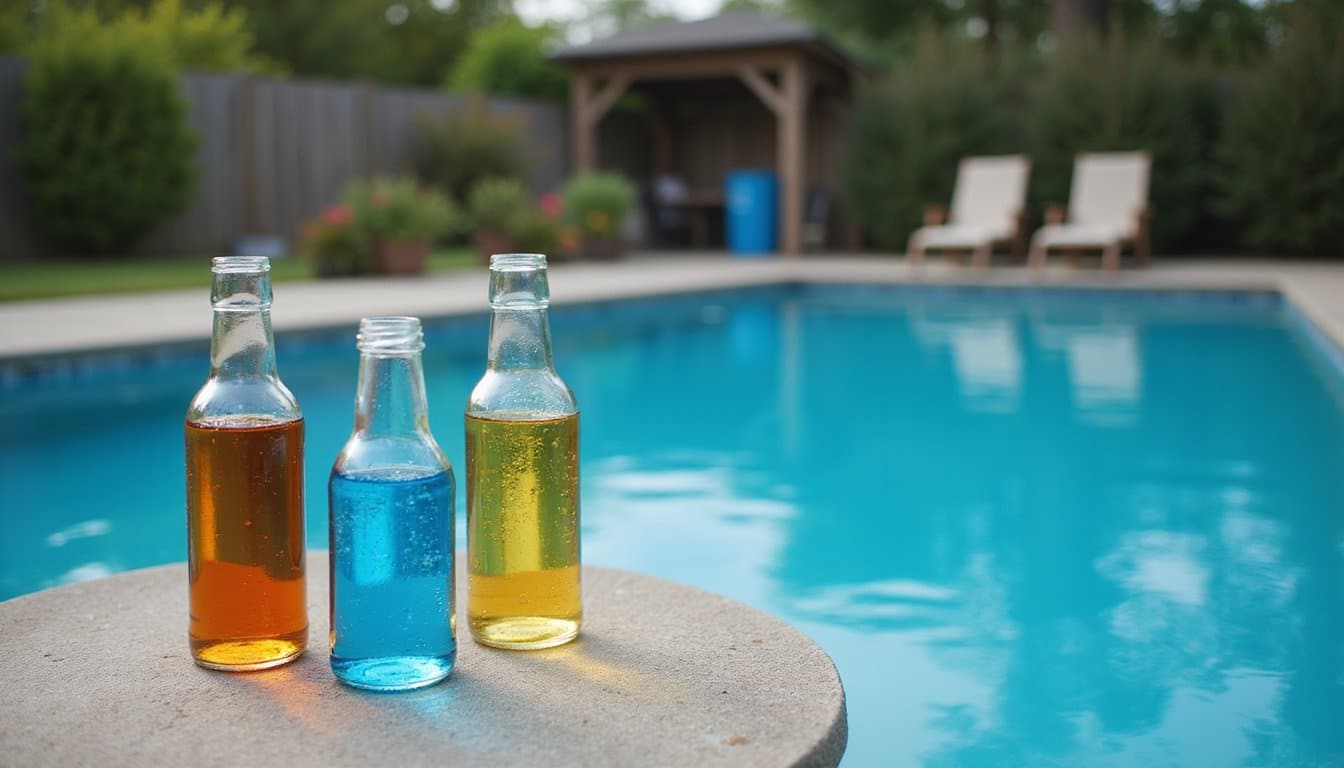
To maintain a safe pool, you’ll need to focus on five key areas. Test your water 2-3 times weekly for chlorine and pH levels, while managing chemical balances within recommended ranges. Store all chemicals properly in a cool, dry area, and never mix different products. Implement daily cleaning routines including skimming and brushing, and control algae through proper sanitization. These fundamental steps will open the door to mastering professional-level pool maintenance.
Essential Pool Water Testing and Monitoring
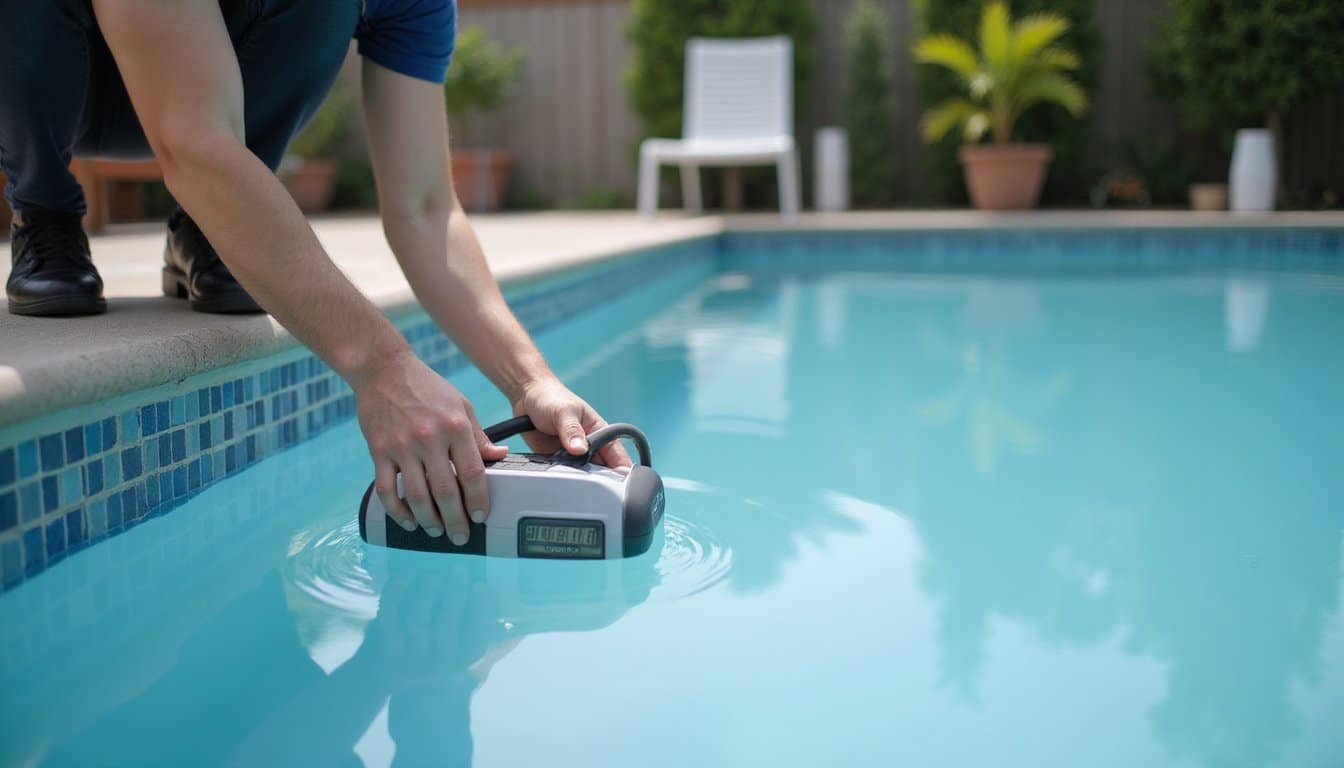
While maintaining a swimming pool might seem straightforward, regular water testing and monitoring form the cornerstone of safe pool operation. You’ll need to test chlorine and pH levels 2-3 times weekly, while checking total alkalinity once per week. Monthly tests for calcium hardness and cyanuric acid help guarantee long-term stability. Digital testing devices provide the highest accuracy for precise chemical management. Maintaining proper chemical balance helps create a clean swimming environment for all users.
When troubleshooting water quality issues, consider factors that affect your pool’s chemistry. High swimmer loads, weather changes, and rising temperatures all impact testing frequency. You’ll want to use reliable liquid reagent kits or test strips, making sure to follow proper sampling procedures. When interpreting test results, watch for patterns that might indicate underlying problems. If you’re experiencing persistent chemical imbalances or unclear water despite regular testing, don’t hesitate to seek professional evaluation.
Managing Chemical Balance and Adjustments
Although maintaining proper chemical balance may seem complex, understanding the key relationships between pool chemicals allows for methodical adjustments that keep your water safe and comfortable. Weekly testing is essential for maintaining proper chemical levels in backyard pools. You’ll need to maintain alkalinity between 80-120 ppm and pH between 7.2-7.6 for optimal chemical stabilization effectiveness. Begin by adjusting alkalinity first, as it helps prevent pH fluctuations.
For calcium hardness, keep levels between 200-400 ppm to prevent scaling or corrosion. Don’t forget cyanuric acid‘s pivotal role in outdoor pools; maintain 30-50 ppm for proper chlorine protection. When performing shock treatment protocols, always follow the correct chemical adjustment sequence: alkalinity, pH, calcium hardness, then sanitizer. Chlorine’s disinfecting power depends heavily on maintaining proper pH levels in your pool. Never mix chemicals before adding them to water, and always retest after making adjustments to confirm your modifications have achieved the desired results.
Proper Chemical Storage and Safety Protocols
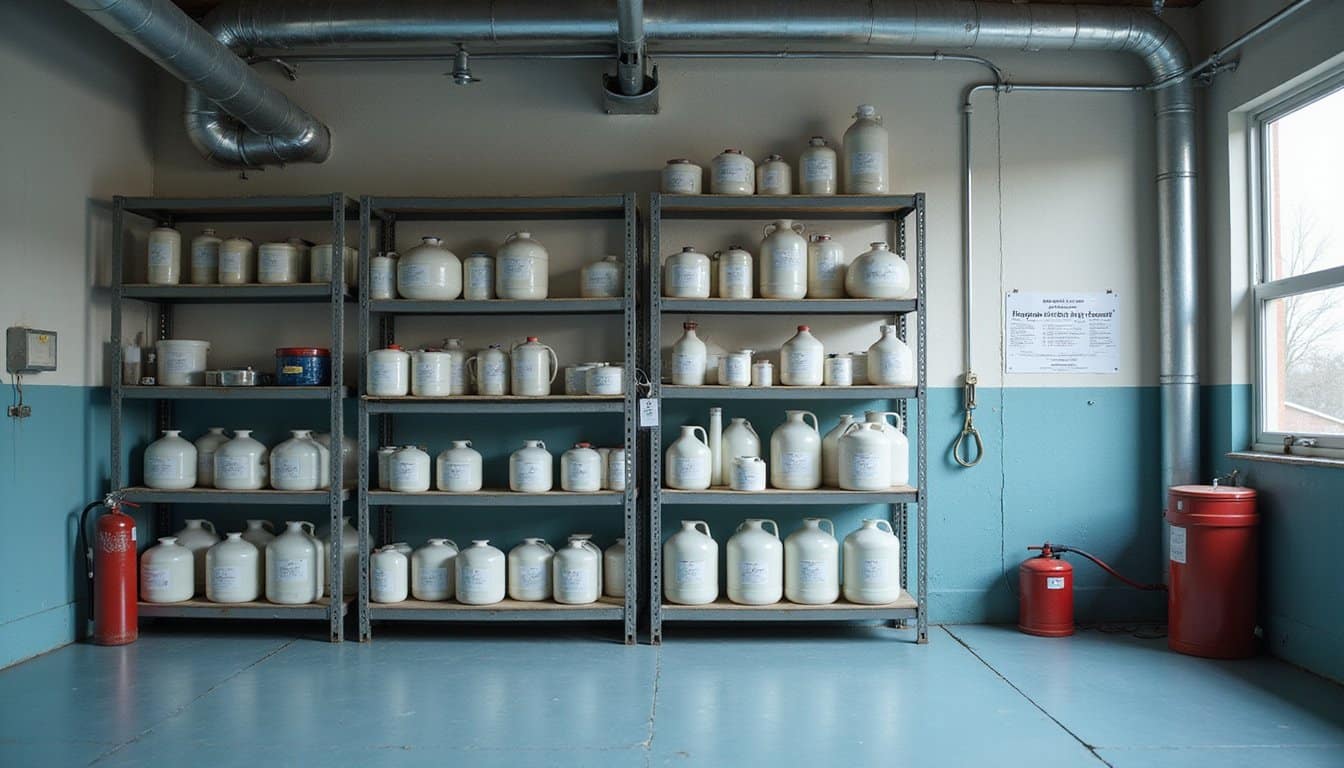
Safe chemical handling begins with proper storage and rigorous safety protocols. You’ll need to store your pool chemicals in a cool, dry, well-ventilated area below 95°F, guaranteeing weathertight chemical sealing to prevent moisture infiltration. Keep chemicals in their original containers and implement proper inventory control management to track usage and condition. Installing adequate lighting systems is essential for reading chemical labels and ensuring safe handling procedures. First responder coordination is crucial for emergency preparedness.
Never mix different chemicals or store them near each other. You’ll want to maintain strict segregation, especially for chlorine products. Use leak-proof secondary containment and store chemicals away from doors, windows, and drains. All pool chemicals must be handled by trained personnel only. Don’t forget to post safety instructions and keep Safety Data Sheets readily available. Establish an Emergency Response Plan and ensure your staff receives proper training in chemical handling. Remove all ignition sources and maintain a clean, organized storage area.
Daily Cleaning and Preventive Maintenance
Maintaining a pristine pool environment requires a systematic approach to daily cleaning and preventive maintenance tasks. You’ll need to skim the surface daily for leaves and debris while brushing pool walls and steps to prevent algae buildup. Pay special attention to skimmer basket maintenance, ensuring they’re clear of debris to maintain proper water flow. Daily water circulation tests are essential to verify your pool’s filtration system is operating correctly. Operating a variable speed pump allows for more efficient and extended circulation times. Chemical level checks should be performed daily to maintain proper water balance.
Keep your pool deck cleanliness at ideal levels to reduce contaminants entering the water. Run your pump 8-12 hours daily and monitor filter pressure, keeping it within 8-15 psi. Test water chemistry daily, maintaining proper pH, chlorine, alkalinity, and calcium hardness levels. Don’t forget to inspect equipment for signs of wear, unusual noises, or leaks. Check water clarity and smell regularly, if you notice strong chemical odors, adjust your water chemistry promptly.
Algae Control and Alternative Treatment Options
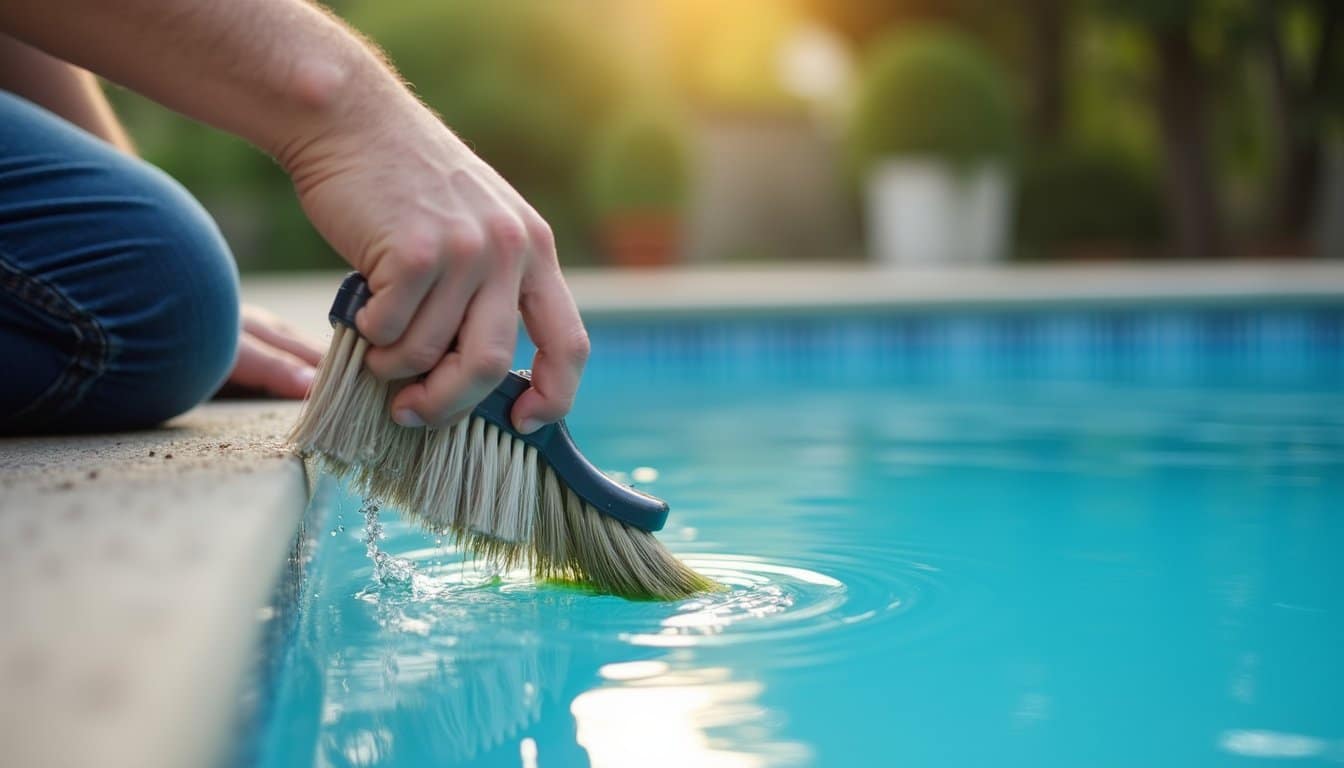
When algae invades your swimming pool, you’ll need a multi-faceted approach to regain control and prevent future outbreaks. Maintain chlorine levels between 2-4 ppm and shock your pool with 3-4 pounds of product per 10,000 gallons for severe cases. You can supplement these treatments with eco-friendly algaecides and natural clarifiers like chitosan to help remove dead algae. Pink spot bacteria commonly appears in corners and crevices when sanitizer levels drop too low. Quaternary algicides provide an effective weekly maintenance option for preventing algae growth. Pools with warm water conditions are especially susceptible to yellow algae development.
Consider installing ozone purification systems or UV treatments to reduce chlorine demand and bolster your pool’s defense against algae. You’ll also need to address contributing factors like phosphates, poor circulation, and inadequate filtration. Keep your filter running 6-8 hours daily during summer, maintain proper water chemistry, and brush your pool weekly. Remember to test phosphate levels after outbreaks to prevent recurrence.
Frequently Asked Questions
How Long Should Swimmers Wait After Adding Chemicals Before Entering the Pool?
You’ll need to wait different times depending on the chemicals added. For routine treatments like pH adjusters, wait 20-30 minutes while ensuring appropriate chemical contact time through proper circulation. For chlorine, wait 2-4 hours, and after shock treatments, wait at least 24 hours. Always test the water before swimming to confirm proper chemical dilution process has occurred. Don’t skip testing; your safety depends on waiting the right amount of time.
What Should I Do if Someone Accidentally Swallows Pool Water?
If someone swallows a small amount of pool water, don’t panic; it’s usually not dangerous. Monitor them for symptoms like nausea, vomiting, or throat irritation. If they’ve swallowed a large quantity or show concerning symptoms like difficulty breathing or severe stomach pain, seek immediate medical attention. You can call poison control at 1-800-222-1222 for expert guidance. Give them water to drink if they’re alert and not vomiting.
Can Pool Chemicals Cause Permanent Staining on Swimwear or Pool Toys?
Yes, pool chemicals can definitely cause permanent stains on your swimwear and pool toys. When you don’t rinse items after swimming, chemical residue buildup from chlorine, copper-based algaecides, and other pool treatments can lead to lasting discoloration. You’ll notice faded pool toy colors and stubborn stains on swimsuits, especially yellowing from sunscreen mixing with chlorine. To protect your items, always rinse them thoroughly with fresh water immediately after pool use.
How Do Weather Conditions Affect Pool Chemical Effectiveness and Maintenance Schedules?
Weather greatly impacts your pool’s chemical balance. During seasonal temperature variations, you’ll notice higher temperatures accelerate chlorine depletion and increase algae growth, requiring more frequent chemical supplementation. Precipitation patterns can dilute your pool chemicals and introduce contaminants, demanding immediate rebalancing. You’ll need to adjust your maintenance schedule accordingly, testing more often in summer months and after rainstorms to maintain proper sanitization levels.
Should I Adjust Chemical Levels Differently for Children Versus Adult Swimmers?
You don’t need to adjust standard chemical levels differently for children versus adults, as CDC guidelines remain the same (1-3 ppm chlorine). However, you’ll want to monitor swimmer health more closely with children present, as they’re more sensitive to chemical irritation. Consider using smaller chemical dosages when balancing the pool, making gradual adjustments rather than large ones. Always maintain proper pH (7.2-7.8) and test frequently when children are primary users.