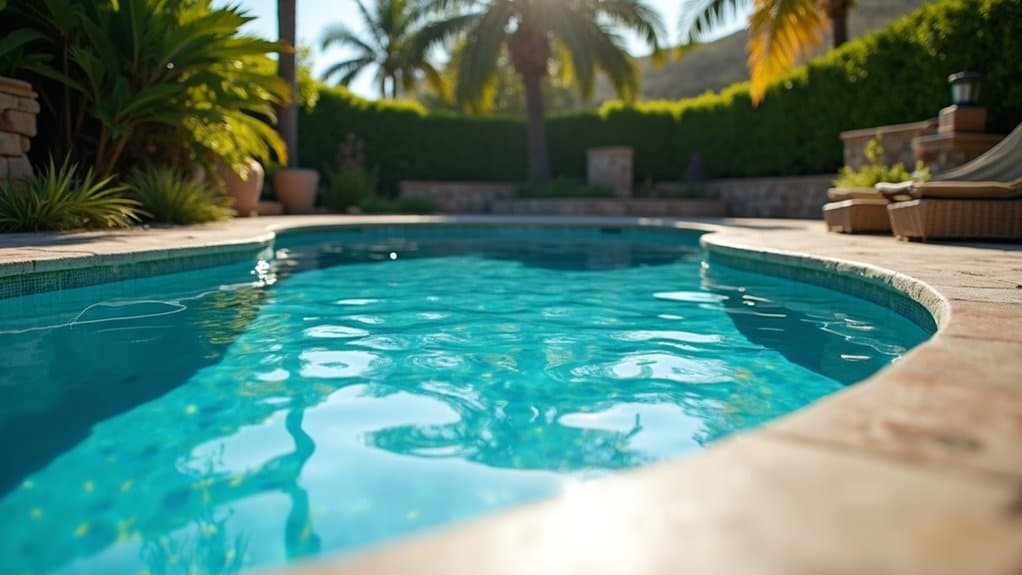
Waterline tile options for gunite pools come down to four main materials. Porcelain’s the densest and most durable, with water absorption below 0.5%, making it ideal for freeze zones. Glass tile’s impervious to water and delivers luminous, iridescent effects. Ceramic needs explicit pool-rating, while natural stone like slate or travertine requires proper sealing. Expect to pay around $3,000 for standard installation. Below, you’ll find everything you need to pick the right tile confidently.
Key Takeaways
- Porcelain is the densest, most durable option with water absorption below 0.5%, offering frost resistance ideal for freeze zones.
- Glass tile is inherently impervious to water, delivers luminous iridescent effects, and adds about $600 over standard porcelain.
- Ceramic requires explicit pool-rating, while natural stone like slate, granite, or travertine needs proper sealing or pool-appropriate rating.
- Standard waterline tile installation costs roughly $3,000, with non-stock patterns adding about $400 to $800.
- Select tile climate-first: porcelain for freeze zones and stable, UV-resistant glazes for high-UV regions.
What is waterline tile in a pool
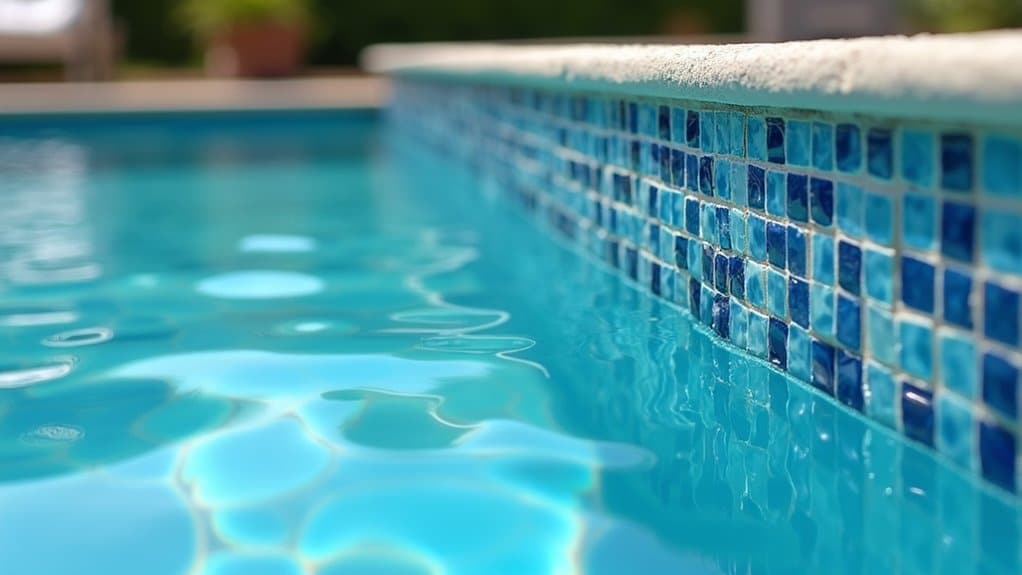
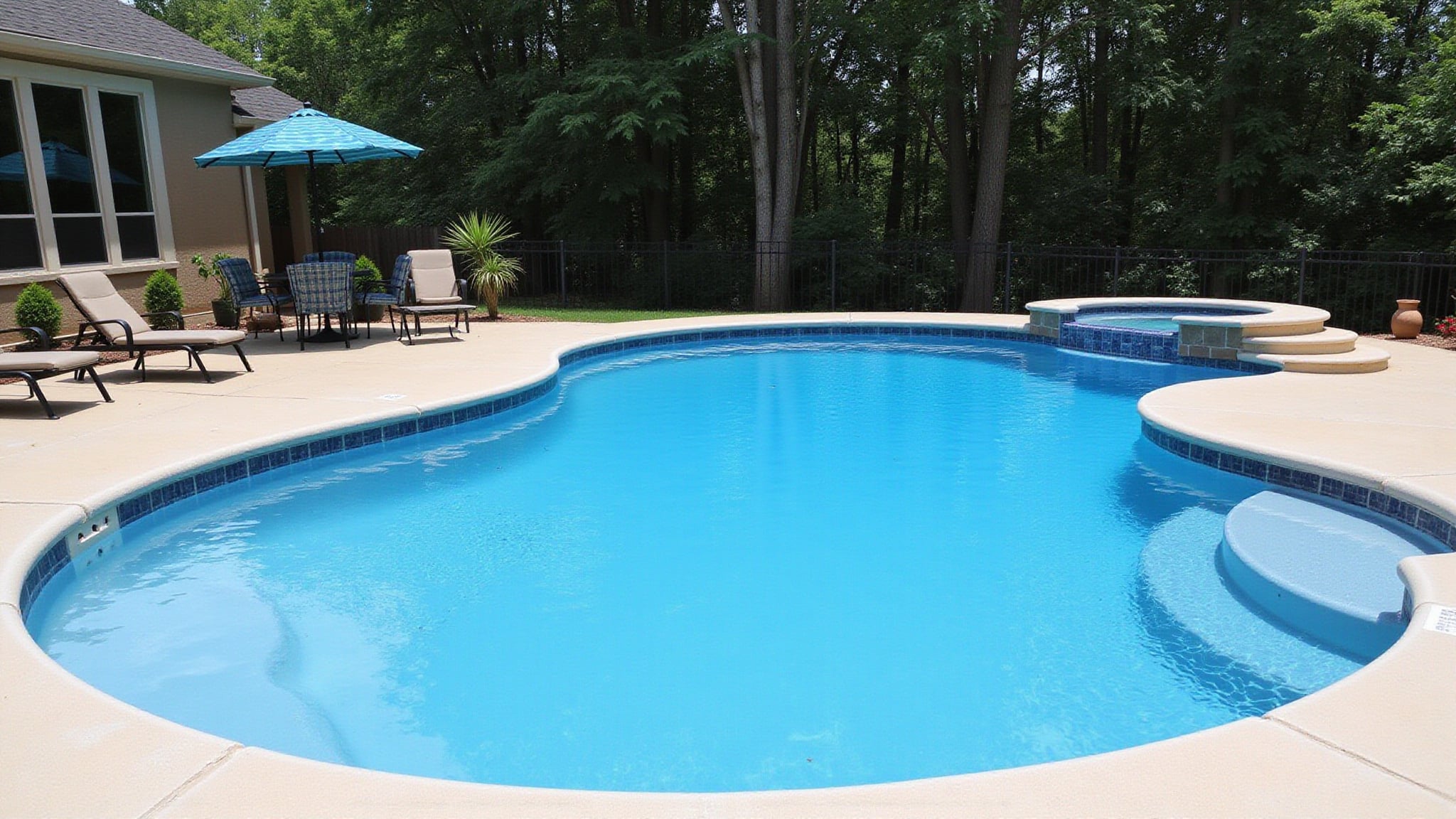
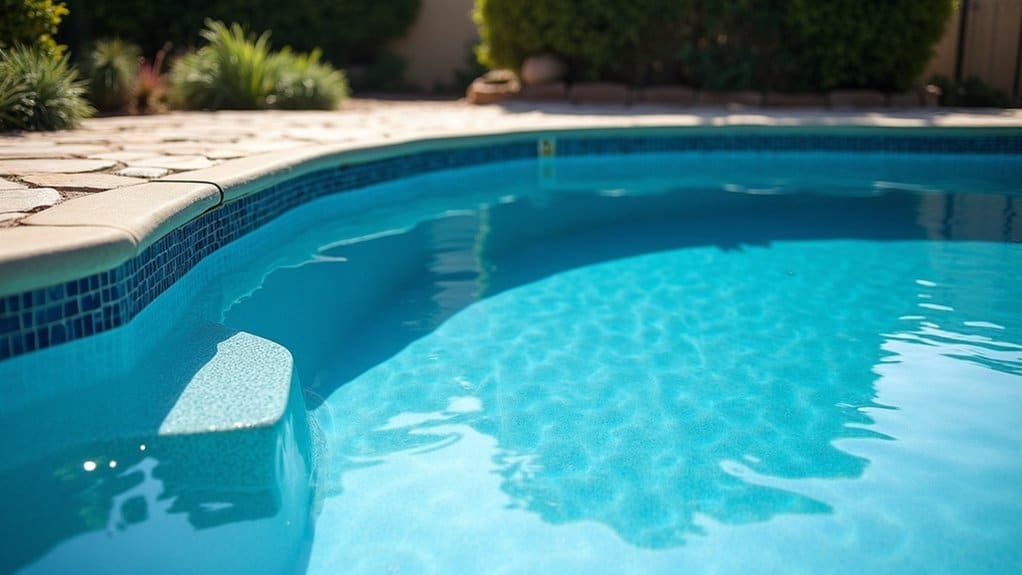
Waterline tile is a durable band roughly 6 inches tall installed along the perimeter of your pool, where water meets the shell, positioned half-submerged and half-exposed. This band protects the underlying plaster shell from the destructive forces of repeated wet-dry cycles, while resisting sunscreen, leaves, and metal deposits that stain plaster over time. You’ll appreciate how it simplifies maintenance, letting you wipe or brush accumulated grime above the waterline. Among your pool tile options, porcelain pool tile stands out as the densest, most durable choice, with water absorption below 0.5% for frost resistance. Glass and pool-rated ceramic offer alternatives, but each waterline tile must be rated for outdoor submersible use. It’s a functional barrier and a design feature you’ll rely on for years.
What types of waterline tile are available
Four material types are available for waterline tile, each with distinct performance characteristics. Porcelain stands as the densest and most durable option, with water absorption below 0.5%, making it frost-resistant and ideal for freeze zones. Glass pool tile delivers luminous, iridescent effects and stays inherently impervious to water, though it costs roughly $600 more without outperforming high-quality porcelain. Ceramic requires explicit pool-rating, and you’ll avoid low-fire varieties in cold climates. Natural stone like slate, granite, and treated travertine offers durability when properly sealed.
- Porcelain, impervious, frost-resistant, budget-friendly
- Glass, vivid, water-tight, premium-priced
- Stone/Ceramic, natural or classic, requires sealing or rating
How does tile color affect the look of the pool
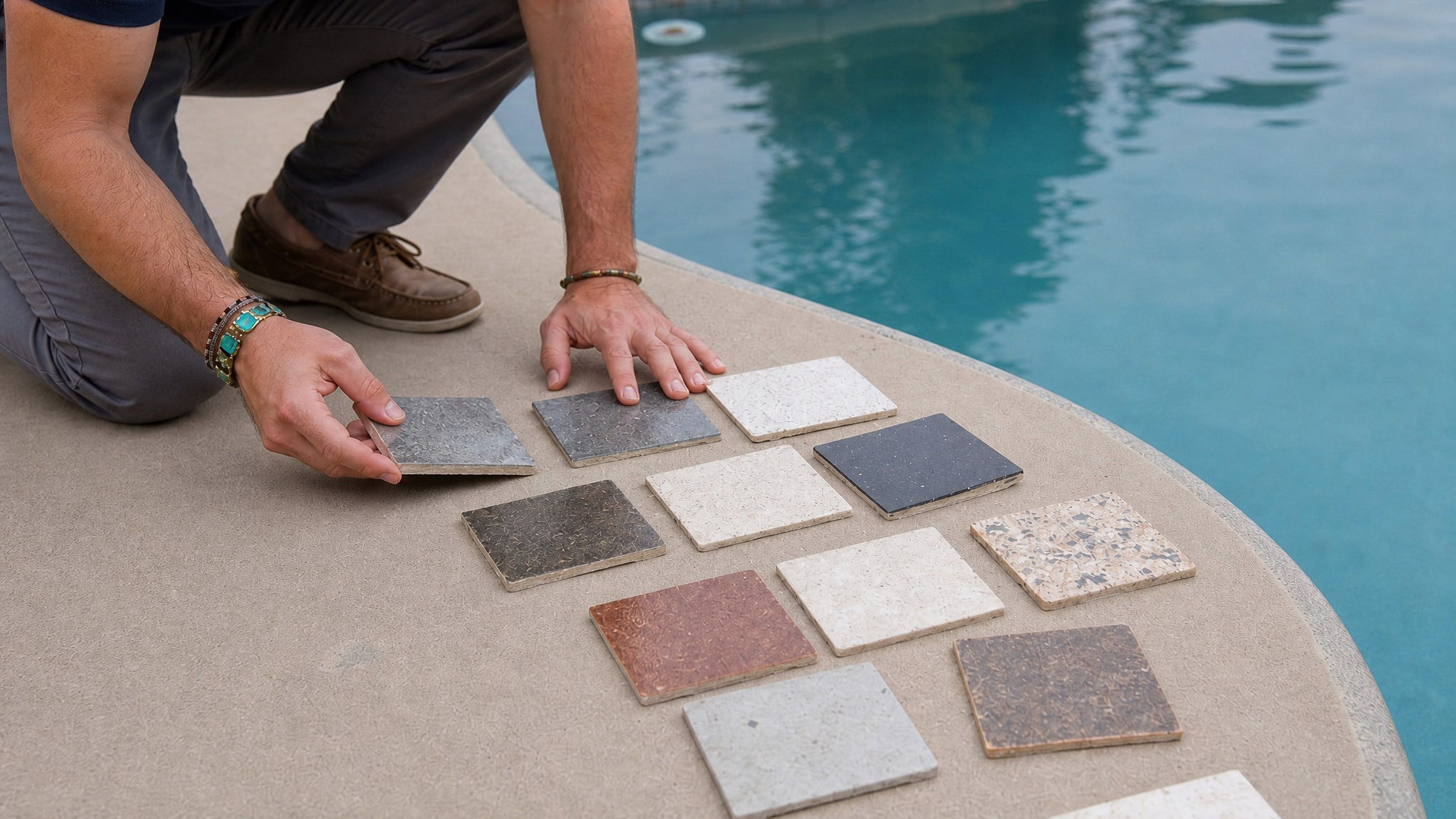
Tile color affects the look of your pool less than you’d expect because your waterline tiles don’t materially affect the pool’s overall water color. Your interior surface material, typically plaster, determines the hue you’ll see. The waterline band sits half-submerged and half-exposed, occupying too narrow a zone to shift the water’s perceived tone.
That said, color still shapes your pool’s character. Blue or teal tiles reflect and amplify existing water tones, reinforcing that classic aquatic look. Neutral colors, common in natural stone, complement your surrounding deck and create a cohesive, organic aesthetic. Hand-painted artisan tiles deliver striking visual detail while outperforming glass in durability and maintenance.
Where else can tile be used in a gunite pool
Tile can be used on functional surfaces throughout your gunite pool where durability and slip resistance matter most. Beyond the waterline band, tile serves critical roles beyond aesthetics, protecting high-traffic and high-movement zones from wear and structural stress. Custom designs for luxury pools can elevate the overall ambiance of outdoor spaces. These unique features not only enhance the visual appeal but also provide a personalized touch that reflects the owner’s style.
Tile isn’t just decorative, it’s a functional safeguard, protecting your gunite pool’s high-stress zones from wear and structural damage.
- Steps, benches, and ledges: Slip resistance is critical here, so you’ll want textured tiles rated for foot traffic to prevent accidents on submerged surfaces.
- Expansion joints: In high-movement areas, tile accommodates temperature fluctuations and reduces cracking from thermal expansion and contraction.
- Bond beam and spillways: Tile protects the underlying plaster shell from destructive wet-dry cycle forces at transition points.
When you extend tile to these surfaces, specify frost-protected, submersible-rated materials with chemical-resistant glazes to ensure consistent long-term performance across every application.
How much does pool waterline tile cost
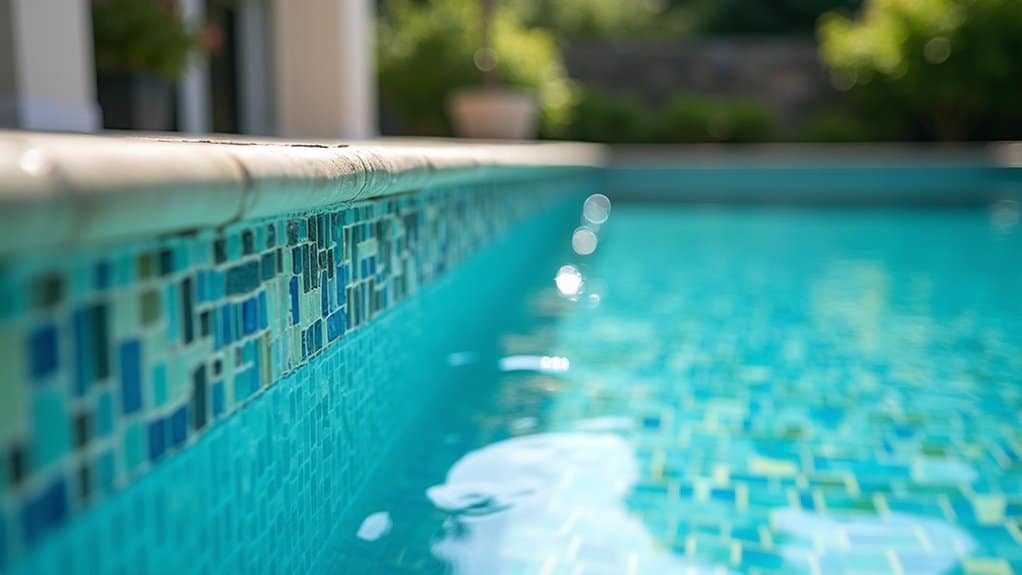
Pool waterline tile costs approximately $3,000 total for a standard installation on an average gunite pool. Within that figure, standard tile itself ranges between $2,100 and $2,800, excluding any special-order upgrades. If you’re specifying non-stock patterns, expect special-order tile to add another $400 to $800 to your base installation cost. Glass tile carries a steeper premium, typically adding about $600 over standard porcelain. Keep in mind that this premium pricing doesn’t guarantee superior long-term performance; high-quality porcelain often matches or outlasts glass while costing less. Factor material grade against durability rather than price alone. Choosing stock 6″x6″ porcelain keeps your project budget-conscious, giving you over 100 selections without triggering special-order surcharges or extended lead times.
How do you choose waterline tile
Choose waterline tile by starting with your climate, because environmental conditions dictate which materials will survive. In freeze zones, you need impervious porcelain with water absorption below 0.5% to prevent cracking. Coastal sites demand salt-tolerant materials, while high-UV regions require stable glazes that resist fading.
Climate comes first: environmental conditions dictate which waterline materials will survive, whether facing freeze, salt, or relentless UV.
After you’ve matched material to environment, weigh these factors:
- Durability: Prioritize porcelain, glass, or properly sealed natural stone; avoid travertine, clay, and unsealed stone at the waterline.
- Slip resistance: Specify slip-rated tiles wherever they continue onto steps, benches, or ledges.
- Aesthetics: Blue or teal tiles amplify water tones; neutral stone complements decking.
Finally, remember waterline tiles don’t determine water color. Your interior plaster does. Match performance to conditions first, then refine appearance. Gunite pool finishes in detail are essential for achieving the desired aesthetics and durability. These finishes not only enhance the look of your pool but also protect it from various environmental factors.
Choosing Waterline Tile for a Gunite Pool
Waterline tile is a small detail that shapes the whole look of a pool, and the right choice depends on your climate, your style, and how the tile works with the rest of the design. In South Florida, UV exposure and salt air matter more than freeze resistance, so material choice should reflect those conditions. Tile is usually addressed when a pool is resurfaced, and selecting it as part of the wider backyard design keeps everything cohesive. Looking at real finishes in daylight is the best way to choose with confidence.
Design Every Detail With the Experts
Every tile, finish, and curve of your pool tells a story, and expert design brings that vision to life exactly as you imagined it. At Cristallo Pools in Palm Beach Gardens, FL, our experienced team provides trusted Design and Planning with craftsmanship, creativity, and a fully custom approach. Call +1 (561) 766-0353 today and start designing the pool of your dreams.
Frequently Asked Questions
Which waterline tile considerations matter most in South Florida?
Freeze resistance is not a factor here, but UV exposure and salt air near the coast are. Tile that resists fading and holds up to sun and salt will look better for longer. Material choices should reflect the local climate rather than what suits a colder region.
Where can I look at the tile and finish options a builder uses?
Ask for a materials library or samples, and look for video walkthroughs or a gallery of completed pools. Seeing tile in finished projects, rather than on a small board, gives a far better sense of how it reads across a full pool before you narrow down a choice.
Is waterline tile replaced when a pool is resurfaced?
Usually, yes. The waterline band sits directly against the interior surface being renewed, so it is typically addressed at the same time as resurfacing. Doing both together is cleaner and avoids a mismatch between new and old finishes.
Can tile be changed without redoing the whole pool?
Often, yes. The waterline tile can usually be updated on its own or as part of a resurfacing, without rebuilding the pool. It is one of the more affordable ways to refresh the look, though the exact scope depends on the pool’s condition.
Does the tile choice need to work with the spa as well?
If you have an attached spa, yes. Matching or coordinating the waterline tile between the pool and spa keeps the design unified. A builder will usually plan the tile across both so they read as one connected space rather than two separate elements.
Who selects the tile, the homeowner or the builder?
It is a collaboration. The homeowner chooses the look they want, while the builder advises on durability, availability, and how a tile will perform in the local climate. That way your preference is balanced with what will hold up well over time.
Does tile detailing sit within the wider design of the backyard?
Yes. Waterline tile, coping, decking, and finishes all work together, so choosing tile as part of the overall design keeps the backyard cohesive. Treating it as one piece of the whole, rather than an isolated choice, gives the most polished result.