
Mustard, yellow, and brown algae develop in your pool when you’ve got nutrient imbalances from excess nitrogen and phosphorus, poor water circulation with dead spots, or chemical conditions like pH above 7.6 and chlorine below 2 ppm. These organisms spread through wind-carried spores, contaminated swimsuits, and organic debris that provides nutrients for rapid growth. Understanding each contributing factor will help you target the exact cause in your pool. Identifying the specific types of mustard algae in swimming pools can assist in selecting the appropriate treatment methods. Regular testing of water chemistry and maintaining proper circulation are essential in preventing these algae from taking hold.
Nutrient Imbalances That Feed Mustard and Yellow Algae
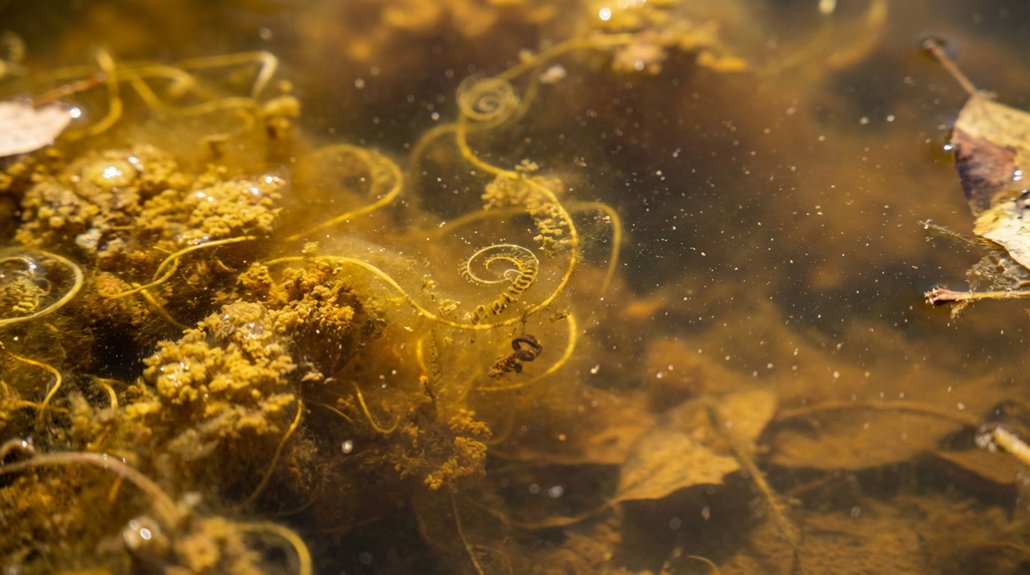
When mustard and yellow algae keep returning despite regular shocking, nutrient imbalances are often the hidden culprit. Excess nitrogen levels and excess phosphorus levels act as primary food sources for these persistent algae strains, fueling rapid metabolism and reproduction even when free chlorine appears adequate.
High phosphates algae problems develop when fertilizer runoff, cleaning products, or contaminated make-up water introduce phosphorus into your pool. Similarly, nitrogen enters through stormwater, atmospheric deposits during summer rains, and organic waste accumulation. Agricultural runoff from nearby lawns and gardens is a major contributor of both nitrogen and phosphorus into pool water.
A pool water chemistry imbalance compounds these issues. When pH drifts or chlorine effectiveness drops, nutrients remain unchecked, creating ideal growth conditions. You must address both sanitizer levels and nutrient loads simultaneously. Testing for phosphates and maintaining balanced chemistry prevents recurring outbreaks. Yellow algae are particularly challenging because they resist normal chlorine levels and tend to establish themselves in shaded areas of the pool. These algae form slimy patches on pool surfaces that require targeted brushing and specialized treatment to fully eliminate.
Poor Water Circulation and Filtration Problems
Poor water circulation and filtration problems rank among the most common causes of persistent mustard, yellow, and brown algae in pools. When you’re dealing with poor pool circulation, stagnant water creates ideal conditions for algae spores to settle and multiply undisturbed.
| Problem | Impact |
|---|---|
| Pump system failures | Prevents proper water turnover, accelerates growth |
| Insufficient filtration runtime | Creates establishment opportunities for algae |
| Dead spots and jet mispositioning | Allows unchecked algae blooms in stagnant areas |
Your pool filter must operate efficiently to remove algae precursors. Clogged or dirty filters substantially reduce filtration effectiveness, permitting spores to persist. You should backwash the filter regularly, especially during peak swimming season, to maintain optimal filtration performance. You’ll need minimum 6-8 hours of daily filtration during summer months to achieve complete water turnover and reach all pool zones. Insufficient filtration not only promotes algae growth but also leads to increased chemical and algaecide costs as you attempt to compensate for poor water movement.
Chemical Conditions That Allow Brown Algae to Thrive
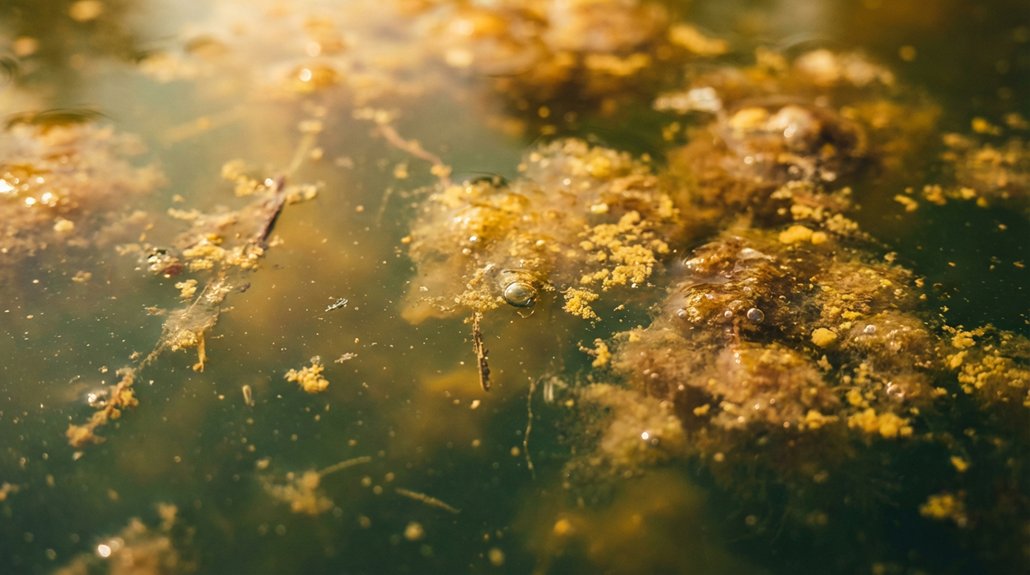
Chemical imbalances create the foundation for brown algae infestations, even in pools with adequate circulation. When your pH rises above 7.6, sanitizer effectiveness drops greatly, giving algae an advantage. Low chlorine levels below 2 ppm can’t neutralize spores entering your pool through wind or debris.
High cyanuric acid levels above 50 ppm suppress chlorine’s ability to fight resilient algae strains. You’ll need to dilute your water to restore proper sanitizer function. Heightened alkalinity and calcium hardness outside ideal ranges destabilize your entire chemical balance, creating conditions where brown algae persist. Metals like iron and manganese can also react with pool chemicals, contributing to discoloration that compounds algae-related water quality issues.
The presence of chloramines compounds these problems. When combined chlorine dominates over free chlorine, you’re left with weak sanitation and rapid algae multiplication. These poor sanitizers also cause physical symptoms like red eyes and breathing difficulty in swimmers. Test weekly and maintain free chlorine between 2-4 ppm to prevent outbreaks. thrive.
Environmental Factors Contributing to Algae Growth
Several environmental conditions work together to trigger brown algae blooms in your pool. Warm water algae growth accelerates dramatically when temperatures exceed 80°F, reducing chlorine’s effectiveness while creating ideal conditions for spores to thrive. Sunlight exposure provides photosynthetic energy that fuels rapid proliferation, especially in outdoor pools with extended UV exposure. High pH levels and unbalanced water chemistry further compromise your sanitizer’s ability to combat algae development.
Warm pool water above 80°F and direct sunlight create the perfect storm for brown algae to flourish.
Key environmental factors include:
- Poor pool circulation creates stagnant zones where algae settle and multiply without sanitizer contact
- Phosphates from fertilizers, debris, and environmental contaminants provide essential nutrients that feed algae colonies
- Inadequate filtration allows organic matter and spores to accumulate faster than your system can remove them
You’ll need to address these interconnected factors simultaneously. Running your pump longer, maintaining clean filters, and reducing nutrient loads will help prevent recurring outbreaks. Regularly brushing pool walls and the floor also helps remove algae buildup before it becomes established. Additionally, maintaining appropriate water chemistry is crucial in keeping algae at bay. If you notice yellow algae starting to form, it’s important to act quickly and learn how to eliminate yellow algae effectively. Failing to address these issues not only leads to unsightly algae growth but also poses health risks. Ignoring the dangers of mustard algae exposure can result in skin irritations and respiratory problems.
Contamination Sources That Introduce Algae Spores
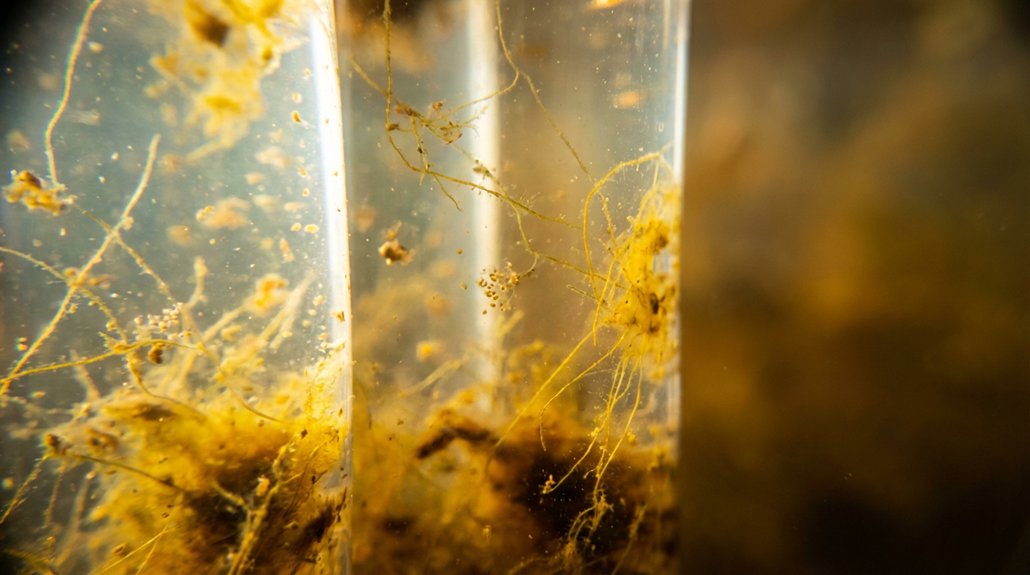
Microscopic algae spores enter your pool through multiple pathways you can’t always control. Wind carries spores from soil, plant material, and nearby water sources directly into your water. Rain introduces additional spores while simultaneously diluting your chlorine levels, creating ideal conditions for rapid colonization.
Swimsuits worn in natural bodies of water or algae-infested pools transfer spores upon entry. Heavy bather loads compound this problem by depleting sanitizer faster than it can neutralize incoming contaminants. Once introduced, these single-cell organisms can multiply into a visible bloom in just days or even hours under the right conditions.
Your cleaning tools present another overlooked risk. Brushes, vacuums, and nets used in contaminated pools spread spores if you don’t sanitize them between uses. Debris like leaves, dirt, and lawn clippings acts as both a spore carrier and nutrient source. These organic contaminants serve as fodder for algae growth, allowing spores to quickly establish themselves once introduced. Unlike black algae that locks deep into pool surfaces, mustard algae clings loosely to walls and brushes off easily, though this makes it adept at spreading throughout your pool. Understanding these contamination vectors helps you implement targeted prevention strategies for lasting algae control. Regularly utilizing professional pool maintenance services can ensure that these tools are properly sanitized and that contaminants are effectively managed. Additionally, incorporating routine inspections can help identify and eliminate potential sources of algae before they become a larger issue.
Frequently Asked Questions
Can Mustard Algae Spread From One Pool to Another Through Shared Equipment?
Yes, mustard algae can absolutely spread from one pool to another through shared equipment. Spores cling to pool brushes, hoses, vacuums, toys, and floats, transferring when you move these items between pools. You’ll need to disinfect all equipment before reuse, soak brushes and hoses in a chlorine-water solution, and clean toys with a multipurpose disinfectant. Don’t forget to wash swimsuits and rinse gear thoroughly to prevent cross-contamination.
Why Does Yellow Algae Keep Coming Back After I Shock My Pool?
Yellow algae keeps returning because shocking alone doesn’t eliminate hidden spores. You’re likely dealing with poor circulation, clogged filters, or chlorine levels that drop too quickly after treatment. This algae tolerates higher chlorine than other types, so it survives standard shocking. You’ll need to brush all surfaces thoroughly, maintain 20 ppm chlorine for extended periods, clean your filter, and add a mustard algae-specific algaecide to break the cycle completely.
Is Brown Algae in Pools Dangerous to Swimmers’ Health?
Brown algae isn’t directly toxic, but you shouldn’t swim in it. It creates a safe harbor for harmful bacteria like E. coli, especially when chlorine levels drop. You may experience skin irritation, eye redness, or rashes from contact. If you swallow contaminated water, you risk nausea, vomiting, or diarrhea. Children and anyone with compromised immune systems face higher risks. Treat the algae completely before swimming again.
How Long Does It Take for Mustard Algae to Grow Visibly?
Mustard algae typically becomes visible within 3-7 days once conditions favor growth. If your pool has warm temperatures above 80°F, poor circulation, or low chlorine levels, you’ll notice that dusty yellow film even faster, sometimes in just 48 hours. Stagnant water and organic debris can accelerate development to 2-4 days. You’ll often spot early signs like cloudy water 1-2 days before the characteristic yellow patches appear.
Can Mustard Algae Survive in Pool Water During Winter Months?
Yes, mustard algae can survive in pool water during winter months. It tolerates temperatures as low as 50°F and continues growing slowly even in cold conditions. You’ll often see it appear as a pale, dusty film rather than thick buildup during winter. If you reduce filtration below six hours daily or let chlorine drop under 1 ppm, you’re creating ideal conditions for mustard algae to establish and persist through the colder season.