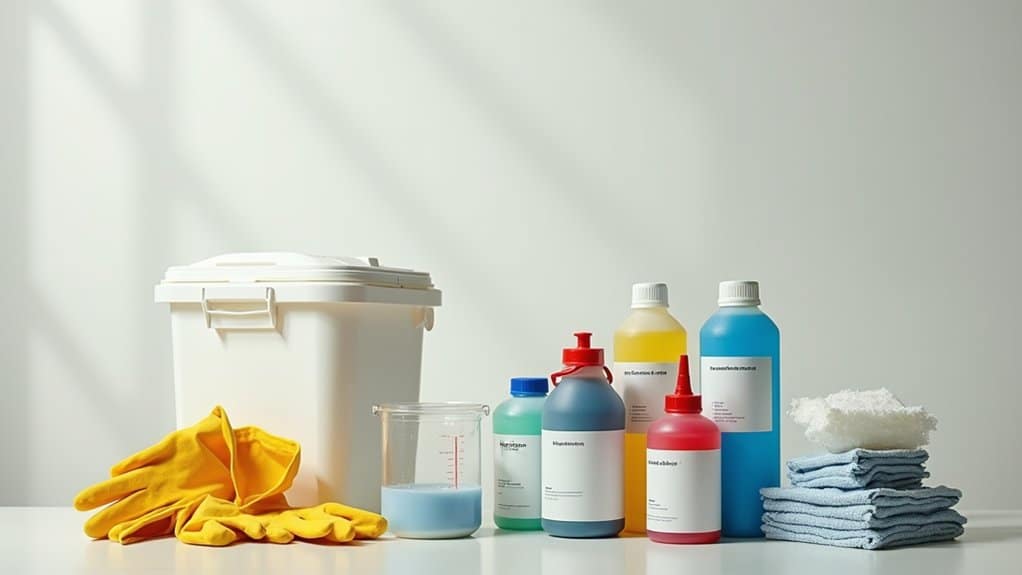
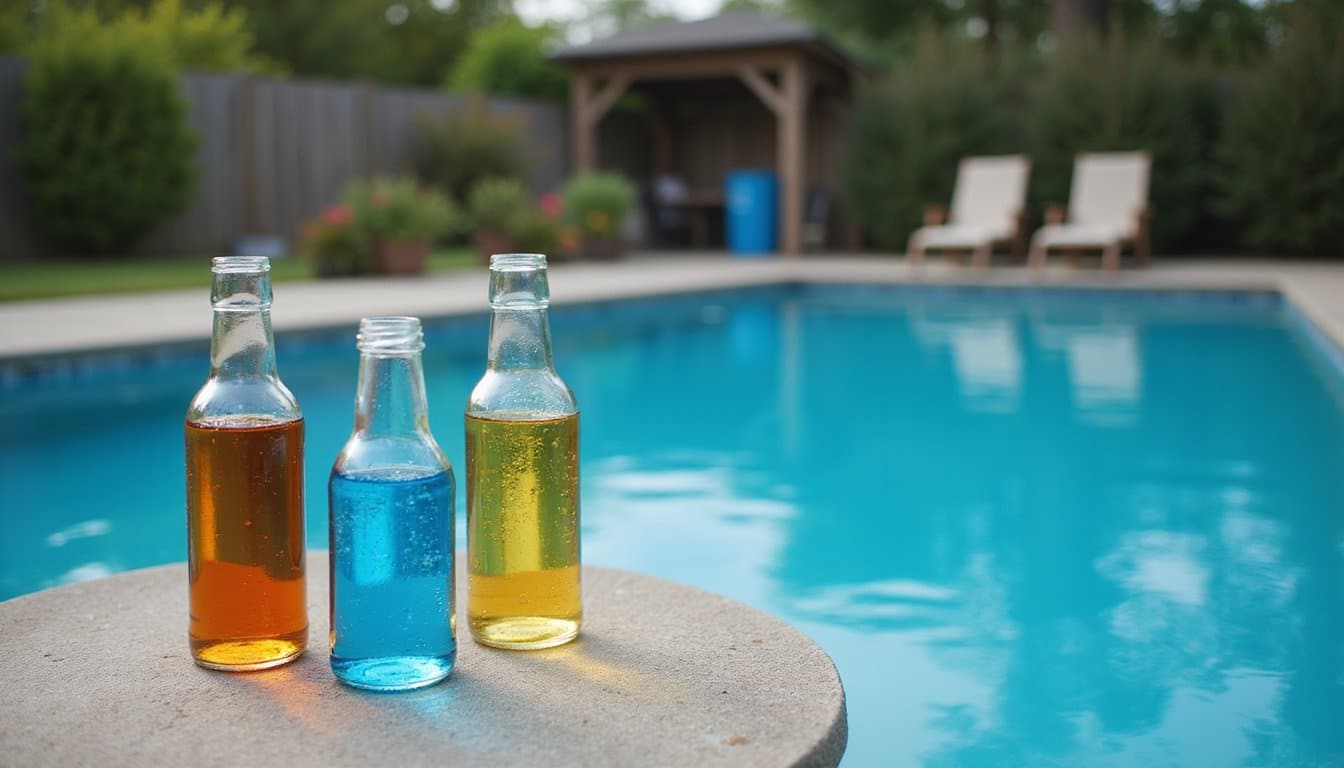
To close your pool properly, you’ll need five essential chemical categories: water balancers (alkalinity, pH, calcium hardness, and stabilizer), shock treatment to achieve breakpoint chlorination, a winter-formula polyquat algaecide, metal sequestrant and scale inhibitors, and pool-specific propylene glycol antifreeze for your plumbing lines. You should always adjust chemicals in sequence, balancing water first, then shocking 24, 48 hours before closing. Each category plays a critical role you’ll want to understand step by step below.
Balance Your Pool Water Chemistry First
Finally, verify your pool stabilizer cyanuric acid conditioner sits between 30, 50 ppm to protect residual chlorine from UV degradation. Always adjust in this sequence: alkalinity, pH, calcium hardness, then stabilizer. When collecting your water sample, draw from elbow depth away from return jets for the most accurate readings. For the most precise results, test pool water in the morning before sunlight and activity can influence chemical levels. Regular testing ensures you avoid potential problems such as algae, bacteria, and contaminants before sealing the pool for the off-season.
Shock the Pool to Kill Bacteria and Algae
You should shock your pool 24 to 48 hours before closing to allow sufficient time for chlorine levels to stabilize and contaminants to be fully oxidized. If you prefer to avoid raising calcium hardness or free chlorine levels right before covering the pool, a chlorine-free oxidizing shock effectively eliminates combined chlorine and organic waste without altering other chemical balances. Apply the shock treatment at dusk, then run your filtration system continuously to distribute the oxidizer evenly throughout the water before you install the winter cover.
Chlorine-Free Shock Benefits
Although chlorine shock is the standard treatment for pool closing, chlorine-free shock (potassium monopersulfate) offers distinct advantages when your pool’s free available chlorine already exceeds 2.0 ppm.
This non chlorine shock potassium monopersulfate oxidizes organic contaminants, sweat, oils, and chloramines, without raising chlorine levels or bleaching pool surfaces. Among essential pool closing chemicals, it preserves your existing chemical balance with a near-neutral pH of 7.4.
Key benefits of chlorine-free pool shock treatment include:
- Oxidizes contaminants without affecting calcium hardness or cyanuric acid levels
- Won’t bleach vinyl liners or winter covers during extended contact
- Maintains pH stability, requiring no additional alkalinity adjustments
- Complements pool algaecide winter treatment by freeing chlorine to focus on sanitization
- Enables immediate covering without waiting 8, 12 hours post-treatment
Pre-Closing Shock Timing
Before you install the winter cover, shocking the pool eliminates bacteria, algae spores, and organic contaminants that would otherwise multiply in stagnant water over the off-season. Apply your chlorine pool sanitizer in the evening to prevent UV degradation. Balance pH first, then add calcium hypochlorite shock dissolved in a five-gallon bucket of pool water. You can also use liquid chlorine, sodium hypochlorite for faster dissolution. Before you install the winter cover, shocking the pool eliminates bacteria, algae spores, and organic contaminants that would otherwise multiply in stagnant water over the off-season, while also reinforcing awareness of how to dispose of pool chemicals safely after treatment. Apply your chlorine pool sanitizer in the evening to prevent UV degradation. Balance pH first, then add calcium hypochlorite shock dissolved in a five-gallon bucket of pool water. You can also use liquid chlorine, sodium hypochlorite for faster dissolution.
Raise free chlorine to approximately 10 ppm to achieve breakpoint chlorination. Wear goggles, gloves, and protective clothing during application. Run your pump on high speed for at least eight hours to distribute chemicals evenly and prevent hot spots. Don’t rely on trichlor chlorine tablets alone, they dissolve too slowly for effective pre-closing superchlorination. Retest free chlorine levels before covering. Raise free chlorine to approximately 10 ppm to achieve breakpoint chlorination, which is essential when learning how to do chemicals in above ground pool properly. Wear goggles, gloves, and protective clothing during application. Run your pump on high speed for at least eight hours to distribute chemicals evenly and prevent hot spots. Don’t rely on trichlor chlorine tablets alone, they dissolve too slowly for effective pre-closing superchlorination. Retest free chlorine levels before covering.
Add Winter Algaecide Right Before You Cover
Every pool closed for winter needs a dedicated winter-formula algaecide, not a standard maintenance dose, to maintain algae suppression across months of zero circulation and sunlight deprivation. You should add it 6, 8 hours after the shock circulates to prevent chlorine neutralization. A polyquat algaecide winterizing formula won’t stain plaster or concrete surfaces, unlike copper-based algaecide options that risk discoloration.
Skip standard algaecide when winterizing, use a polyquat winter formula to suppress algae for months without staining your pool surfaces.
- Pour slowly around the perimeter, then run your pump 2, 4 hours for even distribution.
- Test phosphate levels before applying if you’re using a remover alongside winter pool enzyme treatments.
- Don’t skip this step, saving $15 on regular algaecide leads to $300, $500 acid wash costs.
- Add pool antifreeze for plumbing lines separately to protect equipment.
- Cover immediately after circulation completes.
Apply Stain and Scale Preventers Early
You should add stain and scale prevention chemicals early in your closing process, before you lower the water level, so the sequestering agents can circulate fully and protect all pool surfaces from mineral deposits and metal staining. These products chemically lock up dissolved metals like iron and copper, preventing them from precipitating out of solution and bonding to your pool’s finish during the months of inactivity. Run your filtration system for at least one hour after application to distribute the chemicals evenly throughout the water.
Prevent Mineral Surface Damage
Although chlorine shock and algaecide handle biological threats during pool closing, dissolved metals like iron, copper, and manganese pose a separate risk that requires early chemical intervention. You should apply stain and scale preventers during filling or before lowering water levels to prevent mineral concentration damage. Phosphate-free formulas protect all pool surfaces without introducing contaminants that feed algae.
- Use metal sequestrant stain prevention products like Jack’s Magic Pink Stuff to bind metals and prevent precipitation.
- Apply scale inhibitor chemicals to control calcium-based buildup on plaster, tiles, and salt cells.
- Lower pH to 7.2, 7.4 before treatment to enhance chelator effectiveness.
- Brush stained areas daily for 5, 7 minutes alongside chemical application.
- Choose stain and scale preventers compatible with your sanitizing system for broad mineral protection.
Distribute Before Lowering Water
Because stain and scale preventers need adequate circulation time to bind with dissolved metals before water levels drop, you’ll want to apply these chemicals at least one full day before you begin closing the pool. Add Winter Stain Away with your pump running on high speed, circulating for a minimum of eight hours. Verify chlorine reads below 5 ppm using pool water testing kits before application, since elevated chlorine degrades sequestrant effectiveness.
Among essential pool winterization chemicals, stain preventers require precise sequencing. Balance pH three days prior to using a pH increaser, sodium carbonate if needed. Proper pool circulation system winter care means running one full pump cycle, four to twelve hours, after addition. Lower water levels only after sequestrants have fully circulated, then backwash your filter before proceeding to algaecide application. For those looking to maintain optimal water quality, understanding how to lower ph in pool quickly without chemicals can be beneficial. One effective method involves using natural options such as vinegar or baking soda, which can help manage pH levels while being gentle on your pool’s surfaces.
Use Pool Antifreeze to Protect Your Plumbing
Even after you’ve balanced your pool’s chemistry and added winterizing chemicals, your plumbing lines remain vulnerable to freeze damage if temperatures drop below 32°F. During residential pool closing procedures, you should apply pool antifreeze, specifically propylene glycol formulations, to protect exposed plumbing after completing pool filtration system preparation.
Pool antifreeze with propylene glycol is essential for protecting your plumbing lines from freeze damage during winterization.
When winterizing a swimming pool, follow these critical steps:
- Pour one gallon of antifreeze per 10 feet of water-filled pipe directly into the skimmer after lowering water levels
- Use a garden hose with a funnel to treat return lines, cleaner lines, and main drains
- Never substitute automotive antifreeze, use only pool-specific, non-toxic products
- Select propylene glycol formulas providing burst protection down to -50°F
- Avoid pouring antifreeze directly into pool water, as this requires excessive volume and disrupts chemistry
Choose a Pool Closing Chemical Kit That Does It All
Each kit addresses critical pool winterization chemicals needs: oxidizing shock destroys residual bacteria, long-lasting algaecides prevent dormant spore reproduction, and stain-away formulas provide reliable pool stain prevention against iron and copper deposits. Many kits include time-release floaters and WinterPill enzyme delivery systems that maintain pool water balancing throughout inactive months.
Before applying kit chemicals, guarantee your Free Available Chlorine reads 2.0, 4.0 ppm and pH sits between 7.4, 7.6. Run circulation for 4, 6 hours post-application to distribute treatments evenly.
Ready to Turn Your Backyard Into Something Extraordinary?
Your dream outdoor space deserves more than a standard pool, it deserves a design built around your lifestyle and vision. At Cristallo Pools, our award-winning team specializes in custom pool construction, spa additions, complete backyard makeovers, and concierge maintenance, delivering resort-style results that go far beyond what typical pool contractors offer. Call +1 (561) 766-0353 today and let us bring your vision to life.
Frequently Asked Questions
Can You Close a Pool Without Using Any Chemicals at All?
You can technically close a pool without chemicals, but you’ll risk algae growth, bacterial contamination, metal staining, and surface damage from unbalanced water. Without sanitizer, microorganisms proliferate unchecked during winter. You’d need to rely heavily on physical alternatives, thorough vacuuming, brushing, filter backwashing, proper water level lowering, and a tight-fitting winter cover. However, experts strongly recommend at minimum a chlorine-free closing kit containing shock, algaecide, and stain preventers to maintain safe, stable water chemistry.
How Long After Adding Closing Chemicals Should You Install the Cover?
You should wait at least 24 hours after adding shock before installing your winter cover. Run your pump for 6, 8 hours after shock treatment to guarantee full circulation, then retest chlorine levels, they must drop to 1, 3 ppm before you proceed. Add algaecide and winterizing chemicals next, circulating for another 2, 4 hours. Don’t cover the pool until all chemicals have fully distributed, as premature covering risks uneven treatment and potential liner damage.
Do Saltwater Pools Need Different Closing Chemicals Than Chlorine Pools?
No, you don’t need different closing chemicals for a saltwater pool. Both saltwater and chlorine pools produce the same disinfectant, hypochlorous acid, so you’ll apply identical shock treatments, algaecides, pH adjusters, and alkalinity balancers during winterization. The key difference is that you’ll need to winterize your salt chlorine generator cell separately since it can’t operate below 60°F. You should also maintain your salt concentration near 3,000 ppm before closing.
What Happens if It Rains Right After You Add Closing Chemicals?
Rain dilutes your freshly added closing chemicals, lowering chlorine concentration and disrupting pH balance. Rainwater introduces hydrogen ions that increase acidity, while organic debris provides nutrients for algae spores. You’ll need to retest your water at elbow depth after the storm passes. Check pH, chlorine, and total alkalinity levels, then readjust as necessary. To prevent this, you should monitor weather forecasts and delay chemical treatment until dry conditions are confirmed.
How Soon Before the First Freeze Should You Close Your Pool?
You should close your pool one to two weeks before the first expected freeze. This window gives you enough time to balance your water chemistry, circulate closing chemicals for four to twelve hours, and guarantee everything settles properly. Start the process once water temperatures drop below 60°F, since colder water naturally inhibits algae growth under your cover. Monitor local forecasts closely, sudden early freezes can catch you off guard and risk equipment damage.