

Olympic pools feel cool because World Aquatics mandates a precise 25°C, 28°C range engineered around your body’s physiology. You’re converting chemical energy into motion at under 10% efficiency, so over 90% becomes metabolic heat. Water’s 25x greater thermal conductivity versus air pulls that excess heat away, preventing dangerous overheating. At 26°C, your muscles maintain peak contractile function while your thermoregulation stays balanced. The science behind how this system shifts for sprints, distance, and different aquatic disciplines goes even deeper. Olympic pools feel cool because World Aquatics mandates a precise 25°C, 28°C range engineered around your body’s physiology, directly answering What is the temperature of an olympic swimming pool in a performance context. You’re converting chemical energy into motion at under 10% efficiency, so over 90% becomes metabolic heat. Water’s 25x greater thermal conductivity versus air pulls that excess heat away, preventing dangerous overheating. At 26°C, your muscles maintain peak contractile function while your thermoregulation stays balanced. The science behind how this system shifts for sprints, distance, and different aquatic disciplines goes even deeper.
Olympic Pool Temperatures: Cooler Than You’d Expect
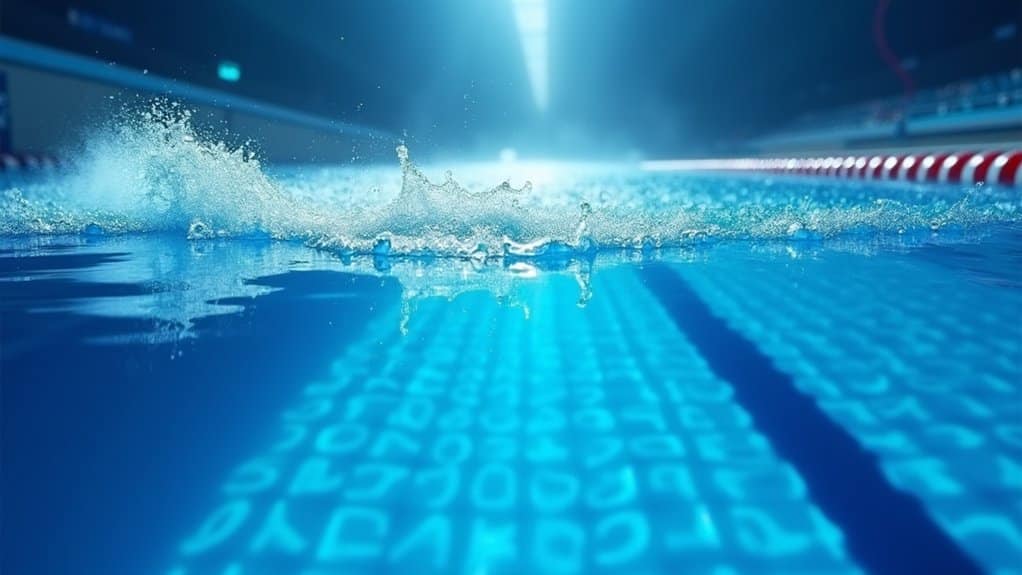
Olympic competition pools hold their water at a precise 26°C (78.8°F), a temperature that’s deliberately cooler than what most recreational swimmers encounter. Under world aquatics regulations, the acceptable range spans 25, 28°C, but competitive swimming pool standards consistently target that 26°C mark for ideal performance. You’ll find synchronized swimming pools set slightly warmer at 27°C, while diving pools hold steady at 26°C within the same approved range.
These olympic size swimming pool conditions aren’t arbitrary. Aquatic facility engineering standards require temperature control systems capable of adjustments under 1°F, ensuring athlete safety in aquatic sports through consistent thermal regulation. You’re looking at precision-engineered environments where every degree directly impacts muscle function, metabolic load, and competitive outcomes. Water temperatures below this regulated range can be dangerous, as dropping to 50, 60°F causes total loss of breathing control, making it impossible for swimmers to manage gasping and hyperventilation. Indoor pools offer a significant advantage over outdoor venues because climate control systems enable consistent temperature maintenance without the environmental fluctuations that can push water outside the recommended range. Elite swimmers strategically train in varied temperatures, using warmer pools for endurance and cooler pools for sprints, helping their bodies adapt and perform optimally on competition day.
Why FINA Requires Pools Between 25°C and 28°C
The 25°C to 28°C temperature range mandated by World Aquatics (formerly FINA) isn’t a guideline, it’s a performance-engineered specification backed by decades of physiological research. Under FINA swimming guidelines, water temperature 25 to 28 degrees Celsius maximizes competitive swimming physiology by balancing heat dissipation with muscular efficiency.
| Parameter | Below 25°C | 25°C, 28°C Range |
|---|---|---|
| Muscle Response | Tense, injury-prone | Ideal contractility |
| Heat Regulation | Excessive cooling | Balanced dissipation |
| Endurance Output | Reduced capacity | Peak swimmer endurance performance factors |
You’ll find aquatic facility management practices target 26.5°C as the competition sweet spot. This precision maintains swimmer endurance performance factors consistent across international venues, eliminating thermal variables that compromise record integrity and athlete safety during high-intensity events.
What Pool Temperature Does to a Swimmer’s Muscles
How precisely does water temperature alter muscular function during competitive swimming? When you immerse yourself in cold water, your muscles undergo measurable ColdWaterEffectsOnMuscleStrengthAndPower changes that directly impact race outcomes. At 10°C, your peak force and rate of force development decrease greatly, while maximum power output drops due to diminished steady-state power-generating capabilities.
Your red muscle fibers generate low or negative work at most swimming speeds except the slowest when exposed to 10°C water. The Q10 for maximum velocity of shortening ranges from 1.5 to 3, vastly affecting power production. Cold temperatures reduce your muscle strength and speed but paradoxically increase muscle activity, forcing greater neural recruitment to compensate.
This explains why FINA’s 25°C, 28°C range represents a precisely calibrated system, warm enough to preserve contractile function while cool enough to manage metabolic heat.
Why Cool Olympic Pool Water Prevents Overheating
Because competitive swimmers convert chemical energy into kinetic output at efficiencies below 10%, the remaining 90%+ dissipates as metabolic heat directly into surrounding tissue. Without effective thermoregulation during swimming, your core temperature escalates rapidly, degrading performance and risking heat illness.
Olympic pools maintained at 25, 28°C optimize athlete body temperature control through conductive heat transfer. Water’s 25x greater thermal conductivity versus air accelerates core-to-surface heat exchange. Continuous water circulation removes heat from your skin boundary layer. Cool water enables peripheral blood vessels to offload excess thermal energy efficiently. The 25, 28°C range prevents both overheating and cold-induced vasoconstriction. Olympic pools maintained at 25, 28°C optimize athlete body temperature control through conductive heat transfer, reflecting advancements since When were heated pools invented that made precise temperature regulation possible. Water’s 25x greater thermal conductivity versus air accelerates core-to-surface heat exchange. Continuous water circulation removes heat from your skin boundary layer. Cool water enables peripheral blood vessels to offload excess thermal energy efficiently. The 25, 28°C range prevents both overheating and cold-induced vasoconstriction.
This regulated thermal environment sustains high-intensity output without cardiovascular compromise.
The Sweet Spot: Why 26°C Unlocks Peak Performance
Within that 25, 28°C regulatory window, 26°C operates as the physiological inflection point where thermoregulation, muscle efficiency, and mental acuity converge at peak levels. At this temperature, your core remains stable during sustained efforts of 30, 60 minutes, and heat conductance gradients function ideally without triggering excessive energy expenditure.
Olympic aquatic facility specifications mandate this precision. The professional competition pool environment you’re swimming in maintains 26°C because it prevents the muscle relaxation and fatigue associated with warmer water while eliminating cold-induced stiffness. International swimming federation standards recognize this balance directly. Your heart rate stays controlled, concentration sharpens, and technique execution remains flawless. Olympic games aquatic center design integrates these thermal parameters into circulation and climate systems, ensuring every competitor operates at the exact physiological threshold where speed and endurance intersect. Olympic aquatic facility specifications mandate this precision, which also informs advanced pool and spa plans for performance-driven environments. The professional competition pool environment you’re swimming in maintains 26°C because it prevents the muscle relaxation and fatigue associated with warmer water while eliminating cold-induced stiffness. International swimming federation standards recognize this balance directly. Your heart rate stays controlled, concentration sharpens, and technique execution remains flawless. Olympic games aquatic center design integrates these thermal parameters into circulation and climate systems, ensuring every competitor operates at the exact physiological threshold where speed and endurance intersect.
Sprint vs. Distance: Why Water Temp Varies by Event
When you’re racing a 100m sprint, your muscles generate peak metabolic heat within seconds, so slightly warmer water near 27, 28°C optimizes power output without triggering rapid fatigue. In contrast, if you’re competing in distance events like the 1500m, moderate temperatures around 25, 27°C allow sustained heat dissipation that prevents the cumulative overheating that degrades your pacing and coordination. These event-specific thermal demands explain why elite training programs systematically vary pool temperatures to match the physiological profiles of sprint versus endurance workouts.
Sprint Cooling Advantages
The explosive energy output of sprint events creates a distinct thermoregulatory demand that favors cooler water temperatures at the lower end of FINA’s 77, 82°F (25, 28°C) regulation range. Modern olympic sports infrastructure maintains precise thermal controls to support this requirement.
Sprint-specific cooling advantages include:
- Rapid heat dissipation: Cooler water at 76, 77°F efficiently transfers metabolic heat generated during explosive bursts
- Muscle performance optimization: Lower temperatures prevent thermal fatigue in fast-twitch muscle fibers
- Sustained breathing regulation: Cool conditions stabilize respiratory function under maximal exertion
- Stroke-specific benefits: Freestyle and backstroke sprints generate continuous motion heat, making cooler temperatures particularly advantageous
You’ll find that automated thermal systems in competition venues calibrate temperatures precisely, ensuring sprint athletes compete within conditions engineered for peak explosive performance.
Distance Warmth Benefits
Unlike sprint events that thrive at the cooler end of FINA’s 25, 28°C pool range, distance swimming demands warmer conditions to counteract prolonged thermal exposure across 5km, 10km, and marathon distances. When you’re racing 10km, cumulative thermal drain forces regulatory bodies to set distinct olympic swimming pool temperature protocols.
| Parameter | Distance Specification |
|---|---|
| Ideal 5km Temperature | 27°C |
| Open Water Range (FINA) | 16°C, 31°C |
| Core Temp Rise Rate | ~1°C/hour |
| Hypothermia Risk Threshold | Below 18°C |
| Tokyo 2020 Adjustment | Start moved 2 hours earlier |
World championship swimming pool specifications don’t fully apply to open-water venues, where swimming event environmental conditions require continuous monitoring. Safety officers measure water temperature mid-course two hours pre-race, triggering schedule modifications when thresholds are exceeded.
Training Temperature Strategies
Competitive swimmers don’t just race at regulated temperatures, they deliberately manipulate training pool conditions to sharpen event-specific performance. Indoor olympic pool heating systems enable precise thermal cycling between sessions, allowing you to target specific physiological adaptations.
You’ll typically encounter these strategic temperature protocols:
- Sprint sessions at 25, 26°C to replicate competition’s cooler standard and optimize explosive heat dissipation
- Endurance blocks at 28, 29°C to sustain muscle function during prolonged aerobic efforts
- Adaptive temperature cycling between warm and cool ranges to build mental toughness and metabolic flexibility
- Event-specific warm-ups that adjust your core temperature before race-pace efforts
How Pool Temperature Differs for Diving and Synchro
How precisely do governing bodies calibrate water temperature when diving and synchronized swimming share the same aquatic center? World Aquatics mandates both disciplines maintain water between 25°C and 28°C, yet ideal targets diverge. You’ll find diving pools set at 26°C, protecting athletes from damaging temperature shifts upon impact from platforms exceeding 6 meters. Synchronized swimming requires 27°C, supporting prolonged endurance during routines while managing cardiovascular load.
Modern aquatic sports facility climate control systems independently regulate each pool’s thermal environment. You can’t exceed 28°C without elevating dehydration risks, and dropping below range threatens hypothermia during extended synchro performances. These one-degree distinctions aren’t arbitrary, they reflect discipline-specific physiological demands. Diving prioritizes muscle preservation through rapid temperature changes, while synchro balances sustained exertion against heat dissipation across longer competitive durations.
How Olympic Pools Hold Temperature Within 1°F
Maintaining that one-degree distinction between diving and synchro pools demands engineering systems capable of holding temperature within remarkably tight tolerances across massive water volumes.
You’ll find these precision controls operating continuously:
- Automated stainless steel sensors check pool water temperature every few seconds, triggering real-time adjustments in sub-1°F increments
- AI-powered monitoring systems track fluctuations instantly, compensating for spectator body heat and environmental variables
- Heat pump circulation networks guarantee pool water circulation distributes thermal energy evenly, preventing stratification
- 24/7 heating and cooling operations preserve temperature stability within FINA’s strict 1°F tolerance through continuous feedback loops
These integrated systems counter external disruptions, humidity shifts, crowd density changes, and facility airflow variations, ensuring you’re witnessing competition conditions calibrated to regulatory precision throughout every event session.
Why Air Temperature Around Olympic Pools Matters Too
You might not realize it, but the air temperature surrounding an Olympic pool is maintained 2, 3°C above the water temperature while humidity stays between 50% and 60%, a precise balance that directly affects your comfort and performance. These conditions prevent excessive evaporative cooling on your skin, which would otherwise accelerate heat loss the moment you surface or stand on deck. Without this tightly regulated air envelope, even properly heated pool water can’t protect you from the rapid chilling that compromises muscle function and competitive fairness.
Ideal Air Temperature Range
The air temperature inside an Olympic aquatic facility operates within a narrow 78, 80°F band for competitive events, and facility engineers calibrate HVAC systems to hold this range with minimal deviation. When you’re managing a 77 to 82.4 degrees Fahrenheit pool temperature, the air must complement the water to prevent physiological stress on athletes.
HVAC protocols enforce these specifications:
- Air temperature never exceeds 82°F during high-intensity racing in water at or below 82°F
- More aerobic the event, lower the required air setpoint
- Indoor climate systems eliminate external weather variables that compromise consistency
- Air-water temperature alignment prevents muscle tightness and energy depletion
You’ll find that precision air control isn’t optional, it’s a regulatory requirement ensuring athletes perform under standardized thermal conditions across every sanctioned competition venue.
Humidity Control Requirements
How precisely must humidity levels align with pool water and air temperatures to protect both athletes and the building envelope? You’ll find that maintaining 50, 60% relative humidity is non-negotiable in competitive indoor pool facilities.
| Parameter | Specification |
|---|---|
| Ideal RH Range | 50, 55% |
| Code-Required Maximum | 60% RH |
| Air Changes Per Hour | 4, 6 |
| Energy Savings via Mechanical Dehumidification | 50, 75% |
When RH drops below 50%, evaporation rates spike, increasing energy demands on pool dehumidification units. You must size PDUs based on indoor temperature setpoints, pool water evaporation rates, geographic climate data, and occupancy loads. ASHRAE Standard 62.1-2022 governs minimum outdoor air volumes, while automatic chemical feed systems eliminate the need for excess ventilation to manage treatment odors. Deviating from these parameters compromises dehumidifier capacity and structural integrity.
Preventing Swimmer Heat Loss
Because pool water temperatures alone don’t determine athlete comfort, facility engineers must maintain ambient air 2, 3°C above the water surface, typically 26, 29°C (78, 85°F) in competition venues. ASHRAE standards cap air at 86°F to prevent excessive heat while minimizing evaporative cooling on wet skin.
This thermal differential delivers measurable physiological advantages:
- Reduces evaporation rate, lowering hypothermia risk when you exit the water
- Preserves muscle function during recovery intervals between races
- Stabilizes blood pressure by preventing rapid body cooling post-immersion
- Balances metabolic load without accelerating dehydration
Ventilation systems reinforce this strategy. Ceiling extraction prevents cold air from pooling at deck level, while separate zoning isolates athlete areas from spectator stands. You’ll find corrosion-resistant vents and insulated exhaust ducts ensuring consistent heat distribution throughout competition zones.
Ready to Turn Your Backyard Into Something Extraordinary?
Your dream outdoor space deserves more than a standard pool, it deserves a design built around your lifestyle and vision. At Cristallo Pools, our award-winning team specializes in custom pool construction, spa additions, complete backyard makeovers, and concierge maintenance, delivering resort-style results that go far beyond what typical pool contractors offer. Call +1 (561) 766-0353 today and let us bring your vision to life.
Frequently Asked Questions
Can Swimming in a Cold Olympic Pool Weaken Your Immune System?
Swimming in a cold Olympic pool won’t weaken your immune system. When you’re exposed to the regulated 25°C, 28°C water, your body triggers an acute immune response, you’ll see increased natural killer cell activity, amplified neutrophils, and a transient rise in interleukin-6. With chronic cold-water exposure, you’ll actually develop enhanced antioxidant defenses and reduced upper respiratory infection rates by up to 40%. Your immune markers normalize within 24 hours post-immersion.
How Does Olympic Pool Water Temperature Affect Young or Amateur Swimmers?
Olympic pool temperatures (25, 28°C) can stress your body if you’re a young or amateur swimmer. You generate less metabolic heat than elite athletes, so cooler water stiffens your muscles, slows your reaction times, and raises your breathing rate. If you’re swimming below 25°C, you’ll face heightened hypothermia risk. Breaststroke and butterfly demand around 80°F to prevent muscle cooling, and prolonged exposure disrupts your thermal regulation and accelerates fatigue.
Do Olympic Swimmers Wear Special Suits to Stay Warm During Competitions?
No, you won’t find Olympic swimmers wearing insulating suits to stay warm. Since 2010, World Aquatics regulations restrict competition swimwear to textile-only materials, knee-length for men, shoulder-to-knee for women. You can’t use neoprene or any thermally protective fabrics in pool events. These suits prioritize hydrodynamic efficiency over thermal retention. The pool’s regulated 25, 28°C range eliminates the need for insulation, as swimmers generate substantial metabolic heat during high-intensity races.
How Much Does It Cost to Maintain an Olympic Pool’s Temperature?
You’ll spend $100, $500 monthly on heater operation alone, depending on your heating method and target temperature range. Gas heaters heat faster but cost more than heat pumps. Factor in $60, $300 monthly for pump circulation, which maintains the regulation-mandated 25°C, 28°C range. You’re also budgeting $1,500, $5,000 annually for overall maintenance, including chemical balancing and filtration systems that keep water consistently within FINA’s strict temperature compliance specifications.
What Happens if a Pool’s Temperature Regulation System Fails During Competition?
If the temperature regulation system fails during competition, you’ll see officials activate backup protocols immediately. They’ll deploy redundant heating and cooling systems while monitoring water temperature continuously. If the pool drifts outside the 25-28°C regulatory range, officials can suspend events until they’ve restored compliant conditions. You’d also find technicians rerouting circulation through secondary pump systems and heat exchangers to stabilize thermal output and prevent athlete performance degradation or physiological risk.