


Your DIY pool project’s true costs stretch far beyond basic materials and installation. You’ll face substantial expenses for site preparation ($300-$35,000), mandatory safety features ($1,100+), and ongoing maintenance ($3,000-$6,000 annually). Chemical treatments, energy costs, and unexpected repairs can double your projected budget, while future removal costs range from $10,000-$15,000. Understanding these hidden financial obligations will help you avoid the common pitfalls that turn backyard dreams into costly long-term commitments.
Hidden Costs Beyond Initial Investment
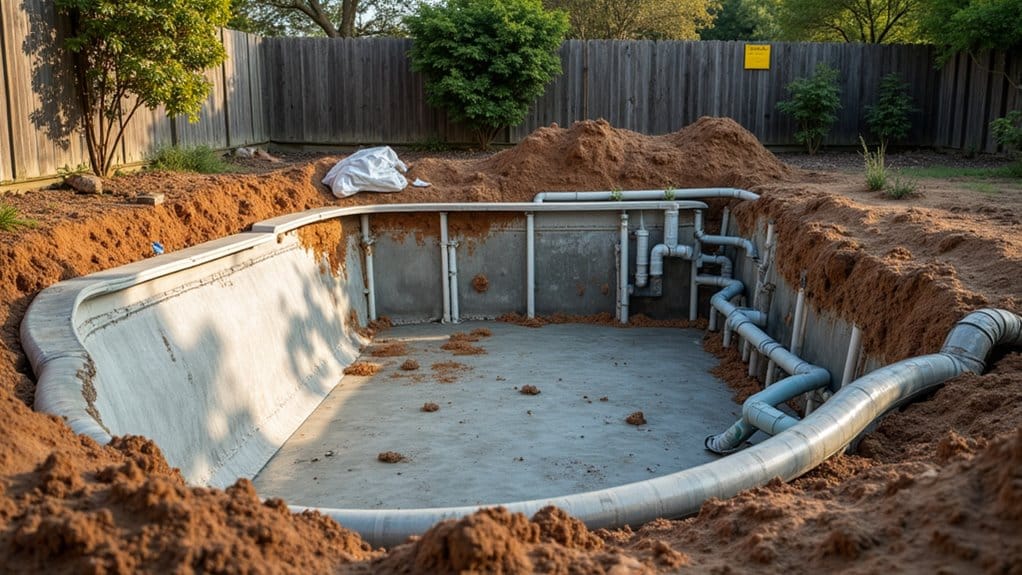
Sticker shock doesn’t end with the initial pool quote, as homeowners frequently encounter substantial hidden expenses during installation. While base pools start at $60,000, site preparation alone can greatly impact your budget. You’ll need to factor in dirt removal costs ($300-$900), potential retaining walls ($3,000-$35,000), and extensive ground leveling. A safety fence requirement will add approximately $1,100 to your total project cost. If removal becomes necessary in the future, expect to pay full removal costs between $10,000-$15,000 for proper demolition.
System upgrades further escalate expenses, with automatic pool covers ranging from $12,000-$22,000 and heating systems adding $4,000-$7,000. Choosing concrete pools requires extensive maintenance costs that can exceed $20,000 over time for resurfacing. Regional cost variances and seasonal pricing factors also play pivotal roles, as labor rates fluctuate by location and peak installation times. Don’t forget essential extras like decking materials, which vary dramatically in cost from basic concrete at $10-15 per square foot to premium pavers exceeding $50 per square foot.
Material Selection and Labor Requirements
When selecting pool materials, you’ll need to weigh the significant cost variations between vinyl ($130-$240/sq ft), fiberglass ($175-$330/sq ft), and concrete ($200-$350/sq ft) against their durability and installation requirements. A concrete pool will cost up to $120,000 for a complete professional installation.
Each material demands specific expertise and equipment: vinyl liners require precise fitting techniques, fiberglass shells need crane rentals for placement, and concrete pools involve complex mixing and curing processes. DIY concrete pools require extensive formwork and substantial equipment assistance for proper construction. Customized design complexity can dramatically increase both material and supplemental costs, particularly with concrete installations requiring specialized formwork. You’ll also face waste disposal logistics during the 4-8 week excavation period, adding $2,000 weekly for equipment rentals. Vinyl liners will need replacement every 7-8 years, making their long-term costs higher than initially apparent. If you’re considering a saltwater system, factor in $8,000-$10,000 for polymer walls to prevent corrosion, plus additional costs for professional stabilization techniques.
Installation Pitfalls and Structural Concerns
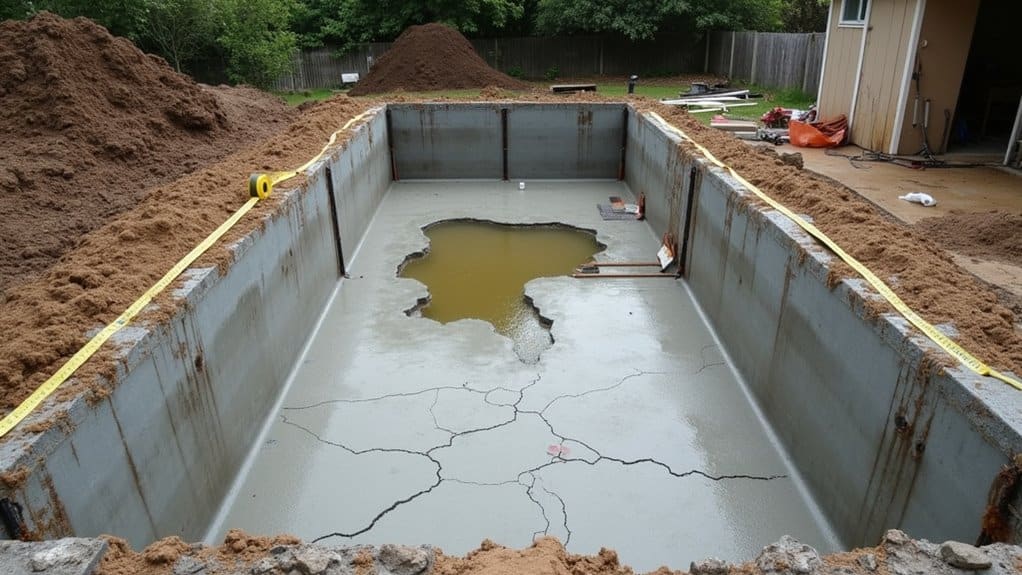
Installing a DIY pool presents numerous structural risks that can quickly derail your project and inflate costs beyond initial estimates. The combination of technical complexity and precision requirements makes DIY installations particularly vulnerable to costly mistakes, especially during critical phases like crane rigging and backfill operations. Homeowners attempting DIY installations often face severe issues with electrical safety permits, creating dangerous conditions that require immediate professional remediation. Installing pools without proper security measures can lead to malformed data being submitted during permit applications, resulting in lengthy approval delays. While DIY projects may seem cost-effective initially, the time investment required can stretch the installation process over many months.
DIY pool installations carry major structural risks, requiring precise technical expertise to avoid costly mistakes during critical construction phases.
- Fiberglass shells can develop spider cracks from improper leveling during crane rigging failures, requiring expensive repairs or complete replacement
- Backfill pressure imbalances often cause shell deformation when not properly monitored and adjusted during installation
- Unexpected ground conditions like high water tables or rock formations can force major excavation changes
- Incorrect coping installation decisions between cantilever and paver systems lead to functionality issues and premature deterioration
These structural concerns often transform seemingly straightforward DIY projects into complex engineering challenges requiring professional intervention.
Long-Term Maintenance Challenges
Beyond the initial structural considerations, long-term maintenance demands extensive financial planning and consistent attention to detail. You’ll need to budget $3,000-$6,000 annually for thorough upkeep, with chemical imbalance monitoring requiring weekly attention to prevent costly equipment deterioration. Hot climate pool owners can expect chemical costs doubling during summer months. If security issues arise with your pool service website access, look for the Cloudflare Ray ID at the bottom of the page to report problems.
Your pool’s surface material substantially impacts maintenance costs. Concrete pools demand the highest chemical input ($450-$1,200 yearly) and require acid washing every 2-3 years. While fiberglass pools need fewer chemicals ($300-$550 annually), they’re susceptible to surface pitting. Vinyl liners fall between these extremes but need replacement every 5-10 years at $3,000-$5,000.
Don’t overlook energy expenses, as pumps and heaters can consume $800-$1,200 yearly in electricity. Variable-speed pumps offer savings but require higher initial investment. Many homeowners find that hiring a professional pool service adds approximately $1,400 annually to maintenance costs.
Property Value and Compliance Considerations
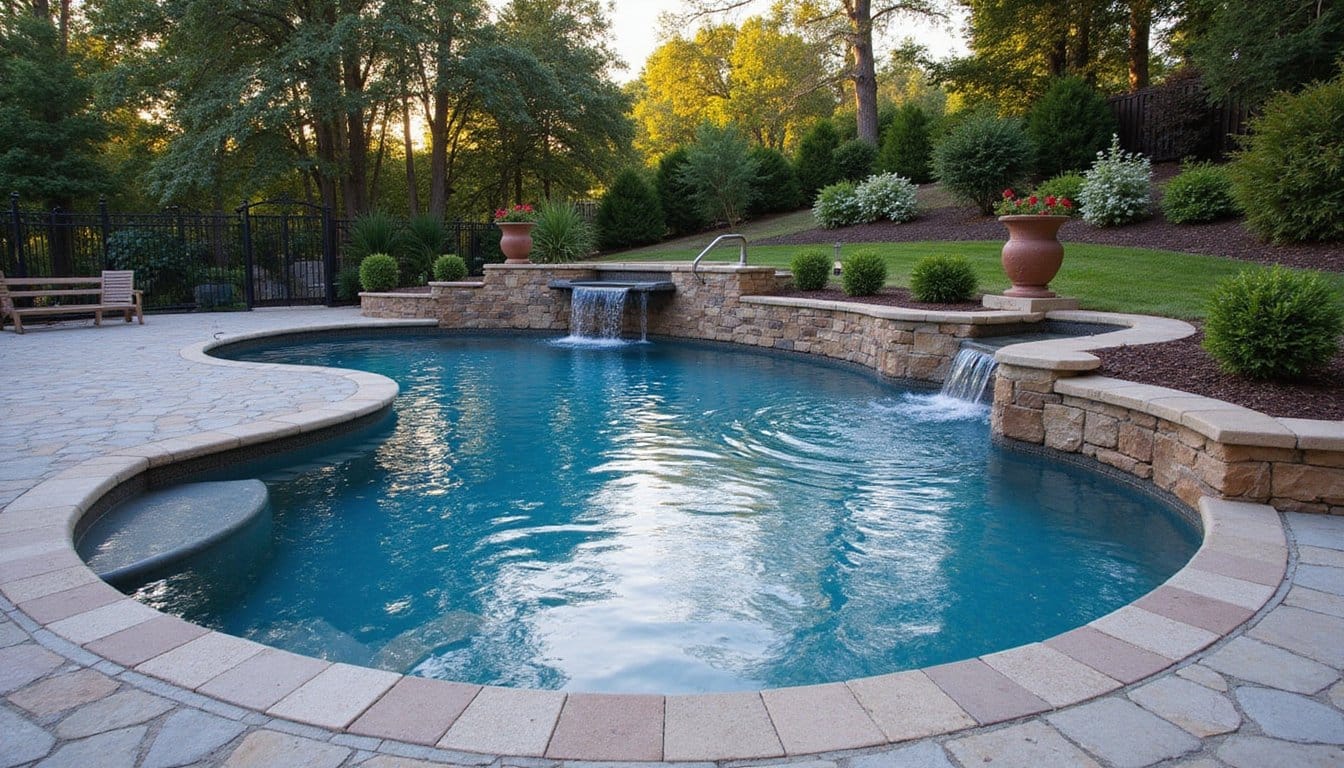
Anyone considering a backyard pool must weigh its impact on property value against strict compliance requirements. Regional market trends and neighborhood prestige substantially influence whether you’ll see positive returns, with warmer climates typically yielding 5-7% value increases. However, compliance costs can quickly erode potential gains.
Before proceeding with installation, evaluate these critical factors:
- ROI typically ranges 50-70% of initial costs, far below kitchen remodels that recoup 100-120%
- Mandatory permits, inspections, and safety features require considerable upfront investment
- Insurance premiums often increase, necessitating additional umbrella coverage
- Property taxes will rise with increased home value, offsetting potential gains
In colder regions or areas where pools aren’t common, your investment may actually decrease property value while increasing liability exposure. Luxury pool features like waterfalls and extensive landscaping can boost property values by up to 15% in upscale neighborhoods. Proper maintenance and upkeep are crucial factors, as neglected pools can significantly detract from a home’s market appeal. Professional weekly cleaning services ranging from annual costs of $6,000-18,000 are essential for maintaining the pool’s value-adding potential.
Frequently Asked Questions
What Happens if Underground Utilities Are Discovered During DIY Pool Excavation?
If you unearth underground utilities during excavation, you’ll face immediate project delays and significant relocation costs. You must halt work and contact utility companies for inspections. Underground utility relocation costs can range from $15-$25 per linear foot for gas lines to $20,000 for septic systems. You’ll need permits, specialized equipment rentals, and mandatory safety evaluations. Proceeding without proper approvals risks fines, service disruption penalties, and insurance coverage issues.
Can DIY Pool Builders Get the Same Wholesale Prices as Professional Contractors?
You won’t be able to access the same wholesale pricing as professional contractors. While you can search for material deals, you’ll typically pay 30-40% more for supplies since suppliers reserve their best bulk material costs for established business relationships. You’ll also face higher minimum order requirements and restricted access to certain pool-specific components. Even if you save on site labor expenses, the higher material costs often offset these savings considerably.
How Does Pool Shape Affect the Complexity and Feasibility of DIY Installation?
Your pool’s shape directly impacts installation complexity. Non-rectangular pool dimensions require precise engineering, specialized framing, and expert concrete application techniques that most DIY builders haven’t mastered. You’ll face challenges with terrain integration, as irregular shapes demand careful consideration of slopes, drainage, and structural support. Custom curves and corners also complicate liner fitting, plumbing routes, and equipment placement, making professional expertise increasingly valuable as design complexity grows.
What Insurance Considerations Should DIY Pool Builders Know Before Starting Construction?
Before starting your DIY pool construction, you’ll need to verify your liability coverage meets increased requirements, typically $500,000 minimum. You must comply with strict safety regulations, including installing a 4-foot lockable fence and proper lighting. Guarantee you obtain necessary permits, as unpermitted work can void your insurance. You’ll also want to confirm that your policy covers permanently installed pools under “other structures” coverage, which is usually 10% of your dwelling coverage.
Are There Specific Weather Conditions That Could Compromise DIY Pool Installation?
Yes, you’ll face significant weather challenges during DIY pool installation. Seasonal temperature fluctuations can affect concrete curing times and vinyl liner flexibility, while rain and moisture create soil composition concerns that may destabilize your excavation. You’ll need to monitor ground conditions closely, as frozen soil makes digging impossible, and extreme heat can warp materials. Wind can also disrupt essential installation steps and extend your project timeline considerably.