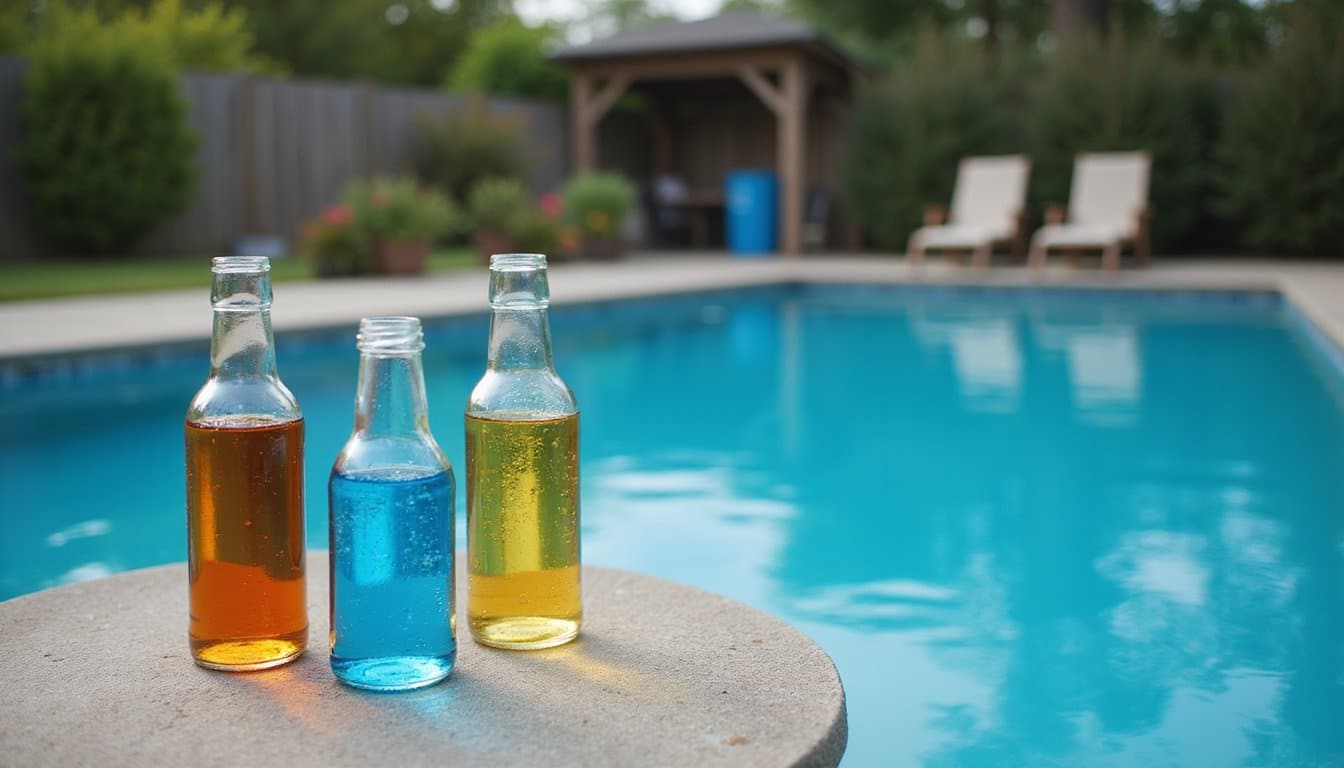
To maintain year-round chemical balance in your pool, you’ll need to regularly test and adjust key parameters: pH (7.4-7.6), total alkalinity (80-120 ppm), calcium hardness (200-400 ppm), and free chlorine (2.0-4.0 ppm). Test water chemistry weekly, increasing frequency during heavy use periods or after weather events. Adjust your chemical treatment strategy seasonally, accounting for UV exposure in summer and reduced sanitizer needs in winter. Understanding the complex relationships between these parameters will help you achieve ideal water quality. Additionally, when preparing for colder months, focus on winterizing pool chemical essentials to ensure your water remains balanced even when the pool is not in use. This includes adding a winter algaecide and properly adjusting your chlorine levels to prevent algae growth.
Essential Chemical Parameters for Pool Health
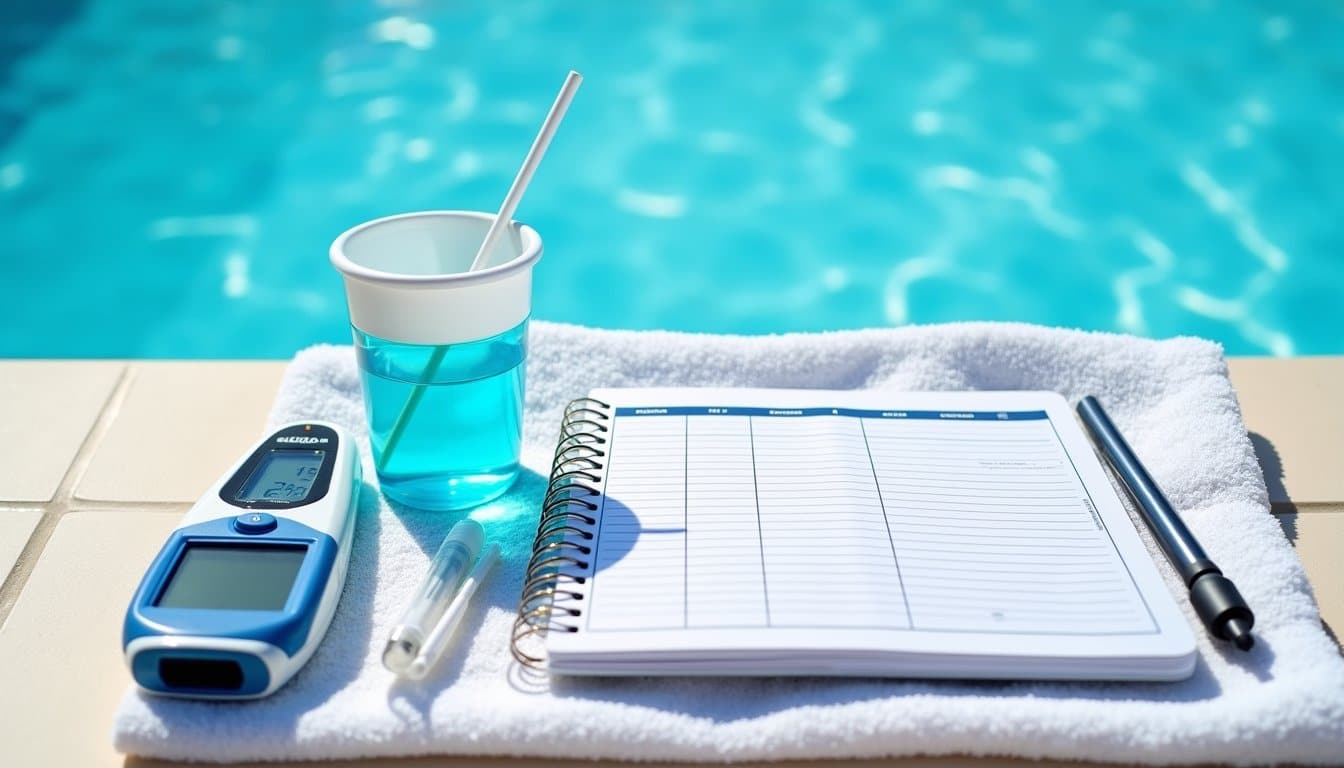
Maintaining proper chemical balance in your pool requires monitoring five critical parameters that work together synergistically. These parameters include pH (7.4-7.6), total alkalinity (80-120 ppm), calcium hardness (200-400 ppm), cyanuric acid (30-50 ppm), and free chlorine (2.0-4.0 ppm). Each parameter influences chemical interactions within your pool water, affecting both sanitization effectiveness and equipment longevity. Suntan oils can significantly reduce chlorine effectiveness, requiring more frequent testing and adjustments. Regular testing with digital colorimeters provides the most accurate readings for maintaining proper chemical levels.
Seasonal effects can greatly impact these levels, requiring vigilant testing schedules. You’ll need to test pH weekly, monitor alkalinity to prevent pH fluctuations, check calcium hardness quarterly, and adjust cyanuric acid based on outdoor exposure. When pH levels rise above 7.6, adding pH Reducer will help restore balance. Your free chlorine requirements will vary depending on CYA levels, with proper testing ensuring peak sanitization. Understanding these relationships helps maintain clear, safe water while protecting your pool’s surfaces and equipment. It’s essential to conduct a thorough assessment of all chemical levels as part of preparing your pool for summer. Regular maintenance not only enhances water quality but also prolongs the life of your pool assets.
Seasonal Changes and Chemical Adjustments
As temperatures and weather patterns shift throughout the year, you’ll need to adjust your pool’s chemical balance to match each season’s unique challenges. The rate of chemical reactions changes considerably with temperature, affecting everything from sanitizer effectiveness to pH stability. Pollen and insects tend to accumulate more during spring months, requiring additional chemical treatments. Regular testing with kits provides detailed and accurate readings to ensure proper chemical adjustments throughout changing seasons. Using Pool Maxx products specifically designed for each season helps optimize water chemistry maintenance. One crucial aspect of seasonal maintenance is preparing your pool for winter. This process includes properly balancing chemicals, lowering water levels, and ensuring that equipment is winterized to prevent damage from freezing temperatures.
Make these key seasonal adjustments to maintain ideal water chemistry:
Seasonal adjustments to pool chemistry are essential for maintaining safe, balanced water throughout the changing temperatures and conditions of the year.
- Summer: Increase chlorine levels and testing frequency due to UV exposure and higher bather loads
- Winter: Reduce sanitizer levels while maintaining calcium hardness between 200-400 ppm
- Spring: Rebalance total alkalinity first, then pH, targeting 7.2-7.6 during pool startup
- Fall: Adjust chemical levels for winterizing (pH 7.2-7.6, TA 80-120 ppm)
- Year-round: Monitor calcium hardness to prevent scaling and corrosion regardless of season
Always test more frequently during active seasons and maintain proper filtration cycles to support your chemical program.
Daily Testing and Monitoring Protocols
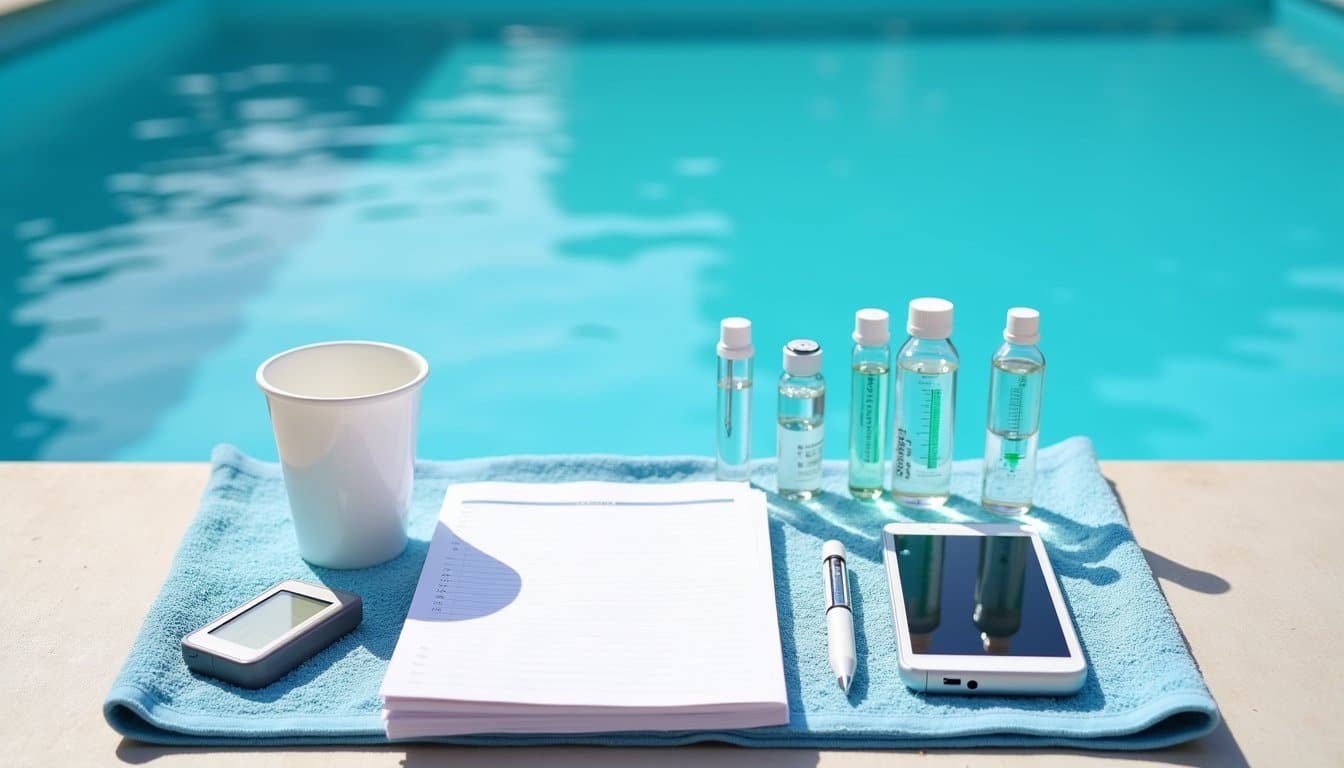
To conduct accurate pool testing, you’ll need a reliable test kit containing DPD tablets for free chlorine measurement, phenol red for pH testing, and specific reagents for alkalinity and calcium hardness analysis. The ideal testing window falls between 10 AM and 4 PM, when your pool’s chemical levels have stabilized from overnight fluctuations and recent swimmer activity. Your basic testing arsenal should also include a digital thermometer, testing strips for quick checks, and a logbook to track results and identify chemical trends over time. For enhanced security, consider using Cloudflare protection services to safeguard any digital pool monitoring systems you may utilize. Testing more frequently during heavy pool usage helps maintain optimal water chemistry and swimmer safety. Following local regulations, you may need to perform testing as often as once per hour depending on your facility’s requirements.
Essential Testing Equipment Needed
Proper pool maintenance requires three essential categories of testing equipment: drop-based kits, test strips, and electronic meters. Each testing equipment type serves a specific purpose in maintaining ideal water chemistry.
- Drop-based kits provide precise measurements through chemical reagents and color-matching
- Test strips offer quick results for basic parameters like chlorine, pH, and alkalinity
- Photometric testers utilize light-scattering technology for advanced analysis
- Automated systems with sealed reagent cartridges test multiple parameters simultaneously
- Digital meters deliver real-time readings with minimal human error
Your essential tools should include at least one reliable testing method from each category. For thorough testing, consider investing in a NSF/ANSI-50 certified system or a trusted brand like Taylor K-2006. Popular options like AquaChek Yellow test strips provide accurate readings for free chlorine, total alkalinity, cyanuric acid and pH levels. The Digital Alkalinity Checker provides fast, accurate readings with simple one-button operation for easier testing routines. Remember to maintain your equipment through regular calibration and proper storage to guarantee accurate readings. Storing reagents in a cool, dry place away from direct sunlight will help extend their shelf life and ensure accurate test results.
Best Testing Time Windows
Once you’ve acquired the right testing equipment, establishing a systematic testing schedule becomes the foundation of effective pool maintenance. The ideal timing for your daily tests should be early morning or late afternoon to capture accurate readings, particularly for pH and chlorine levels. You’ll need to adjust your testing frequency based on usage patterns and seasonal factors. Liquid drop tests provide more accurate results for precise chemical balance monitoring.
During peak season, conduct pH and chlorine tests 2-3 times weekly, with increased monitoring after heavy use or weather events. Poolwerx offers free testing at their local stores for comprehensive water analysis. For saltwater pools, check cyanuric acid monthly and perform total alkalinity tests weekly. Red eyes and irritation can result from poorly maintained chemical levels, making regular testing crucial for swimmer safety. When temperatures drop below 65°F, you can reduce testing to every two weeks. Always test 24 hours after adding chemicals to verify proper balance, and maintain hourly checks during severe water quality issues until conditions stabilize.
Advanced Water Balance Techniques
Maintaining ideal pool chemistry requires mastering advanced water balance techniques that extend beyond basic parameter monitoring. Understanding chemical interactions and achieving water enhancement involves coordinated management of multiple parameters simultaneously.
- Synchronize your calcium hardness (220-350 ppm) adjustments with pH levels to prevent scaling and equipment damage
- Install automated dosing systems with pH/chlorine sensors to maintain precise chemical balance 24/7
- Implement cloud-based monitoring for real-time chemical adjustments from your smartphone
- Rotate between different sanitizer types seasonally to prevent bacterial resistance
- Pre-treat your source water before adding it to the pool to minimize chemical demands
Regular test strip monitoring helps maintain proper chemical levels throughout the year, ensuring consistent water quality. You’ll need to coordinate TDS management with alkalinity adjustments, especially in high-traffic pools. Monitor orthophosphate levels while maintaining cyanuric acid between 30-50 ppm for ideal chlorine stabilization and sanitizer efficiency.
Understanding Ph and Alkalinity Relationships
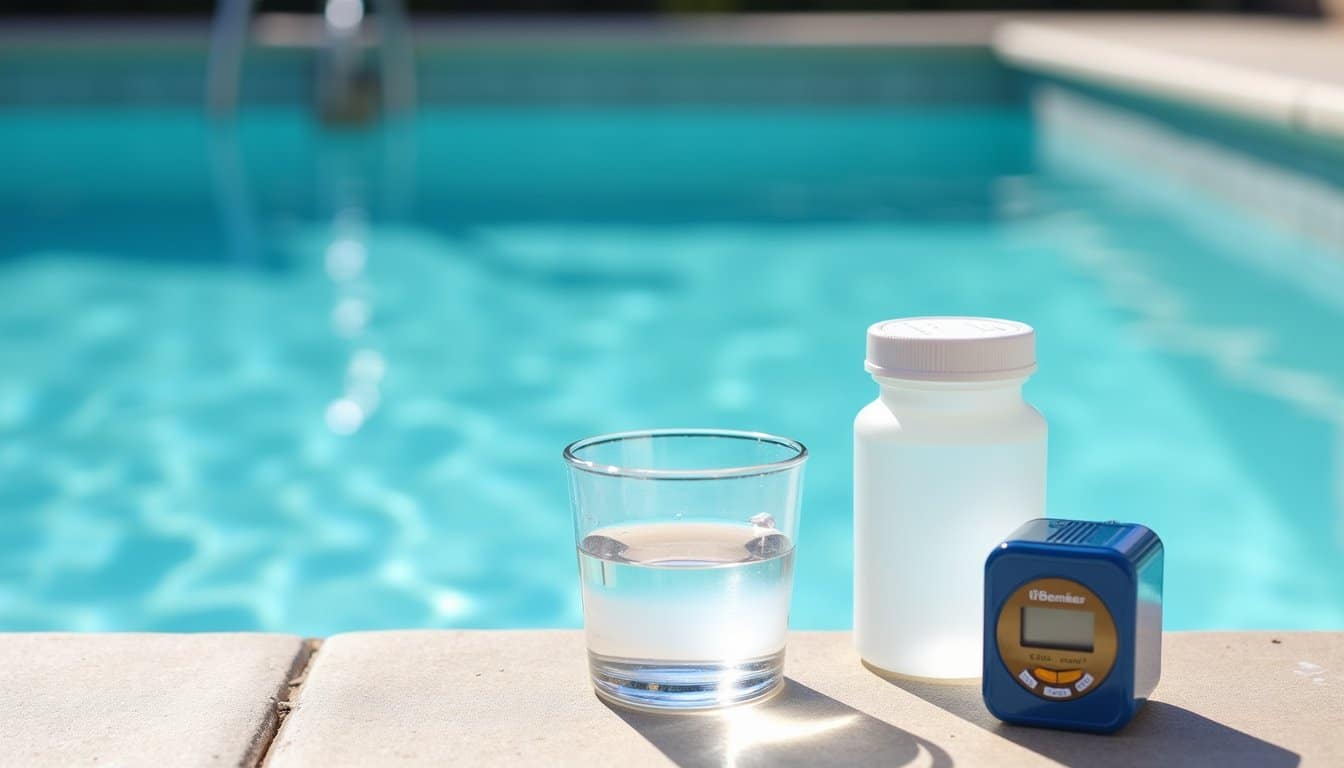
While pH and alkalinity operate as distinct chemical parameters, they’re inextricably linked through carbonate equilibrium reactions that determine your pool’s overall chemical stability. Your pH measurement techniques should focus on maintaining levels between 7.2-7.8, as values outside this range considerably impact sanitizer efficiency and swimmer comfort.
Your alkalinity testing methods will reveal the buffering capacity of your water, which should stay within 80-120 ppm. When you’re testing both parameters, remember that high alkalinity can drive up pH, while low alkalinity leaves your pool vulnerable to rapid pH fluctuations. You’ll need to adjust these levels carefully, as adding acid reduces both pH and alkalinity, while sodium bicarbonate increases them. Regular weekly testing guarantees you maintain ideal chemical balance for your pool’s longevity.
Sanitizer Management Strategies
Successful sanitizer management depends on implementing an all-encompassing strategy that integrates proper circulation, accurate testing, and precise chemical dosing. To maintain ideal sanitizer levels, you’ll need to adapt your approach based on environmental conditions, bather load, and seasonal changes while following strict dosage methods for your chosen sanitizer types.
Essential sanitizer management practices include:
- Testing water parameters daily using calibrated equipment
- Adjusting pH levels to 7.2-7.8 before adding sanitizers
- Distributing chemicals around the pool’s perimeter for even coverage
- Maintaining proper filtration to remove sanitizer-consuming contaminants
- Following volume-based calculations for precise chemical dosing
Remember to monitor your pool’s sanitizer levels more frequently during periods of heavy use and adjust your treatment schedule accordingly. You’ll also need to store chemicals separately and follow proper dilution protocols to guarantee safe, effective application.
Common Chemical Imbalances and Solutions
Chemical imbalances in pool water can quickly escalate from minor inconveniences to serious maintenance challenges if left unchecked. Understanding common chemical reactions and maintaining proper water clarity requires monitoring key parameters and implementing timely solutions.
| Imbalance | Symptoms | Solution |
|---|---|---|
| Chlorine Issues | Strong odor, red eyes, cloudy water | Shock pool, adjust CYA (30-50 ppm) |
| pH Problems | Scale formation, equipment corrosion | Add muriatic acid or soda ash |
| Algae Growth | Slimy surfaces, reduced sanitizer efficacy | Increase chlorine to 20-30 ppm |
You’ll need to test regularly for free chlorine (2-4 ppm), pH (7.2-7.6), and total alkalinity (80-100 ppm). Watch for chloramine buildup, which often masquerades as a chlorine smell but actually indicates poor sanitation. When chemical reactions become unbalanced, address the issue immediately to prevent compound problems.
Preventive Maintenance Schedule
Regular preventive maintenance forms the cornerstone of effective pool care, requiring a systematic approach across five key areas: chemical testing, essential weekly tasks, pump management, cleaning protocols, and automated solutions.
A well-structured pool maintenance routine tackles five essential domains, ensuring optimal water quality and equipment longevity through systematic care.
To maintain ideal water quality and equipment performance, implement these critical preventive cleaning and maintenance automation procedures:
- Test pH levels 2-3 times weekly, maintaining 7.4-7.8 range
- Clean skimmer and pump baskets every 2-3 days to prevent debris buildup
- Run your pool pump 8-12 hours daily, adjusting runtime seasonally
- Vacuum pool floor weekly using either manual or robotic methods
- Log all chemical tests and equipment adjustments in a monthly calendar
Equipment Impact on Chemical Balance
Your pool’s filtration system directly influences chemical stability through its ability to remove contaminants and disperse sanitizers effectively throughout the water. When your filter becomes clogged or operates inefficiently, it allows debris and organic matter to accumulate, which rapidly depletes chlorine levels and creates increased demand for chemicals. Your pump’s flow rate must maintain manufacturer-specified turnover rates to guarantee proper chemical distribution and maintain balanced water chemistry throughout all areas of the pool.
Filtration System Chemical Effects
While maintaining proper chemical balance requires attention to water chemistry, the filtration system plays an essential role in stabilizing pool chemicals and preventing imbalances. Your system’s filtration efficiency directly impacts contaminant removal, which affects sanitizer demand and chemical stability. Poor filtration creates challenges that can spiral into serious water quality issues.
Key effects of your filtration system on chemical balance:
- Reduces DBP formation by removing organic matter before it reacts with sanitizers
- Guarantees even distribution of chemicals throughout your pool water
- Prevents pH and alkalinity fluctuations by maintaining consistent water quality
- Controls TDS levels that could otherwise compromise sanitizer effectiveness
- Minimizes CYA buildup that can reduce chlorine’s ability to sanitize
Regular backwashing and maintenance of your filtration system will help maintain ideal chemical balance and reduce the need for chemical adjustments.
Pump Flow Rate Impacts
Building on the filtration system’s role in chemical balance, pump flow rate directly influences how chemicals distribute and function throughout your pool. Your pump efficiency determines how well sanitizers, pH adjusters, and other treatments reach every corner of your pool.
Flow optimization becomes critical for maintaining consistent chemical levels. When you’re running your pump at high flow rates, you’ll achieve better chemical mixing and reduce the risk of stagnant areas where algae can develop. However, you’ll need to balance this against lower flow rates that can improve filtration efficiency and reduce equipment wear.
You’ll want to monitor your pump’s performance carefully, as inadequate flow can create chemical stratification and pH gradients. This means you might need higher chemical doses to achieve the same sanitizing effect, potentially leading to increased maintenance costs.
Professional Testing and Record Keeping
Professional pool maintenance demands rigorous testing protocols and meticulous record keeping to maintain perfect water chemistry. You’ll need to master multiple testing methods and implement systematic documentation practices to guarantee accurate results.
Key professional testing and record keeping protocols include:
- Collecting water samples 12-18 inches below surface after running filtration for one hour
- Using titration methods for precise calcium hardness and alkalinity measurements
- Maintaining digital logs of pH, chlorine, and LSI values through pool care apps
- Calibrating testing equipment regularly to prevent measurement drift
- Documenting seasonal changes and bather load impacts on chemical levels
For maximum accuracy, you’ll want to use liquid test kits over strips, conduct weekly pH and chlorine checks, and store all testing reagents according to manufacturer guidelines. Share your detailed logs with pool technicians to receive customized chemical dosing recommendations.
Frequently Asked Questions
Can I Swim Immediately After Adding Pool Chemicals?
You shouldn’t swim immediately after adding pool chemicals, as proper chemical absorption is vital for pool safety. While mild additives like pH adjusters need 20-30 minutes, stronger treatments require longer waits. You’ll need to wait 24 hours after shocking, 4 hours for liquid chlorine, and 2-4 hours for calcium chloride. Always test water levels before re-entering and make certain the filtration system has completed at least one cycle.
How Do Saltwater Pools Affect My Skin Compared to Chlorine?
Your skin will experience notable benefits in saltwater pools compared to traditional chlorine pools. Saltwater benefits include reduced irritation, less dryness, and gentler effects on sensitive skin conditions like eczema. You’ll notice fewer chlorine drawbacks since saltwater systems maintain lower, more consistent chlorine levels that won’t disrupt your skin’s natural pH balance as severely. The salt concentration also provides therapeutic effects similar to ocean water, helping maintain your skin’s hydration.
Why Does My Pool Smell Strongly of Chlorine Sometimes?
That strong chlorine odor you’re smelling isn’t actually from too much chlorine – it’s from chloramines, which form when chlorine combines with sweat, urine, and other organic materials in your pool. These compounds, particularly trichloramine, create that intense smell. To address this, you’ll need to test your free chlorine levels and likely “shock” your pool to break down the chloramines. Regular maintenance and proper ventilation will help prevent these odors from developing.
What Happens if I Accidentally Add Too Much Stabilizer?
If you’ve added too much stabilizer, you’ll face several issues. High stabilizer levels reduce chlorine’s effectiveness in killing bacteria and algae, requiring higher chlorine doses to maintain sanitation. You’ll notice cloudy water and potential chemical overexposure symptoms like skin irritation or respiratory discomfort. To fix this, you’ll need to partially drain and refill your pool with fresh water, as stabilizer can’t be chemically removed once added.
Should I Adjust Chemicals Differently for Indoor Versus Outdoor Pools?
Yes, you’ll need to adjust chemicals differently for indoor versus outdoor pools. Indoor pools require higher free chlorine levels (3.0 ppm) and don’t need stabilizer (CYA), while outdoor pools need stabilizer to protect chlorine from UV degradation. You’ll also need to monitor TDS more closely in indoor pools due to less natural dilution. For outdoor pools, you’ll face more frequent chemical adjustments due to environmental factors like rain and debris.