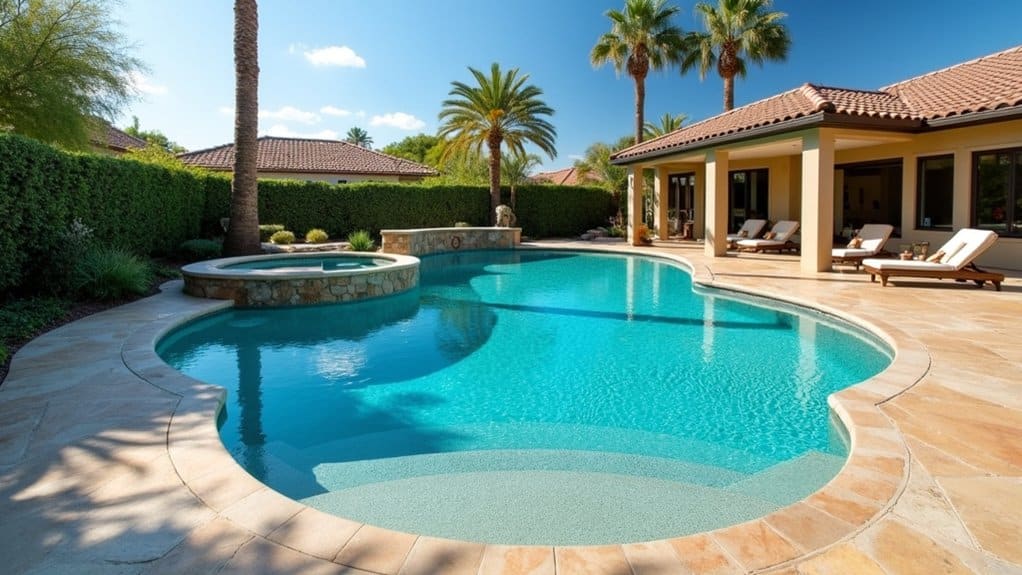
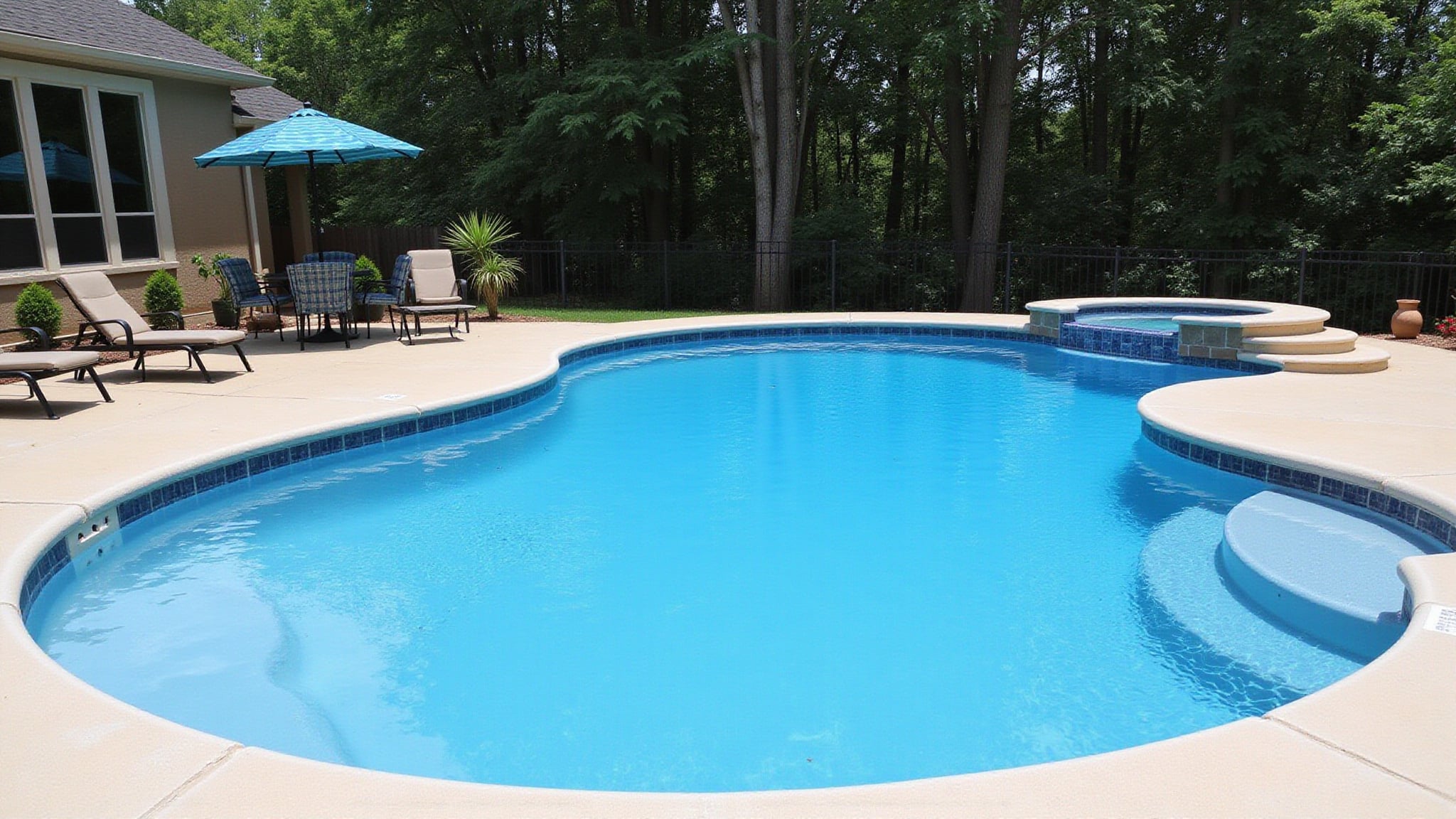
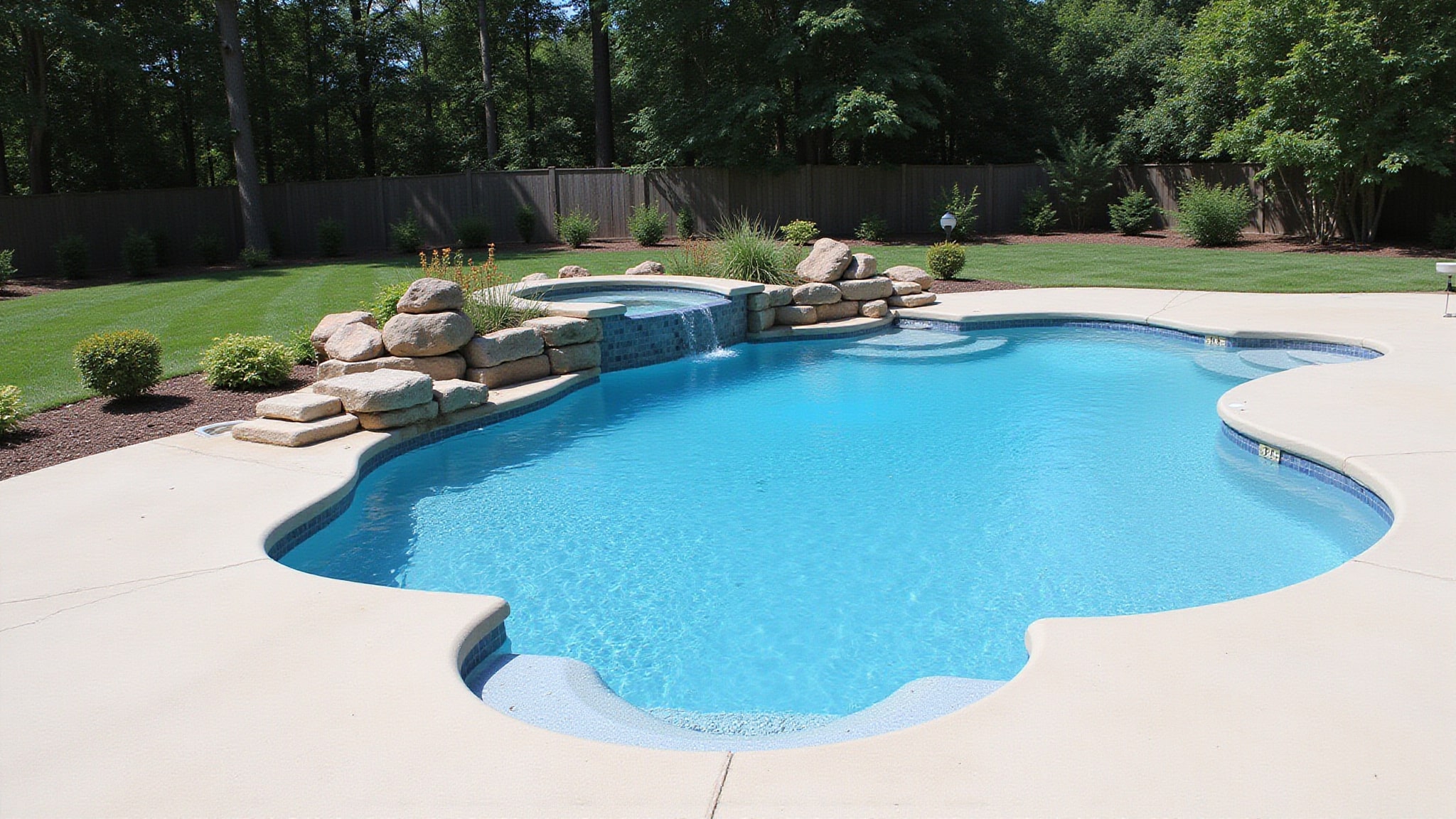
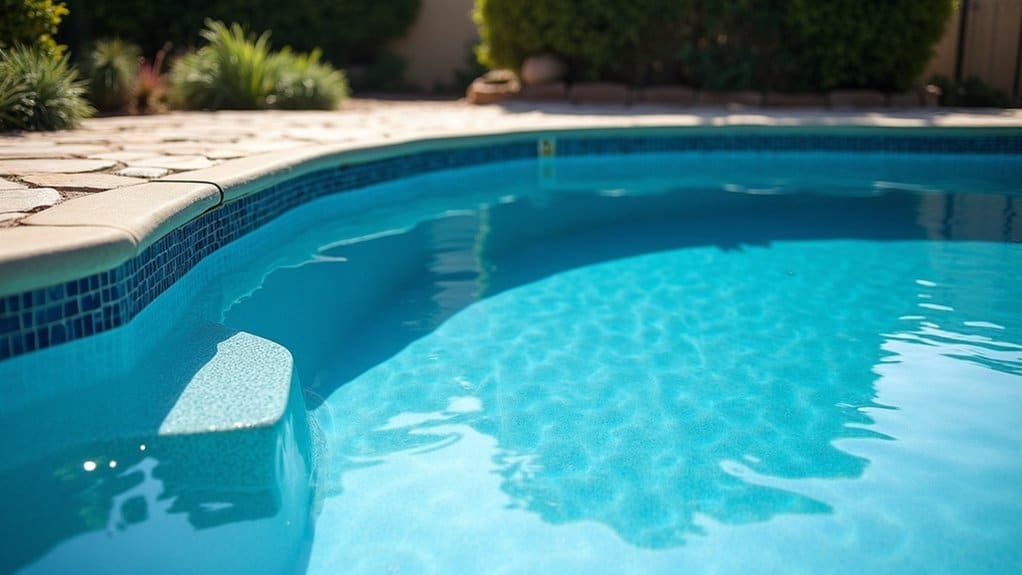
You’ll need professional-grade testing equipment to monitor water chemistry, including kits for chlorine, pH, and alkalinity levels. Stock essential repair materials like epoxy putty, bonding agents, and texture-matching tools for surface work. Don’t forget chemical-resistant safety gear, including HEPA masks and protective eyewear. Your supplies should include water balance management tools and cleaning equipment. Proper material selection and preparation will determine your project’s success.
Essential Testing Equipment for Water Chemistry
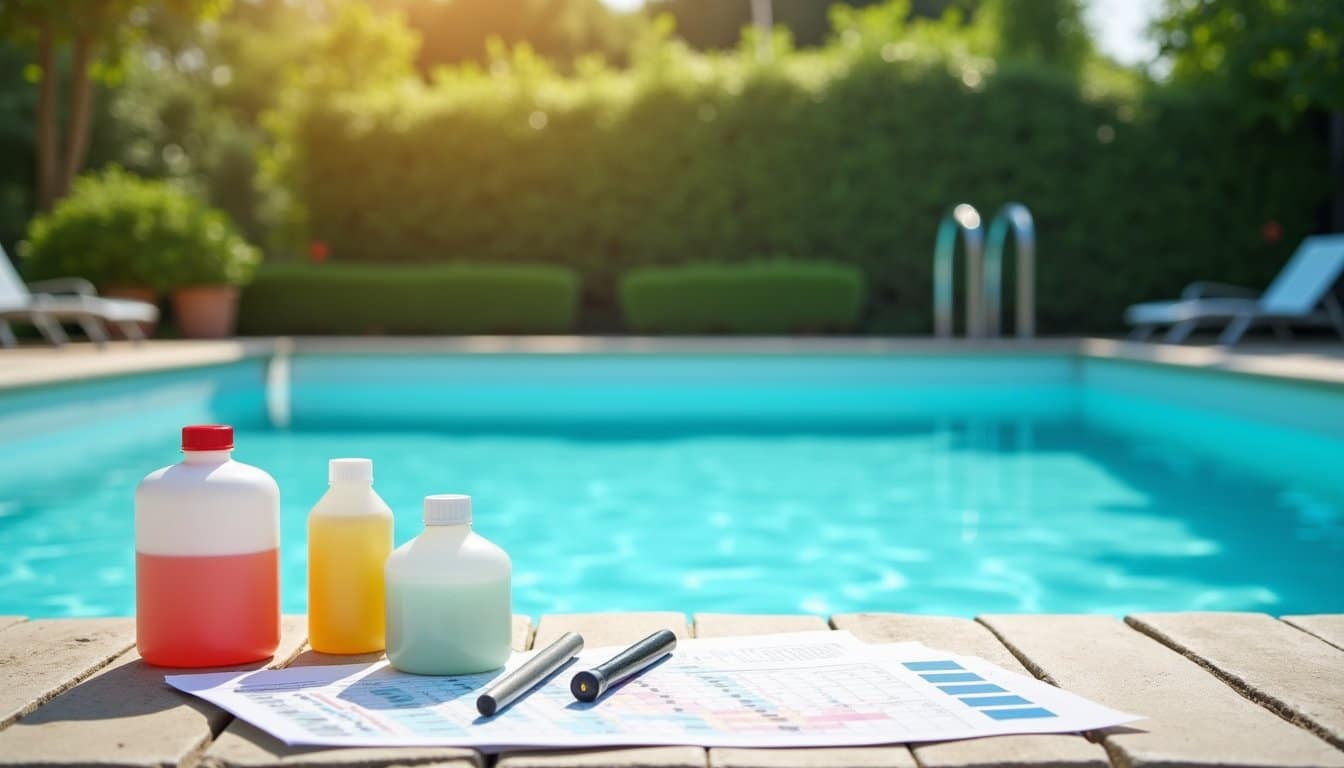
Five critical parameters must be monitored regularly to maintain proper pool water chemistry: free chlorine, pH, total alkalinity, calcium hardness, and cyanuric acid levels. You’ll need reliable water testing equipment to measure these parameters accurately, with options ranging from manual drop-based kits to automated digital systems. For enhanced security against malicious attacks, some pool testing equipment manufacturers employ online protection services.
For precise measurements, consider investing in a professional-grade testing kit like the Taylor K-2006, which uses chemical reagents for manual titrations. If you’re seeking efficiency, digital testers like the LaMotte WaterLink Spin Touch can complete a full panel of tests in under a minute. Using a SpeedStir device can significantly reduce testing time while improving accuracy. The Digital Alkalinity Checker provides fast, reliable alkalinity readings with simple one-button operation. Remember to store your chemical reagents properly and replace them annually or when they become cloudy. For specialized needs, such as saltwater pools or bromine systems, guarantee your testing equipment includes the appropriate parameters for your specific application.
Advanced Plaster Repair Materials and Tools
You’ll need specialized epoxy repair kits containing bonding agents, polymer-modified compounds, and color-matching components to guarantee durable repairs that seamlessly blend with existing plaster. Professional-grade texture matching tools like grout floats, putty knives, and grout sponges enable you to precisely replicate surrounding surface finishes during application. Your kit selection should account for the scope of repairs, with sizes ranging from 1.5lb containers for small cracks to 50lb packages for extensive resurfacing projects. The incorporation of acrylic-polymer latex creates stronger, more resilient patches compared to traditional repair formulations. Considering the pool’s history as a koi pond habitat, extra attention must be paid to thoroughly cleaning any organic residue before applying repair materials. If you encounter any online security blocks while researching products, be sure to email the vendor for immediate access restoration and product information.
Epoxy Repair Kit Components
Professional pool plaster repair requires a thorough epoxy repair kit containing both core materials and specialized application tools. You’ll need two-part epoxy putty for hand-moldable repairs and multifunctional epoxy resins like X33 AquaBond for sealing leaks and anchoring hardware. Essential bonding agents include liquid cement primers and acrylic additives to enhance adhesion and modify workability. A reliable choice is the Epoxybond Pool Putty that allows for effective underwater repairs without draining the pool. For optimal bonding strength, include cement bonder liquid in your repair mixture to ensure maximum adhesion to existing surfaces. Working in small batches is crucial since epoxy materials set quickly and can become difficult to manage.
Your kit should include precision application tools: syringes with applicator films for controlled epoxy placement, putty knives for smooth feathering, and dovetailing tools to create undercut edges. Don’t forget mixing sticks for blending compounds and grout sponges for surface preparation. When working with epoxy materials, you’ll need to take into account curing times, which typically range from 2-4 minutes for rapid-set products to 3-4 hours for complete water resistance.
Surface Texture Matching Tools
When matching pool plaster textures during repairs, specialized tools enable craftsmen to replicate the original surface characteristics with precision. You’ll need rendering tools and finishing floats as primary texture replication techniques, while slick trowels help achieve glossy finishes that match surrounding areas. Proper mixing of patch materials to a peanut butter consistency is crucial for successful texture matching.
For ideal surface finishing methods, you’ll want to use angle grinders to polish rough patches and tamping tools to compact repair materials to the correct density. Achieving optimal results requires the use of variable speed grinders for controlled surface smoothing. Don’t forget to utilize sponges and brushes for blending repair edges seamlessly with existing plaster. Your texture matching arsenal should also include specialized spray applicators for uniform thin-layer distribution across larger areas. To guarantee accuracy, keep color-checking samples on hand and use surface profiling tools like UV lights or gauges to verify texture uniformity across all repairs.
Key Chemical Supplies for Surface Treatment
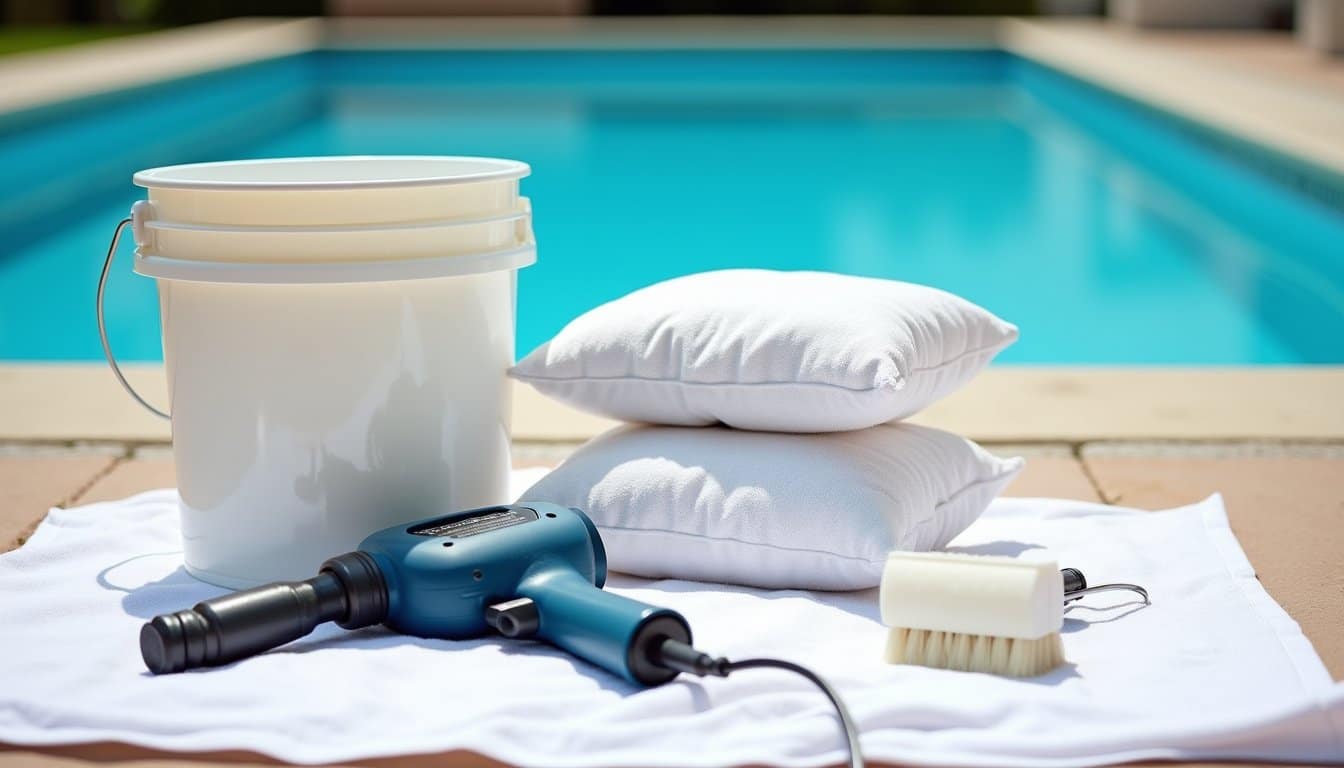
When selecting chemical supplies for pool plaster treatment, you’ll need an all-encompassing pH balancing kit that includes muriatic acid for lowering pH and sodium bicarbonate for raising alkalinity to the critical 70 ppm threshold. Your mineral treatment solutions must contain calcium hardness increasers to achieve the minimum 150 ppm requirement, while maintaining proper ratios according to the Langelier Saturation Index (-0.3 to +0.5). Pre-dilution of chemicals is essential before adding them to the pool to ensure even distribution and prevent surface damage. Regular testing of water parameters helps identify and correct corrosive conditions before they cause etching damage. You’ll also require sequestering agents to prevent metal staining and scaling by binding minerals after hardness stabilization, ensuring long-term plaster protection. Daily brushing during the initial start-up phase helps prevent staining and promotes even distribution of chemicals across the surface.
Ph Balancing Products Required
To maintain ideal pool plaster conditions, you’ll need specific pH balancing products that protect both the surface and equipment while ensuring swimmer comfort. Start with HTH Pool Care pH Up for raising levels when they drop below 7.0, as low pH can severely damage plaster surfaces and corrode equipment. Using high-quality test kits ensures you get precise measurements before adding any chemicals. Regularly monitoring and adjusting your pool’s pH levels is crucial to prevent the need for extensive maintenance or pool surface refinishing steps later on. If you notice signs of wear or discoloration, consider consulting a professional for a thorough evaluation. Effective postplaster care strategies help extend your pool surface’s life. Shock the water regularly, brush the walls and floor, and monitor pH to keep your swimming environment pristine.
Incorporating these chemical treatments becomes especially critical since pH above 7.8 promotes scale formation. Incorporate pH adjustment techniques that include weekly monitoring and gradual corrections using plaster-friendly formulas like Clorox Pool&Spa 2-in-1 Perfect Balance. You’ll want to pair these with alkalinity stabilizers such as HTH Alkalinity Up to maintain levels between 80-120 ppm, which helps buffer pH fluctuations. When applying these products, always calculate dosages based on your pool’s volume and current test readings. For best results, address alkalinity issues before making pH adjustments, especially with newly plastered pools.
Essential Mineral Treatment Solutions
Beyond pH balance, effective pool plaster maintenance requires thorough mineral treatment solutions that protect and enhance your surface investment. The strategic use of mineral blend benefits, combining silver, copper, and zinc additives, creates a complete defense system against pathogens and algae formation. Regular use of pool structural treatment chemicals helps seal microfractures and extend the life of your plaster surface. Integrating these treatments into your routine keeps the water cleaner, enhances safety, and preserves your pool’s appearance.
You’ll find silver sanitizer efficacy particularly essential, as it provides persistent antibacterial protection while working synergistically with copper algaecides to prevent bloom infestations. Incorporate MicroGlass™ nanotechnology to strengthen your plaster’s internal structure, while limestone components help stabilize pH levels and reduce harmful chlorine interactions. When you’re managing calcium levels, focus on converting soft calcium into stable compounds using specialized treatments. This approach prevents etching and extends your plaster’s lifespan by stopping mineral leaching and reinforcing the surface against thermal expansion.
Must-Have Brushes and Cleaning Equipment
Selecting the right brushes and cleaning equipment forms the foundation of effective pool plaster maintenance. You’ll need a combination of stainless steel brushes specifically designed for plaster surfaces and telescopic poles that extend up to 15 feet for complete coverage. When choosing pool brush types and cleaning equipment, focus on durability and functionality to guarantee efficient maintenance routines.
- Choose stainless steel brushes with varied bristle lengths for ideal plaster surface contact
- Select poles with secure cam locks to prevent slippage during vigorous brushing
- Install wall-mounted storage solutions to maintain equipment integrity
- Invest in both manual vacuum heads and automatic cleaners for thorough debris removal
- Implement quick-release attachment systems for efficient tool changes during maintenance
Remember to replace your brushes every 1-2 years and maintain proper sanitization protocols to prevent contamination of your cleaning equipment.
Water Balance Management Tools
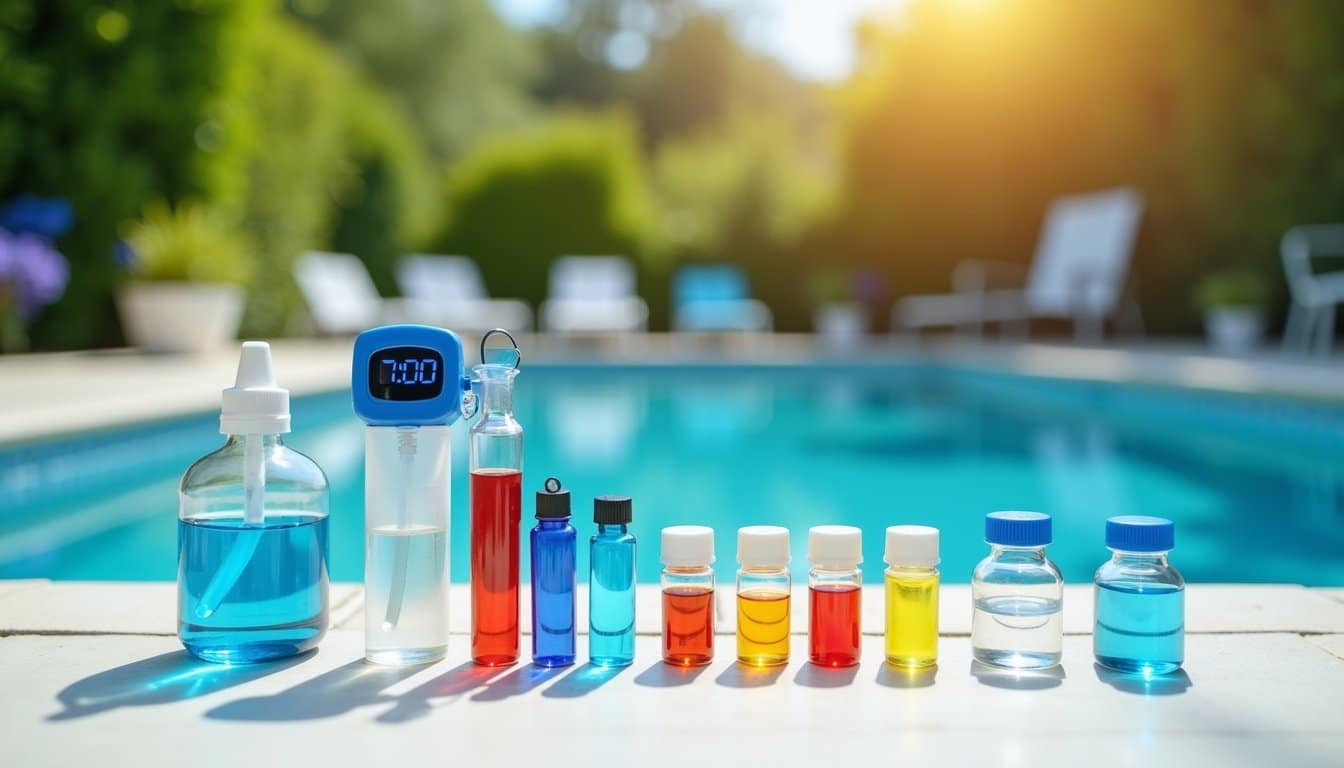
While maintaining proper water chemistry requires dedication, having the right water balance management tools is essential for protecting your pool’s plaster finish. You’ll need thorough water testing kits that measure pH, total alkalinity, calcium hardness, and stabilizer levels to calculate the Langelier Saturation Index (LSI). Keep your LSI between -0.3 and +0.5 to prevent plaster damage.
For chemical adjustments, you’ll want precise measurement tools and automated monitoring systems like WaterGuru SENSE to track real-time changes. Stock Balance Complete® or Balance PAK® 100 for alkalinity control, along with muriatic acid and sodium bicarbonate for pH adjustments. Don’t forget sequestering agents to prevent metal staining during startup. Using LSI calculation tools and adjustment charts will help you maintain ideal water chemistry and extend your plaster’s lifespan.
Surface Finishing and Color Matching Products
To achieve professional pool plaster finishes, you’ll need to choose from several surface finishing material categories and color-matching products. Today’s options offer extensive color customization capabilities and texture variations to match specific design requirements. Select materials based on your desired aesthetic, from smooth quartz applications to reflective glass bead finishes.
Modern pool finishes combine innovative materials and customizable designs to create stunning surfaces that perfectly match your vision and specifications.
- Quartz-based plasters deliver non-abrasive surfaces with 70+ fade-resistant color options
- Pebble aggregates provide natural-looking finishes with enhanced slip resistance
- Glass bead systems create enhanced water clarity through light refraction
- Polished plaster applications achieve high-gloss, contemporary appearances
- Engineered aggregate blends incorporate specialty materials like mother-of-pearl for unique effects
Consider manufacturer warranties, application methods, and environmental factors when selecting your finishing products. Premium lines now include eco-friendly options using recycled materials and low-VOC formulations.
Professional-Grade Startup Materials
Professional pool plaster startup requires an extensive set of chemical balancing solutions, metal control products, and scaling prevention agents to secure proper curing and long-term surface integrity. You’ll need startup chemical innovations like LSI management tools and calcium hardness adjusters to maintain ideal water chemistry between 200-400 ppm.
Professional application techniques demand precision testing kits and specialized programs like Orenda’s Calcium Startup for high-calcium balancing. You’ll want to utilize sequestering agents and metal-removing media to prevent staining, while incorporating scale-reducing compounds for equipment protection. Don’t forget to implement proper dosing methods with accurate applicators and follow NPC Start-up Procedure manuals for standardized care. Track your progress using water parameter log templates and guarantee compliance with material compatibility guides for your specific finish type.
Safety Equipment and Protective Gear
Three essential categories of protective equipment form the foundation of safe pool plastering work: respiratory protection, skin barriers, and eye safety gear. You’ll need proper PPE compliance to guarantee worker safety during mixing, application, and finishing processes. Select HEPA-filtered masks for respiratory safety, chemical-resistant gloves and coveralls for skin protection, and wrap-around goggles for eye protection during all plastering operations.
Proper protective equipment including respiratory masks, skin barriers, and eye protection safeguards workers throughout the pool plastering process.
- Replace disposable respirators when breathing resistance increases
- Use heavy-duty gloves to shield hands from abrasive materials
- Confirm proper fit testing of all respiratory equipment
- Select polycarbonate goggles with anti-fog coating
- Store contaminated gear in dedicated lockers to prevent cross-contamination
Maintain your safety equipment’s integrity through regular inspections and proper storage. Follow PHTA-12 standards and local safety codes while conducting thorough hazard assessments before beginning work.
Frequently Asked Questions
How Long Should I Wait Before Allowing Pets in a Replastered Pool?
You’ll need to wait 2-3 weeks before allowing pets in your newly replastered pool to guarantee proper pet safety and ideal pool maintenance. During this critical curing period, your pool’s surface is vulnerable to permanent damage from paws and claws. You should also verify that chemical levels have stabilized, typically 4-10 days post-plastering, and maintain a 24-hour waiting period after any chemical treatments before pet access.
Can Different Plaster Types Be Mixed for Repairs in Emergencies?
You shouldn’t mix different plaster types, even for emergency repairs, as this can lead to serious structural problems. Plaster compatibility issues arise when combining different binding agents and aggregates, potentially causing delamination, uneven curing, and accelerated deterioration. Instead, you’ll want to use a matching plaster type or opt for a temporary patching kit until you can complete proper repairs with compatible materials. This guarantees better durability and structural integrity.
What Temperature Conditions Are Ideal for Applying Pool Plaster Repairs?
You’ll achieve the best results when applying pool plaster repairs within a temperature range of 50-90°F, with ideal conditions between 60-80°F. Keep humidity levels below 65% to guarantee proper curing. Don’t attempt repairs when temperatures drop below 40°F or exceed 90°F, as these extremes can compromise the plaster’s integrity. You’ll need to maintain these conditions for at least 4 days during and after application for proper curing.
How Often Should Pool Plaster Be Completely Replaced or Resurfaced?
You’ll typically need to resurface your pool every 8-10 years with traditional plaster, though your pool’s lifespan can vary based on several factors. Watch for key resurfacing signs like peeling, stubborn stains, or rough texture that signal it’s time for replacement. If you’ve opted for premium finishes like Pebble Tec, you can expect 10-15+ years before needing resurfacing. High chemical exposure, heavy usage, and harsh climates will shorten these intervals.
Are There Eco-Friendly Alternatives to Traditional Pool Plastering Materials?
Yes, you’ll find several eco-friendly options for pool surfacing that outperform traditional plaster. EcoFinish and AquaBright use VOC-free sustainable materials, reducing chemical maintenance requirements. Pebble Tec incorporates natural elements like pebbles and seashells, while Bead Crete utilizes recycled glass beads. These alternatives offer longer lifespans (15-20+ years), require fewer chemical adjustments for pH balance, and minimize environmental impact while providing superior durability and stain resistance.