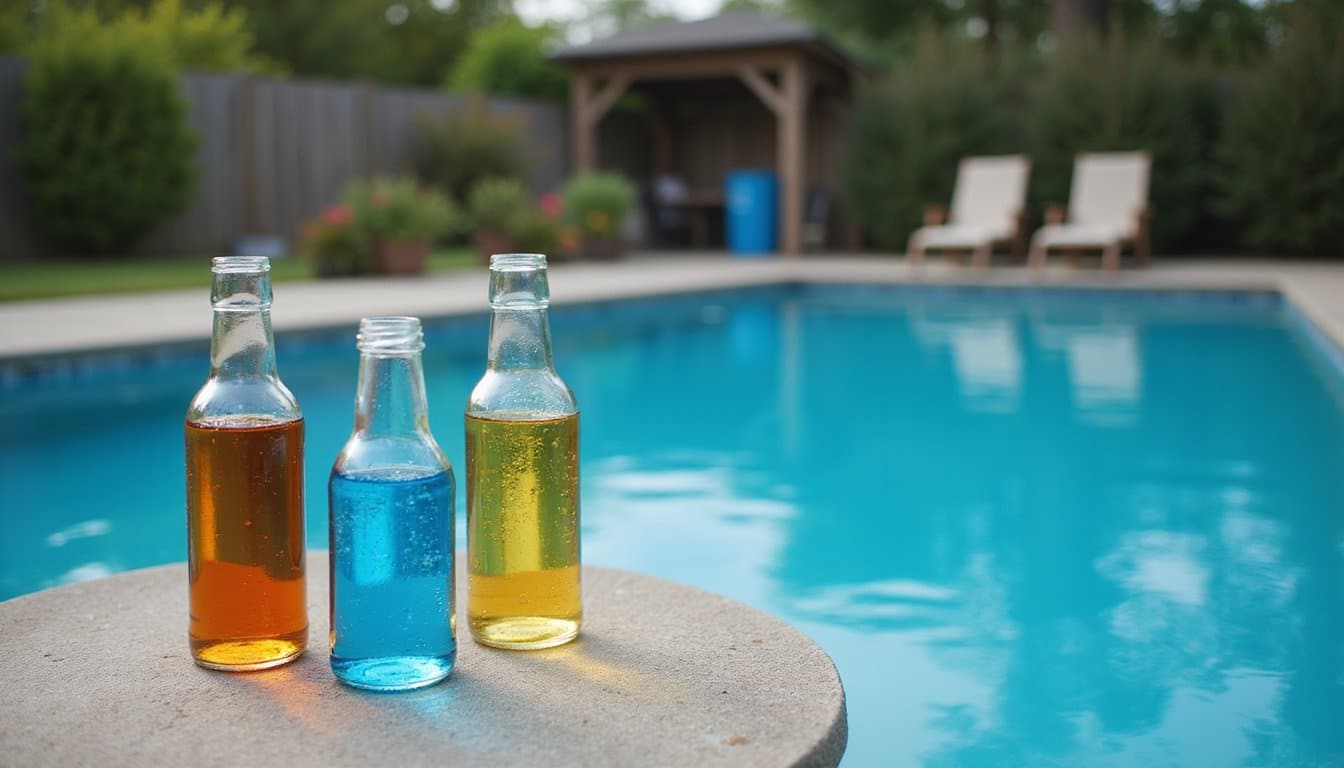
You can deep-clean your spa filter with vinegar in a few safe, methodical steps that dissolve stubborn mineral buildup without exposing you or your hot tub to harsh chemicals. First, disconnect power at the GFCI breaker and remove the cartridge. Then, fully submerge it in a vinegar solution and soak it for several hours. Rinse thoroughly between each pleat with a garden hose, and air-dry completely before reinstalling. The steps below cover every detail you’ll need to get it right. You can deep-clean your spa filter with vinegar in a few safe, methodical steps that dissolve stubborn mineral buildup without exposing you or your hot tub to harsh chemicals, while also understanding how to clean underside of spa cover as part of complete spa maintenance. First, disconnect power at the GFCI breaker and remove the cartridge. Then, fully submerge it in a vinegar solution and soak it for several hours. Rinse thoroughly between each pleat with a garden hose, and air-dry completely before reinstalling. The steps below cover every detail you’ll need to get it right.
Why Spa Filters Need Regular Deep Cleaning
When spa filters become clogged with debris, oils, and mineral deposits, they can’t maintain the water clarity and sanitation your system depends on. Without consistent spa filter upkeep, dirty filters force pumps to work harder, straining heaters and circulation components. Efficiency can drop by 25% or more, raising your electricity costs considerably.
Neglected filters also harbor bacteria and mold in hard-to-reach pleats, making spa filter biofilm removal crucial for preventing rashes, eye irritation, and pathogen exposure. Thorough spa filter debris removal guarantees sanitizers like chlorine maintain effective concentrations. Allowing lime scale and mineral deposits to accumulate can also clog the filtration system, potentially leading to leaks and costly plumbing repairs.
You should deep clean filters every one to two weeks. Regular cleaning detects early deterioration, extends cartridge lifespan, and prevents overheating. Filters still require full replacement approximately every six months despite routine maintenance. Constant exposure to harsh chemicals, heat, and trapped contaminants means filters have a finite functional lifespan regardless of how well they are maintained. Staying on top of this schedule also helps prevent sudden drops in clarity, foaming, and unpleasant odors that compromise your overall spa experience.
Why Vinegar Works as a Spa Filter Cleaner
White distilled vinegar breaks down mineral deposits on spa filter cartridges because it contains acetic acid, a weak acid that dissolves calcium carbonate scale and magnesium salt buildup. Its acidic properties mimic stronger acids like muriatic acid by loosening mineral bonds without damaging filtration fabric. The pH-lowering effect targets hardened scale embedded deep within filter pleats.
You’ll also benefit from vinegar’s effectiveness in grime removal capabilities. It cuts through layers of body oil, skin cells, and sweat that accumulate during regular spa use. When you soak cartridges for several hours, the acetic acid dissolves stubborn contaminants, restricting water flow.
Vinegar’s Non-Toxic Safety profile makes it a practical choice. It poses no skin exposure risks, contains no harsh irritants, and leaves no harmful residue after thorough rinsing.
Supplies You Need for Vinegar Filter Cleaning
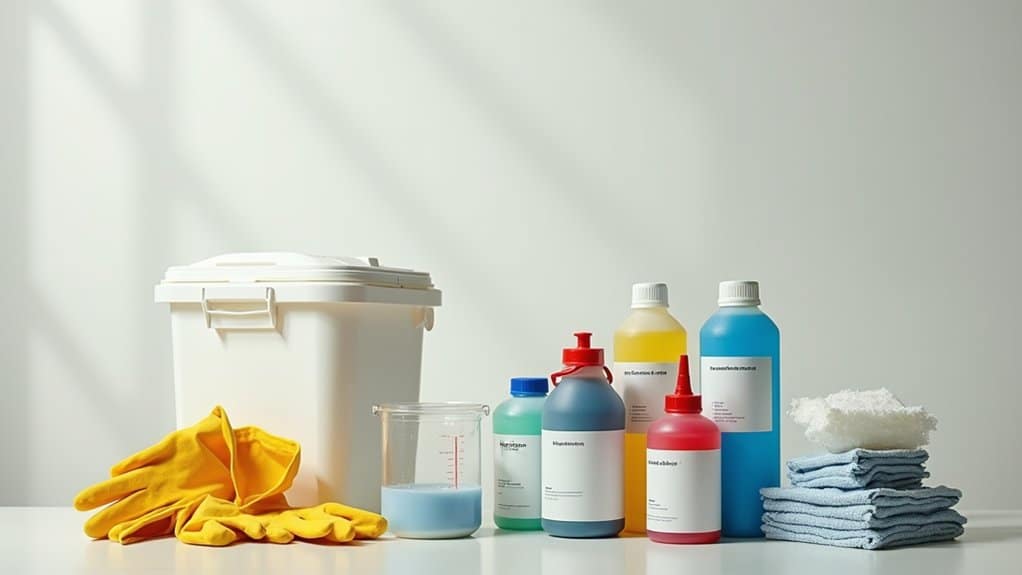
Before you begin cleaning your spa filter, you’ll need to gather a few essential supplies: white distilled vinegar, a 5-gallon plastic bucket large enough to fully submerge your filter cartridge, warm water, and a garden hose with a spray nozzle. For the vinegar solution, mix equal parts white distilled vinegar and warm water in your bucket, ensuring you have enough volume to completely cover the filter without air pockets. Having these materials prepared and organized before you power off your spa and remove the filter keeps the process efficient and minimizes the time your system operates without filtration. Before you begin cleaning your spa filter, you’ll need to gather a few essential supplies: white distilled vinegar, a 5-gallon plastic bucket large enough to fully submerge your filter cartridge, warm water, and a garden hose with a spray nozzle, especially if you’re addressing issues like how long does it take to clear cloudy spa water through proper maintenance. For the vinegar solution, mix equal parts white distilled vinegar and warm water in your bucket, ensuring you have enough volume to completely cover the filter without air pockets. Having these materials prepared and organized before you power off your spa and remove the filter keeps the process efficient and minimizes the time your system operates without filtration.
Essential Cleaning Materials
Although vinegar cleaning requires only a few basic supplies, gathering everything beforehand guarantees a smooth, uninterrupted process. You’ll want to assemble your materials in a ventilated workspace before removing the filter cartridge.
Start with these essential items:
- Filter cleaning sprayers or wands with specialized nozzles that penetrate deep between pleats, delivering targeted rinsing power a standard hose can’t match
- Soft-bristled brushes that gently dislodge stubborn deposits without tearing or compromising your filter’s delicate fabric
- Buckets or soaking containers sized to fully submerge your cartridge, ensuring the vinegar solution contacts every surface evenly
You’ll also need protective gloves to shield your skin from prolonged vinegar exposure and a clean drying rack to air-dry the cartridge completely after treatment. Don’t skip eye protection, splashing acid solution poses a real risk.
Vinegar Solution Preparation
With your cleaning tools assembled, the next step is preparing the vinegar solution itself, getting the mixture right determines how effectively it breaks down mineral deposits. Mix equal parts white distilled vinegar and warm water in a 5-gallon bucket. This 50/50 ratio provides sufficient acidity for cartridge filter deep cleaning without damaging the pleated fabric. Stir the solution thoroughly to guarantee uniform concentration throughout.
You’ll need enough volume to fully submerge your spa filter cartridge, so every pleat contacts the cleaning solution. Use a non-reactive plastic container with a stable base to prevent spills during extended soaking. Prepare this mixture before removing the filter from your spa filtration system so you can submerge it immediately, preventing dried-on deposits from hardening further. After submerging your filter, it’s essential to allow it to soak in the solution for the recommended time to ensure it is thoroughly cleaned. Regular maintenance, including how to clean a spa filter cartridge, will prolong the life of the filter and keep your spa water clear and safe for use. Rinse the cartridge thoroughly under a steady stream of water to remove any residual cleaning solution before reinstalling it into your spa.
Turn Off the Power and Remove the Spa Filter
Shut off the spa’s main power supply at the GFCI breaker or service disconnect before touching any filter components. Proper power disconnection procedures prevent electrical hazards and guarantee pump cessation during maintenance.
Always disconnect power at the GFCI breaker before servicing your spa filter, safety first, maintenance second.
Next, access the filter housing. Filter housing access methods vary by model, twist the cover counterclockwise, lift the skimmer shield, or remove the lid assembly based on your spa’s configuration.
Apply the correct filter extraction techniques for your cartridge type:
- Grasp the handle and pull upward with steady pressure to dislodge the cartridge
- Unscrew the locking ring counterclockwise if your model uses a retention mechanism
- Compress pleats slightly and push forward past capture tabs on tab-secured designs
Place the removed filter on a flat, stable surface.
Mix Your Vinegar Spa Filter Cleaning Solution
Every effective vinegar cleaning solution starts with selecting the right type: white distilled vinegar. Its acetic acid content targets calcium scale and mineral deposits precisely, making it ideal for cartridge filter cleaning without harsh chemicals.
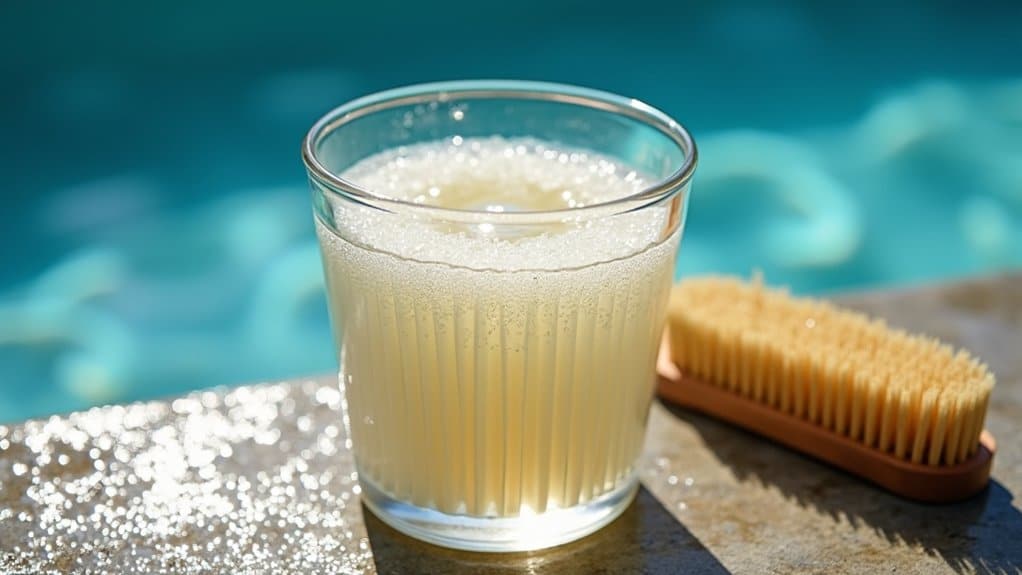
To prepare your spa filter soaking solution, fill a large plastic bucket with equal parts warm water and white vinegar. Add the water first, then pour in the vinegar and stir for uniform distribution. Warm water accelerates the breakdown of mineral buildup and oils embedded in your hot tub filter cartridge.
Ensure the container is large enough to fully submerge the filter. This 50/50 ratio balances cleaning strength against excessive acidity, protecting delicate filter pleats while dissolving stubborn deposits. Prepare the solution immediately after filter removal for prompt submersion.
Soak and Rinse the Spa Filter With Vinegar
Once your 50/50 vinegar-and-water solution is ready, lower the filter cartridge into the bucket until it’s fully submerged. Swish it gently to distribute the solution between every pleat. This spa filter vinegar soaking method works best when you leave the cartridge immersed overnight, up to 24 hours for heavy mineral buildup.
During soaking, the acetic acid dissolves calcium scale that compromises hot tub water filtration efficiency. Consider these key points:
- Rotate the filter periodically to guarantee uniform acid exposure across all pleats
- Soak heavily soiled cartridges overnight for thorough mineral and deposit removal
- Never skip the rinse to prevent foaming in your spa
For spa filter rinsing after soak, use a garden hose with a spray nozzle. Rinse between each pleat gently, then air-dry in sunlight.
Dry and Reinstall Your Clean Spa Filter
| Reinstallation Step | Action | Safety Check |
|---|---|---|
| Seat filter securely | Place into skimmer or filter bay | Confirm tight seal on lid |
| Restore power | Turn hot tub back on | Verify proper fit first |
| Circulate water | Run jets several minutes | Monitor for foam |
| Test chemistry | Check pH and sanitizer levels | Adjust if imbalanced |
| Maintain schedule | Follow spa filter replacement schedule (12, 24 months) | Integrate into residential spa maintenance routine |
How Often to Clean a Spa Filter With Vinegar
How frequently you clean your spa filter with vinegar depends on your usage patterns, bather load, and water chemistry. Follow this schedule for ideal spa filter calcium scale removal:
Your ideal vinegar cleaning schedule depends on how often you use your spa, bather load, and water chemistry.
- Weekly: Rinse your pleated filter cartridge with a garden hose, spraying between each pleat to clear surface debris.
- Monthly: Spray or soak filters with vinegar to dissolve mineral deposits, then rinse thoroughly to prevent residue.
- Quarterly: Perform a deep vinegar soak in warm water every three to four months to address embedded scale buildup.
Vinegar won’t remove oils, lotions, or cosmetics. You’ll need a spa filter degreaser solution periodically to handle organic contaminants. High-usage spas require more frequent vinegar cleans. Monitor water clarity and adjust intervals accordingly. Replace filters annually regardless of maintenance.
The Backyard You’ve Always Wanted Starts Here
Your dream outdoor space deserves more than a standard pool, it deserves a design built around your lifestyle and vision. At Cristallo Pools, our award-winning team specializes in custom pool construction, spa additions, complete backyard makeovers, and concierge maintenance, delivering resort-style results that go far beyond what typical pool contractors offer. Call +1 (561) 766-0353 today and let us bring your vision to life.
Frequently Asked Questions
Can Vinegar Cleaning Remove Sunscreen and Body Oil Buildup From Spa Filters?
Vinegar can partially remove sunscreen and body oil buildup from your spa filter, but it’s less effective on heavy oil accumulations. Its acetic acid loosens emulsified sunscreen films and light oil deposits during a prolonged soak. You’ll get better results soaking your cartridge in a 50/50 vinegar-water solution for at least two hours. For stubborn oil residue, you should alternate with a specialized filter cleaner designed to dissolve organic contaminants thoroughly.
Is It Safe to Use Apple Cider Vinegar Instead of White Vinegar?
You can use apple cider vinegar since it contains 5, 6% acetic acid, comparable to white vinegar’s 5%. However, you shouldn’t consider it your best option. Apple cider vinegar’s sediments and natural sugars risk leaving residue in your filter pleats, and its organic compounds can feed bacteria if you don’t rinse thoroughly. You’re better off sticking with white distilled vinegar for its purity, which guarantees cleaner results without contamination risks.
Can I Run My Spa Without a Filter While Cleaning It?
You shouldn’t run your spa without a filter. Operating filterless allows impurities to enter your pump and heater directly, risking impeller clogs, motor burnout, and scale buildup on heating elements. Without filtration, bacterial growth accelerates and water quality deteriorates rapidly. You’ll also void your manufacturer’s warranty. Instead, stop your pumps while you’re cleaning the cartridge and reinstall it promptly once rinsed. Don’t substitute towels or sponges, they’ll detach and cause secondary damage.
Should I Alternate Vinegar Cleaning With Commercial Spa Filter Cleaning Solutions?
Yes, you should alternate vinegar cleaning with commercial spa filter solutions. Vinegar effectively dissolves mineral deposits during routine maintenance, but it’s less effective at removing oils and organic contaminants like sunscreen and body oils. You’ll want to use vinegar for regular weekly cleanings and reserve commercial cleaners for deeper quarterly soaks. This rotation prevents chemical residue buildup, protects your filter’s delicate fabric from repeated harsh exposure, and extends your cartridge’s overall lifespan.
How Many Gallons of Water Does a Spa Filter Process Each Day?
Your spa filter processes thousands of gallons daily, with the exact volume depending on your pump’s flow rate and filtration cycle duration. If your pump circulates 30 to 60 gallons per minute, you’re moving 1,800 to 3,600 gallons per hour. High-flow systems like QCA Spas can filter over 30,000 gallons per day running two four-hour cycles. You’ll want to keep your filter clean to maintain this critical throughput safely.