You’ll need to maintain free chlorine at 1-3 ppm or bromine at 3-5 ppm, while keeping pH between 7.4-7.6 and total alkalinity at 80-120 ppm. Modern automated systems with smart sensors will monitor these levels continuously, sending alerts to your smartphone when adjustments are needed. Don’t forget cyanuric acid stabilizer (30-50 ppm) and regular testing 2-3 times weekly. Advanced chemical management techniques and seasonal strategies can transform your pool maintenance routine.
Essential Chemical Parameters for Pool Health
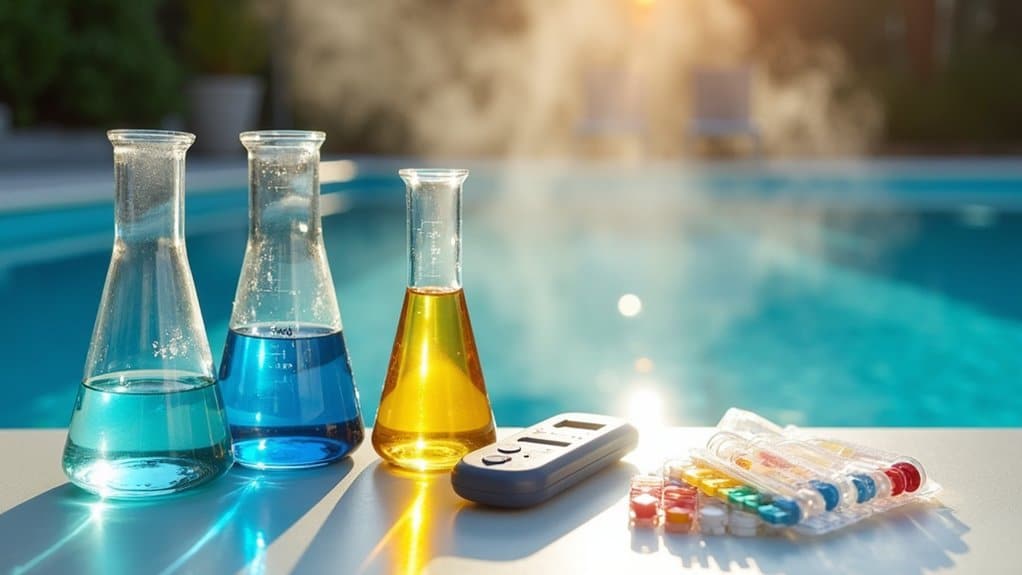
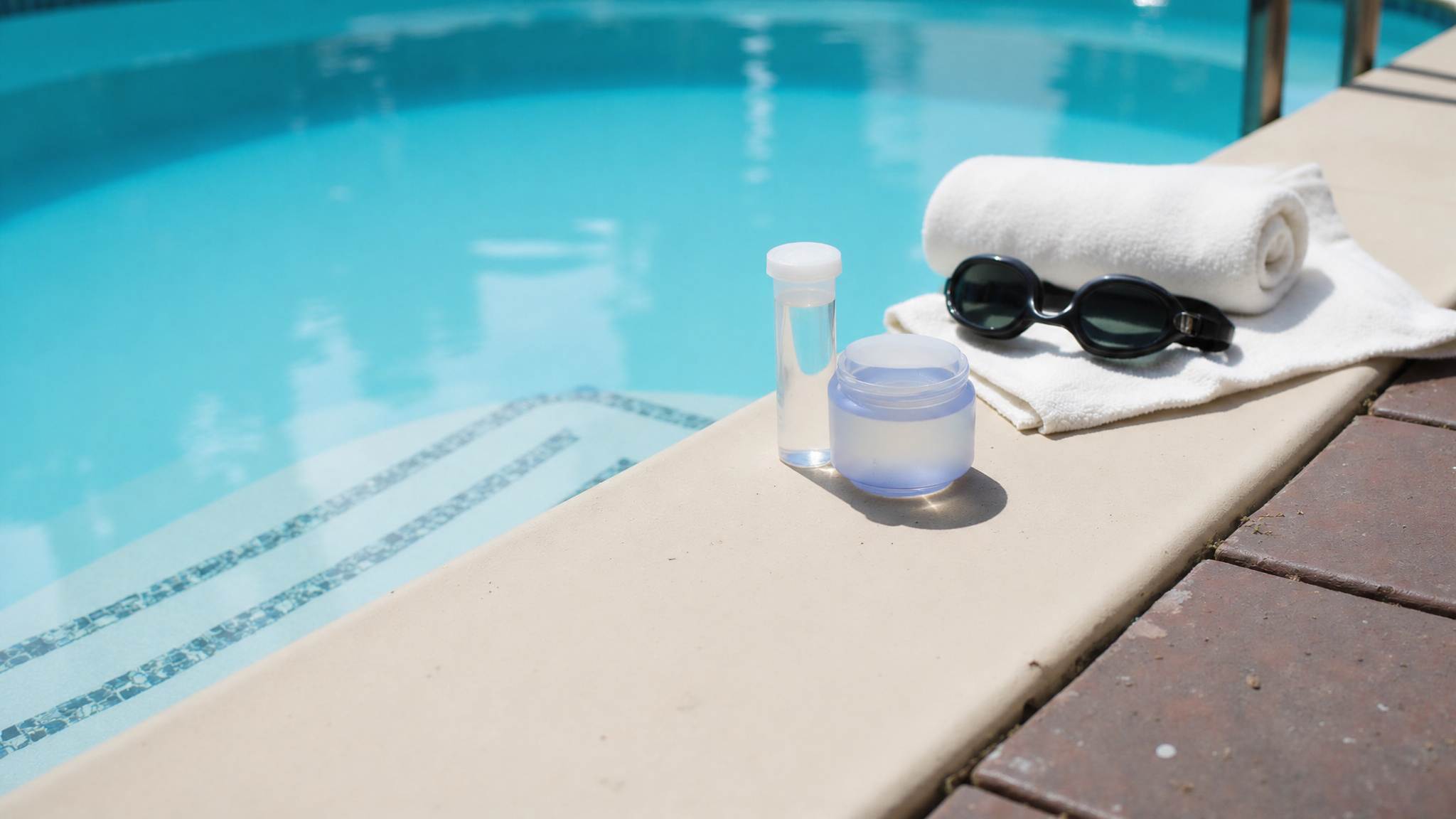
While maintaining a healthy pool requires attention to multiple factors, proper chemical balance forms the foundation of safe swimming water. Your primary focus should be on maintaining free chlorine levels between 1-3 ppm or bromine at 3-5 ppm for ideal sanitizer effectiveness. Monitor combined chloramines to keep them below 1.0 ppm, triggering a SLAM process if exceeded. Testing your pool’s total alkalinity level helps prevent sudden pH fluctuations that can affect sanitizer efficiency. Regular water testing performed 2-3 times weekly ensures optimal chemical levels stay balanced. Variable speed pumps can improve chemical distribution throughout your pool while reducing energy costs.
For saltwater pools, you’ll need to maintain salt levels between 2700-3400 ppm if using a chlorine generator. Cyanuric acid requirements vary by pool type: 30-50 ppm for traditional pools and 60-90 ppm for saltwater systems. When handling these chemicals, always prioritize chemical safety by wearing appropriate PPE and following proper storage protocols. Remember to add chemicals to water, never water to chemicals, and maintain circulation during treatment.
Smart Testing Methods and Modern Equipment
As pool maintenance technology continues to evolve, automated testing systems have revolutionized water chemistry management. Smart sensors now continuously monitor your pool’s chemical parameters, while AI monitoring systems analyze data in real-time, providing instant alerts through smartphone apps when adjustments are needed. Robotic pool cleaners help maintain water chemistry by removing debris and contaminants that could affect chemical balance. Advanced monitoring devices like ICO can reduce monthly chemical costs by maintaining ideal pH levels between 7.0 and 7.2. Regular testing using digital pool testers provides highly accurate readings without the subjectivity of color interpretation. These advancements not only enhance the efficiency of pool management but also ensure a healthier swimming environment. Users can precisely track the effectiveness of common pool cleaning chemicals, optimizing their usage and reducing waste.
Modern pool automation takes the guesswork out of maintenance, with smart sensors and AI systems providing real-time chemical monitoring and alerts.
- Multi-parameter devices simultaneously measure pH, chlorine, CYA, alkalinity, and hardness using dual testing methods
- Cloud-based diagnostics enable remote access to pool health data and predictive maintenance alerts
- Automated systems integrate with smart home ecosystems for seamless control and enhancement
- Energy-efficient smart pumps and heaters adjust operations based on real-time chemical and temperature readings
These modern solutions streamline maintenance routines while ensuring ideal water chemistry through precise, data-driven adjustments. You’ll benefit from reduced manual testing and more accurate chemical balance management.
Advanced Chemical Balancing Techniques
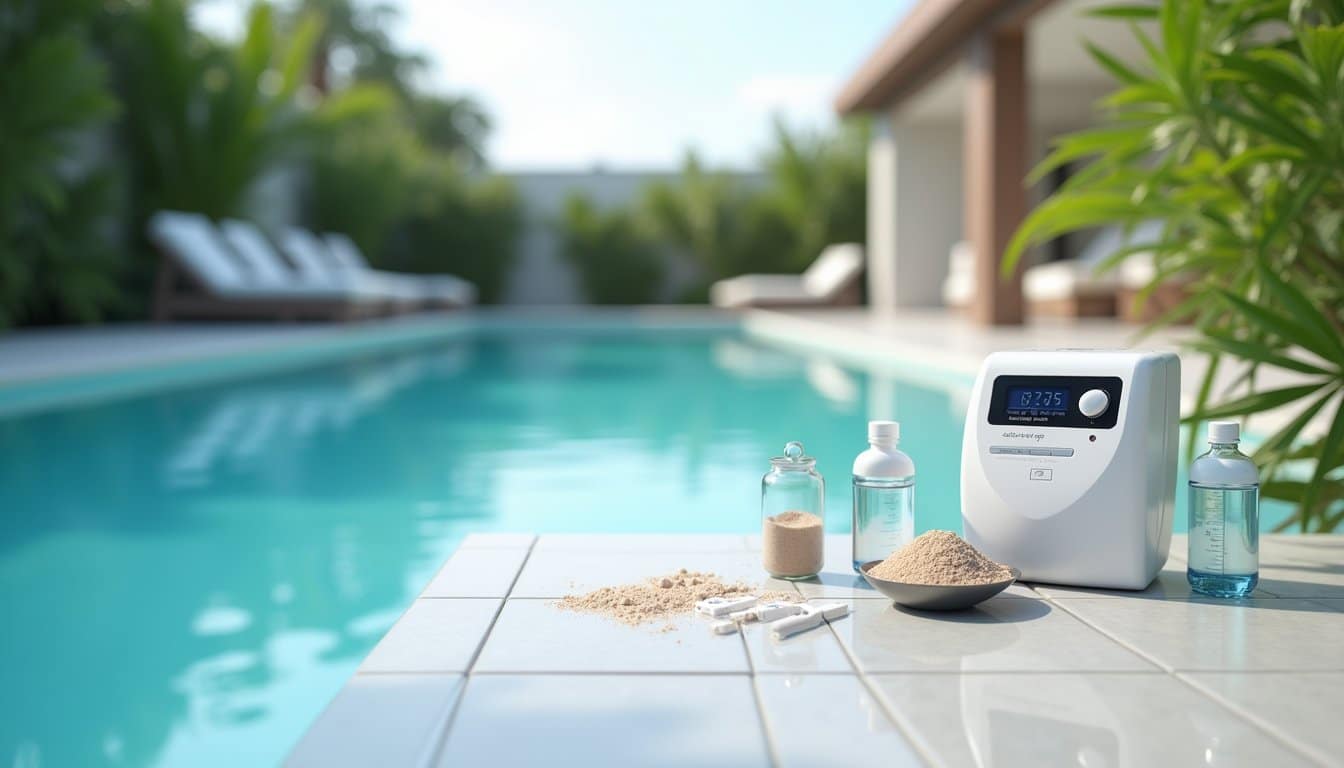
Modern testing equipment provides data, but mastering advanced chemical balancing requires systematic application of proven techniques. You’ll need to start with total alkalinity management, using precise amounts of chemical additives like sodium bicarbonate while maintaining levels between 80-120 ppm. Next, optimize your chlorine stabilizer levels to prevent chlorine lock, keeping cyanuric acid between 30-50 ppm for effective algae management. Working with pool service professionals can ensure accurate chemical balancing and prevent costly mistakes. Maintaining weekly test schedules helps prevent dangerous chemical imbalances from developing.
Regular testing helps catch chemical imbalances quickly before they develop into serious maintenance issues. Focus on precise pH control after stabilizing TA, making gradual adjustments with muriatic acid or soda ash. Balance calcium hardness between 200-400 ppm to protect your pool’s plaster and equipment. For advanced stain prevention, employ sequestering agents to bind metals and use scale preventers to inhibit mineral buildup. Remember to run your filter continuously during intensive chemical treatments.
Seasonal Chemical Treatment Strategies
Because seasonal changes considerably impact pool chemistry, you’ll need to adjust your chemical treatment approach throughout the year. Your seasonal adjustments should align with specific maintenance requirements, from spring’s initial chemical rebalancing to winter’s reduced sanitizer protocols.
- Spring requires aggressive chemical application, starting with total alkalinity adjustments (80-120 ppm) before fine-tuning pH levels to 7.4-7.6. Professional inspections help ensure water testing accuracy for proper chemical balancing. Test water weekly to maintain balanced chemical levels and prevent harmful algae growth.
- Summer demands consistent chlorine maintenance with increased frequency after rainstorms, supplemented by UV treatment for organic contaminant control. Automated testing systems can help monitor these frequent chemical adjustments in real-time.
- Fall preparation involves thorough chemical balancing, including calcium hardness and cyanuric acid adjustments before winterization
- Winter treatment focuses on reduced sanitizer levels combined with algaecide application, requiring quarterly monitoring to prevent organic matter buildup under covers
Focus on systematic chemical application sequences and precise timing to maintain ideal water chemistry throughout each season.
Automated Chemical Management Systems
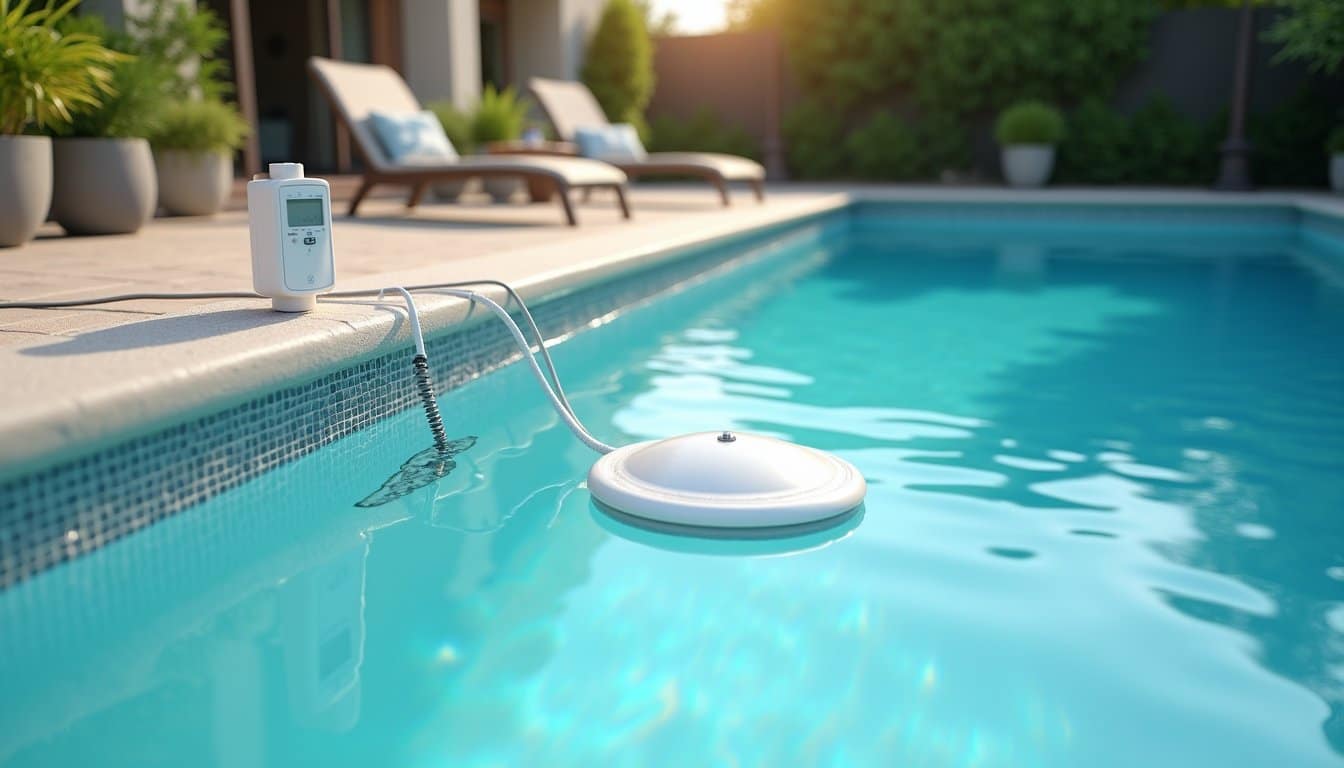
While traditional pool maintenance relies heavily on manual testing and adjustments, automated chemical management systems revolutionize the process through AI-driven monitoring and precise dosing controls. These systems integrate smart sensors that continuously track pH, sanitizer, and chlorine levels, ensuring ideal chemical safety through real-time analysis. Predictive maintenance algorithms help prevent chemical imbalances before they become problematic.
You’ll benefit from automated monitoring that triggers precise chemical adjustments via smart chlorinators and pH stabilization systems. Voice command controls enable easy chemical adjustments through simple spoken instructions. The WaterGuru Sense offers skimmer-based monitoring for comprehensive chemical tracking right from your pool’s existing hardware. The technology synchronizes with your pool’s filtration cycles and uses AI algorithms to enhance chemical consumption. When levels fall outside preset thresholds, you’ll receive instant mobile alerts and can make adjustments remotely through smartphone apps. Advanced sanitization options, including saltwater chlorinators and hybrid systems combining UV and ozone, further enhance water quality while reducing chemical dependency and equipment strain.
Frequently Asked Questions
How Long Should I Wait to Swim After Adding Pool Chemicals?
Your swimming safety depends on the specific chemical timing requirements. You’ll need to wait 20-30 minutes for basic adjusters like pH balancers and clarifiers, 2-4 hours for calcium chloride, and a full 24 hours after shock treatments. Don’t enter the pool until chlorine levels drop below 5 ppm. You must always check product labels, as they’ll provide the most accurate wait times for your specific chemicals.
Can I Mix Different Brands of Pool Chemicals Together?
You can mix different brands of pool chemicals if they contain identical active ingredients. When evaluating chemical compatibility, check product labels carefully to confirm the exact compounds. While same-type chemicals from different manufacturers are generally safe to combine, you’ll want to monitor your pool’s performance after switching brands to guarantee consistent effectiveness. If you’re uncertain about specific brand interactions, contact the manufacturer for verification.
Where Should I Store My Pool Chemicals During Winter Months?
For ideal storage locations during winter, you’ll need to separate your pool chemicals based on their form. Store liquid chemicals indoors in a cool, dry, well-ventilated space away from direct sunlight and heat sources. You can keep dry chemicals outdoors if they’re raised on pallets and protected from moisture. Always maintain proper ventilation, secure your storage area, and keep chemicals separated to prevent reactions. Never store chemicals near electrical components or heating systems.
What Happens if Pool Chemicals Accidentally Freeze?
If your pool chemicals freeze, you’ll face several serious issues. The freezing point disruption alters their chemical composition, greatly reducing their effectiveness. You’ll notice that liquid chlorine’s sanitizing power decreases substantially, and chemical reactions become sluggish or inconsistent. Additionally, you may experience container damage or rupturing. Don’t use frozen chemicals after thawing – they won’t provide reliable sanitization and could create unsafe water conditions. Always replace frozen chemicals with fresh products.
How Do I Safely Dispose of Expired Pool Chemicals?
You’ll need to follow strict chemical disposal safety guidelines when disposing of expired pool chemicals. First, check the product labels for specific disposal instructions. Don’t mix different chemicals together, and keep them in their original containers. Contact your local household hazardous waste facility for proper disposal options. You should always wear protective gear when handling chemicals, and never dispose of them in regular trash or down drains.