


To choose the right pool pump, you’ll need to match your pool’s volume with the appropriate pump size and type. Calculate your pool’s turnover rate (complete water circulation every 6-8 hours) to determine the required flow rate. Consider variable-speed pumps for maximum energy savings, or dual-speed models as a mid-range option. Look for ENERGY STAR certification and key features like programmable timers and self-diagnostics. Understanding modern pump technology and efficiency ratings will help optimize your investment.
Key Takeaways
- Calculate your pool’s volume and required flow rate to determine the appropriate pump size for a 6-8 hour turnover time.
- Consider energy efficiency ratings and ENERGY STAR certification, as variable-speed pumps can reduce energy costs by up to 80%.
- Match the pump’s inlet and outlet ports with your existing plumbing system to ensure proper installation and optimal performance.
- Evaluate noise levels and built-in features like programmable timers, digital displays, and self-diagnostic systems for convenience.
- Compare upfront costs with long-term operating expenses, factoring in electricity rates and maintenance requirements over time.
Understanding Pool Pump Types and Their Functions
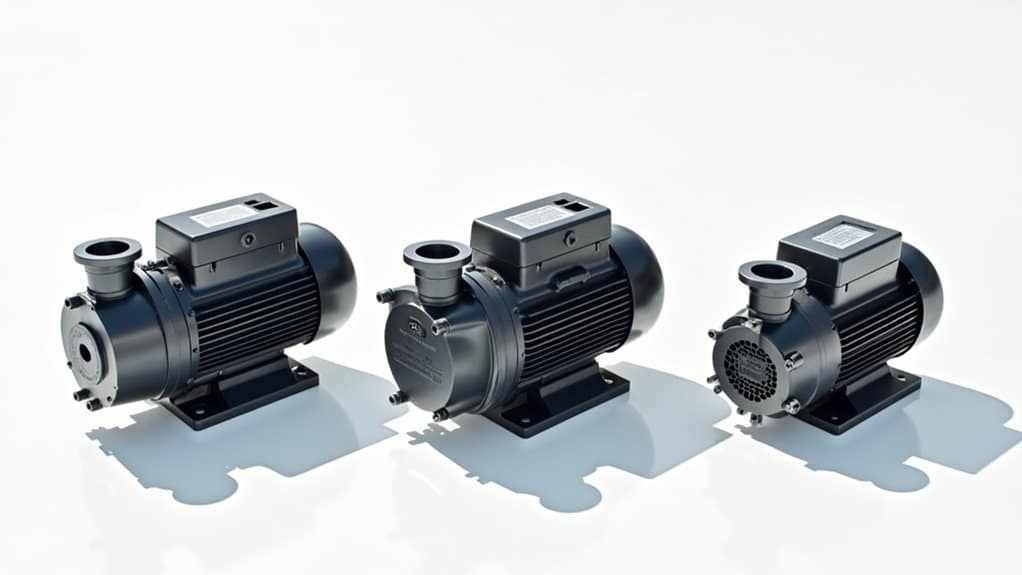
While maintaining your pool requires diverse equipment, the pump serves as the heart of your pool’s circulation system. Understanding pool pump types and their core functions will help you make an informed choice for your specific needs.
The three main pool pump types include single-speed, dual-speed, and variable-speed pumps. Single-speed pumps operate at one consistent RPM, making them simple but less energy-efficient. Dual-speed pumps offer two settings – high for intense cleaning and low for daily circulation. Variable-speed pumps provide multiple RPM settings, offering the highest energy efficiency and customization options.
Your pump’s primary functions include circulating water through the filtration system, distributing chemicals evenly, and preventing algae growth by maintaining proper water movement. Each pump type performs these functions differently, impacting both effectiveness and operating costs. By understanding pool pump mechanics, you can make informed decisions when selecting the right pump for your specific needs. This knowledge helps optimize the filtration process and prolong the lifespan of your pool equipment, ultimately leading to a clearer and healthier swimming environment. When combined with the best pool filtration systems, a well-chosen pump can dramatically enhance water quality and efficiency.
Calculating the Right Size for Your Pool Pump
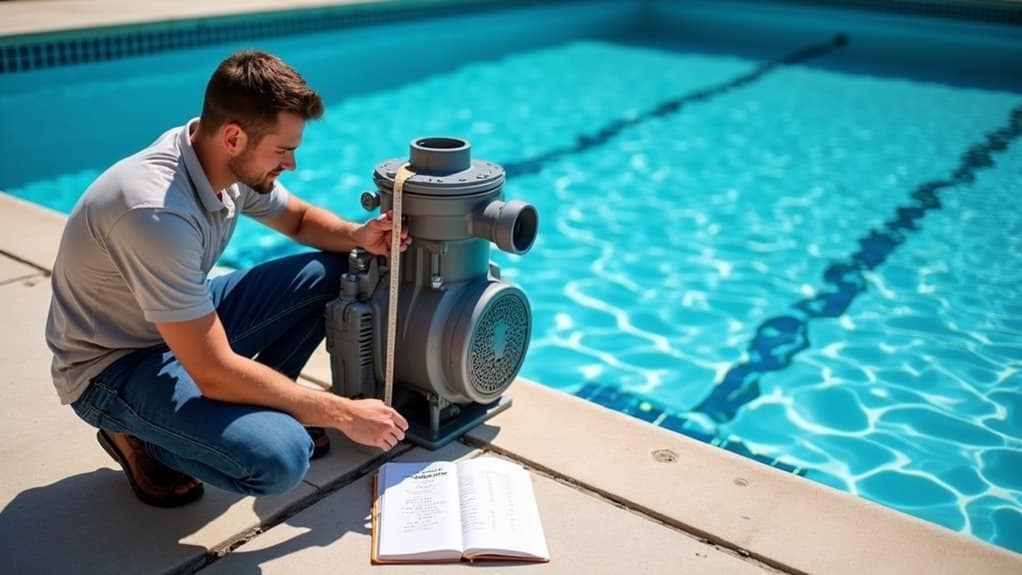
How accurately you size your pool pump can make the difference between ideal performance and wasted energy. To determine the right size, you’ll need to calculate your pool’s volume and required pump flow rate.
| Pool Type | Turnover Rate (Hours) | Minimum Flow (GPH) | Maximum Flow (GPH) | Ideal HP Range |
|---|---|---|---|---|
| Small | 6-8 | 1,500 | 2,500 | 0.5-0.75 |
| Medium | 6-8 | 2,500 | 4,000 | 0.75-1.0 |
| Large | 6-8 | 4,000 | 6,000 | 1.0-1.5 |
| Lap | 6-8 | 5,000 | 7,500 | 1.5-2.0 |
| Olympic | 6-8 | 7,500 | 10,000 | 2.0-3.0 |
Your pump should cycle your entire pool volume once every 6-8 hours. To calculate required pump flow, divide your pool’s volume in gallons by your desired turnover time in hours. This gives you the gallons-per-hour (GPH) rating you’ll need.
Energy Efficiency Ratings and Cost Considerations
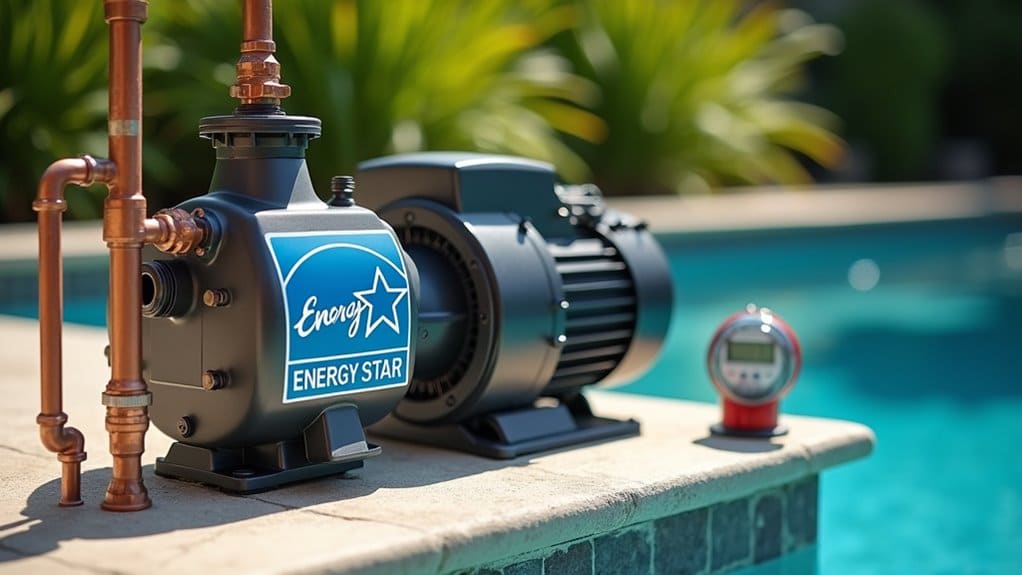
When selecting a pool pump, energy efficiency ratings directly impact your long-term operating costs. You’ll find that high-efficiency pumps typically carry a higher upfront cost but deliver significant energy savings over time. Understanding the pump’s efficiency rating helps you make an informed decision about operational costs.
Consider these key factors when evaluating energy efficiency:
- Variable-speed pumps can reduce energy consumption by up to 80% compared to single-speed models, paying for themselves within two years
- Look for ENERGY STAR certified pumps, which must meet strict efficiency guidelines set by the EPA
- Calculate your potential savings using the pump’s horsepower rating and local electricity rates to determine the true cost of ownership
Smart pump scheduling and proper sizing further optimize your energy savings while maintaining proper pool circulation.
Key Features to Look for in Modern Pool Pumps
Modern pool pumps offer sophisticated features that boost both performance and user control. You’ll want to prioritize variable speed functionality, which allows you to adjust pump power based on specific needs, resulting in significant energy savings and improved circulation control. Additionally, variable speed pumps run quieter than single-speed models, boost water circulation for cleaner, clearer water, and reduce algae and debris buildup, all while cutting energy use and maintenance effort.
Look for models with built-in programmable timers and digital displays that let you monitor performance metrics and schedule operation cycles. Low noise levels are vital, so check the decibel ratings and opt for pumps with noise-reduction technology. Consider pumps with automatic protection features that prevent damage from freezing, overheating, or priming issues.
Other essential features include self-diagnostic systems that alert you to maintenance needs, compatibility with smart home automation, and corrosion-resistant materials. Built-in strainer baskets with clear lids make routine maintenance more convenient and help you quickly spot debris accumulation.
Installation Requirements and Compatibility
Building on these advanced features, proper installation and system compatibility determine your pool pump’s performance and longevity. When considering pump installation and compatibility, you’ll need to verify your setup meets specific requirements for peak function.
- Check your plumbing size and type – your pump’s inlet and outlet ports must match your existing pipe dimensions, typically 1.5 or 2 inches for residential pools, to prevent flow restrictions and potential damage.
- Verify your electrical requirements – confirm your home’s voltage capacity (115V or 230V) and make sure you’ve got proper wiring and circuit breaker ratings for your chosen pump.
- Calculate hydraulic requirements – match your pump’s flow rate and head pressure capabilities to your pool’s volume, filter specifications, and any supplementary water features you’re operating.
Maintenance Requirements and Long-Term Reliability
To improve your pool pump’s service life and maintain peak performance, regular maintenance and reliability checks are essential components of ownership. You’ll need to follow recommended maintenance schedules, which typically include cleaning the strainer basket weekly, inspecting seals monthly, and checking motor bearings quarterly.
Key reliability factors include monitoring unusual noises, addressing leaks promptly, and ensuring proper water chemistry to prevent corrosion. You should lubricate moving parts according to manufacturer specifications and replace worn components before they fail completely. Most quality pumps require professional servicing annually to assess electrical connections, verify pressure readings, and test safety mechanisms.
Consider keeping a maintenance log to track service dates and performance metrics. This documentation helps identify patterns of wear and predicts when you’ll need replacements or repairs.
Top Pool Pump Brands and Models Compared
Leading manufacturers in the pool pump industry offer distinct advantages across their product lines. When evaluating top brands like Pentair, Hayward, and Jandy, you’ll find significant differences in performance, efficiency, and price points. Model comparisons reveal varying strengths across manufacturers’ offerings.
- Pentair’s IntelliFlo series dominates the variable-speed category with superior energy efficiency and advanced programming features, though at a premium price point.
- Hayward’s Super Pump VS provides excellent mid-range value, combining reliable performance with user-friendly controls and quieter operation.
- Jandy’s Pro Series offers sturdy construction and seamless automation integration, particularly beneficial if you’re already using their ecosystem.
Consider your pool’s specific requirements when comparing models, as factors like horsepower needs, plumbing compatibility, and local climate conditions will influence your ideal choice.
Frequently Asked Questions
Can I Leave My Pool Pump Running While Swimming?
Yes, you can safely swim while your pool pump is running. It’s actually beneficial for pool safety and pump efficiency to keep it operating during swimming sessions. The circulation helps distribute sanitizing chemicals and removes debris. However, verify your pump’s suction isn’t too strong near drain covers to prevent entrapment risks. You’ll also want to maintain proper chemical levels and keep swimmers away from the pump’s intake areas.
What Happens if I Run My Pool Pump During a Thunderstorm?
Don’t run your pool pump during a thunderstorm due to serious electrical hazards. Lightning can strike power lines, creating dangerous power surges that may damage your pump or, worse, electrify your pool water. For proper thunderstorm safety, you’ll want to turn off and unplug your pump before the storm hits. Wait until at least 30 minutes after the last thunder before restarting your system to guarantee your safety and protect your equipment.
Should I Cover My Outdoor Pool Pump During Winter Months?
Yes, you’ll want to protect your pool pump during winter months as part of proper pool pump maintenance. Cover your pump with a weatherproof pump cover or tarp to shield it from snow, ice, and freezing rain. If you live in an area that experiences freezing temperatures, you should also drain the pump completely and store it indoors. This winter protection prevents internal component damage and extends your pump’s lifespan.
Why Does My Pool Pump Make Gurgling Sounds Occasionally?
If you’re hearing gurgling sounds from your pool pump, it’s likely due to air entering the system. Common gurgling causes include low water levels in your pool, a loose pump lid, damaged O-rings, or cracks in your suction lines. As part of regular pump maintenance, check these components and guarantee proper water levels. You’ll also want to inspect your skimmer basket for clogs and verify that all fittings are tight. Don’t ignore these sounds, as they can indicate reduced efficiency.
Can I Use My Neighbor’s Electricity to Power My Pool Pump?
You shouldn’t use your neighbor’s pool electricity without a formal neighbor agreement, as this could be considered theft and lead to legal issues. If you’re looking to share utility costs, you’ll need to: 1) Get written consent from your neighbor, 2) Install a separate meter to track usage, and 3) Create a legal agreement for payment terms. Instead, consider energy-efficient pump options or solar alternatives for your own electrical setup.