




To prevent electrical accidents in swimming pools, you’ll need to implement multiple safety measures. Start by ensuring all equipment is properly grounded, installing GFCIs, and maintaining a secure bonding system. Keep electrical devices at least 10 feet from water, inspect wiring regularly, and upgrade outdated components. Train staff on emergency protocols and conduct routine professional inspections. Following these critical guidelines will help protect swimmers, but there’s much more to maintaining thorough pool electrical safety.
Key Takeaways
- Install and regularly test ground-fault circuit interrupters (GFCIs) on all pool electrical equipment to prevent shock hazards.
- Ensure all metal components are properly bonded to a common grounding point using solid copper conductors (#8 AWG or larger).
- Conduct monthly inspections of electrical equipment, checking for frayed wires, damaged fixtures, and proper connection sealing.
- Keep extension cords away from pool areas and replace any damaged underwater lighting systems immediately.
- Post clear electrical safety signage and train staff on emergency response procedures for electrical accidents.
Common Electrical Hazards Around Swimming Pools
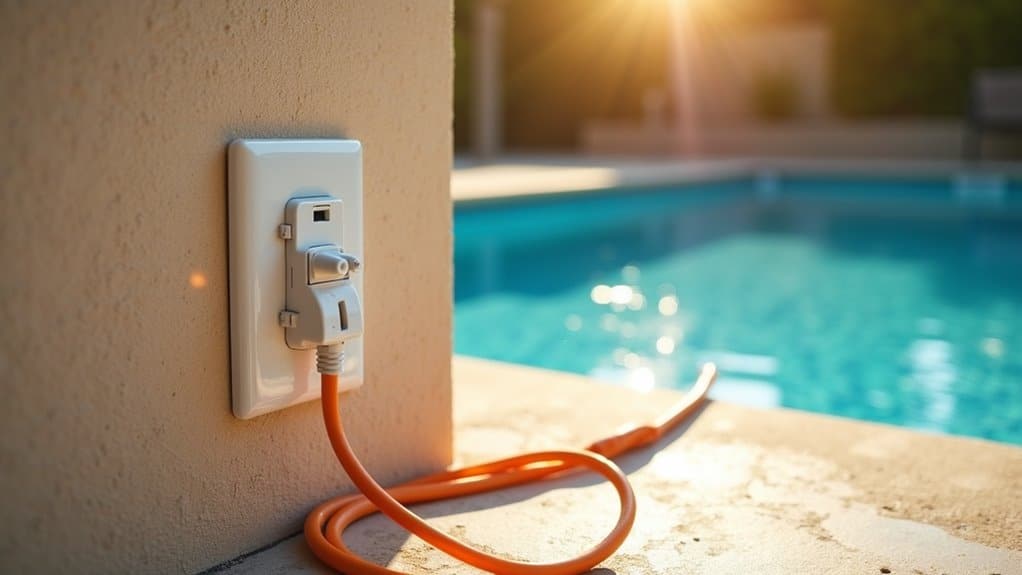
While swimming pools provide recreation and relief from hot weather, they present serious electrical hazards that require vigilant attention. You’ll need to maintain constant hazard awareness around pool equipment, including pumps, filters, underwater lights, and electrical outlets. Additionally, it is crucial to educate children about the dangers of electricity near water and ensure they understand the importance of reporting any damaged equipment immediately. Implementing essential safety tips for families, such as utilizing Ground Fault Circuit Interrupters (GFCIs) and keeping all electrical cords and outlets away from the pool area, can significantly reduce the risk of accidents.
Common electrical dangers include improperly grounded equipment, frayed wiring, damaged pool light fixtures, and extension cords near water. You must guarantee all electrical installations meet local safety codes and undergo regular electrical inspection by qualified professionals. Keep all electrical devices at least 10 feet from the pool’s edge, and install ground-fault circuit interrupters (GFCIs) on all outlets within 20 feet of water.
Never handle electrical equipment when you’re wet or standing in water. If you notice any tingling sensations while swimming, exit the pool immediately and shut off power to the area.
Essential Safety Standards and Regulations
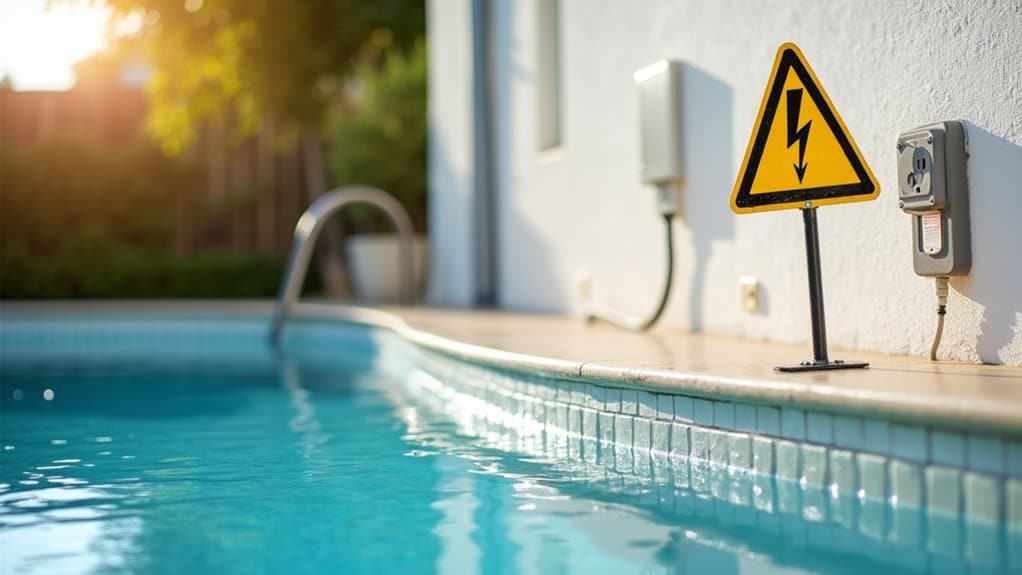
Beyond electrical requirements, swimming pool owners must comply with extensive safety standards established by local, state, and federal regulations. You’ll need to maintain proper barrier fencing heights, typically 4-6 feet, with self-closing and self-latching gates. Your pool must display required safety signage and depth markers at specified intervals. Additionally, it’s crucial to implement measures for childproofing backyard swimming pools, which may include the installation of alarms or pool covers that provide an extra layer of protection.
You’re responsible for maintaining water quality standards, including proper pH levels and sanitizer concentrations. Regular safety compliance inspections are mandatory, and you must keep detailed records of chemical testing and maintenance. Stay current with regulatory updates, as requirements can change yearly.
Your pool’s safety equipment must include rescue devices, emergency phones, and initial aid kits positioned at prescribed locations. Suction outlets require anti-entrapment covers meeting VGBA standards, and you’ll need to implement proper chemical storage protocols.
Proper Pool Equipment Grounding Techniques
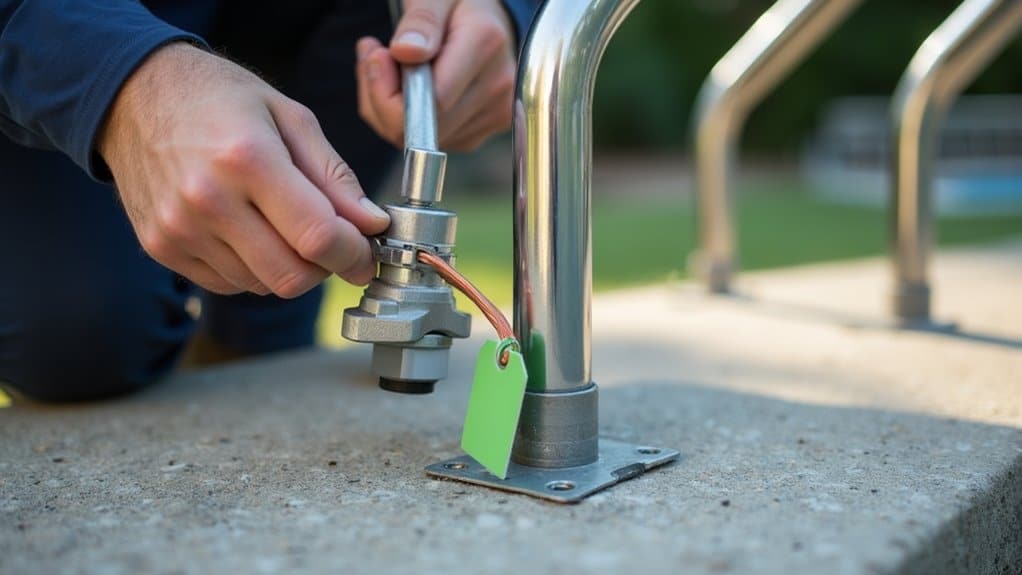
To guarantee ideal safety around your pool, proper electrical grounding of all metal components is essential. You’ll need to ascertain that every metal fixture, including ladders, handrails, diving boards, and light fixtures, is correctly bonded to a common grounding point.
Apply proven grounding techniques by connecting all metal components with a solid copper conductor, typically #8 AWG or larger. The conductor must be securely attached to each metal element using approved clamps or connectors. Install a grounding ring around your pool’s perimeter, buried 18-24 inches deep and connected to your pool’s bonding grid.
Complete electrical bonding by connecting the grounding system to your home’s electrical service panel through a dedicated ground rod. Have a certified electrician verify all connections meet local electrical codes and National Electrical Code requirements.
Inspecting and Maintaining Pool Lighting Systems
Since underwater pool lighting creates unique safety challenges, regular inspection and maintenance of these systems is critical. You’ll need to carefully monitor both traditional and LED lighting installations to prevent electrical hazards and guarantee consistent illumination for nighttime swimming safety.
Regular monitoring of pool lighting isn’t optional it’s essential for preventing electrical hazards and ensuring safe nighttime swimming conditions.
- Check underwater fixtures monthly for water intrusion, corrosion, or loose components – immediately replace any damaged units
- Test ground fault circuit interrupters (GFCIs) before each use of pool lighting systems
- Verify that all junction boxes remain properly sealed and mounted above water level to prevent moisture penetration
- Schedule professional inspection of bonding wires and conduit connections annually, assuring proper grounding between lighting fixtures and pool’s electrical system
Don’t attempt repairs on underwater lighting yourself always hire a certified pool electrician for maintenance work to maintain safety compliance and protect swimmers.
Safe Distance Requirements for Electrical Devices
Maintaining proper clearance between electrical devices and your swimming pool is essential for preventing shock hazards and electrical accidents. You’ll need to follow strict electrical clearances based on your local safety codes and national standards.
Keep all portable electrical devices at least 10 feet away from the pool’s edge. For permanently installed equipment, maintain a minimum distance of 5 feet from the water, unless it’s specifically designed and rated for pool use. Device placement for overhead power lines requires at least 22.5 feet of vertical clearance above the water surface and deck area.
Install ground-fault circuit interrupters (GFCIs) for all outlets within 20 feet of the pool’s edge. When mounting lighting fixtures, verify they’re at least 12 feet above the water level unless they’re specifically rated for wet locations.
Emergency Response Protocols for Electrical Incidents
When electrical incidents occur around swimming pools, every second counts in preventing severe injury or death. You’ll need to act swiftly while following proper emergency response protocols to guarantee everyone’s safety and provide effective initial aid.
- Cut power immediately at the circuit breaker don’t attempt to reach into the water or touch any electrical equipment
- Use a non-conductive shepherd’s hook or fiberglass pole to remove victims from the water – never enter the water yourself
- Call emergency services (911) immediately while directing others to clear the pool area and keep bystanders away
- Begin CPR if the victim isn’t breathing, continuing until medical professionals arrive check for burns and other injuries requiring initial aid
Keep emergency contact numbers posted visibly and guarantee all pool staff are trained in electrical emergency procedures.
Professional Inspection and Testing Guidelines
Regular professional inspections form the cornerstone of pool electrical safety and compliance. You’ll need to schedule thorough evaluations by certified electricians who hold professional certification in pool systems at least once annually, with supplementary checks after major repairs or modifications.
Your inspection schedule should include quarterly testing of Ground Fault Circuit Interrupters (GFCIs), verification of bonding and grounding systems, and assessment of underwater lighting fixtures. The inspection frequency may need to increase in areas with high humidity or salt exposure. Verify your inspector documents all findings, including voltage measurements and resistance readings.
Don’t overlook the importance of hiring inspectors who specifically understand pool electrical systems and local codes. They should provide detailed reports outlining any deficiencies and required corrective actions, helping you maintain compliance with safety standards.
Weather-Related Electrical Safety Measures
Beyond routine inspections, weather conditions greatly impact pool electrical safety protocols. You’ll need to monitor weather forecasts and implement specific storm preparedness measures to protect swimmers and electrical equipment.
- Clear the pool immediately when you hear thunder or see lightning, and don’t allow swimming until 30 minutes after the last lightning strike or thunder clap.
- Install a lightning detection system that provides early warnings and automatically shuts down pool equipment during electrical storms.
- Keep weather-resistant covers on all outdoor electrical outlets and guarantee they’re properly grounded with GFCI protection.
- Develop and post an emergency weather response plan that includes power shutdown procedures, evacuation routes, and emergency contact numbers for quick response during severe weather conditions.
This systematic approach to weather-related electrical safety helps prevent accidents and protects both equipment and swimmers.
Upgrading Outdated Pool Electrical Systems
Since older pool electrical systems can pose significant safety risks, upgrading your outdated equipment should be a top priority for pool owners and operators. Start with a thorough electrical system evaluation to identify components that don’t meet current safety codes or show signs of deterioration.
You’ll need to focus on essential pool equipment upgrades, including replacing outdated ground-fault circuit interrupters (GFCIs), modernizing underwater lighting systems, and installing new bonding and grounding components. Make sure all electrical connections are properly sealed and protected from water exposure. Don’t forget to upgrade your circuit breakers and wiring if they’re showing signs of wear or aren’t rated for your pool’s current electrical demands.
Always hire a certified electrical contractor who specializes in pool systems to perform these critical safety improvements.
Training Staff and Educating Pool Users
Proper training of pool staff and education of swimmers forms the foundation of an effective aquatic safety program. You’ll need to implement thorough staff training protocols and user education initiatives to minimize electrical hazards around your pool facility.
- Verify your staff completes specialized electrical safety certification courses that cover emergency response procedures, equipment maintenance protocols, and hazard identification techniques.
- Post clear, visible signage explaining electrical safety rules, including proper behavior during thunderstorms and guidelines for using electrical devices near water.
- Conduct regular safety briefings for pool users, highlighting potential electrical hazards and emergency evacuation procedures.
- Maintain detailed documentation of all staff training sessions, user education programs, and safety incident reports to track effectiveness and identify areas for improvement.
Your commitment to ongoing staff training and user education will greatly reduce the risk of electrical accidents in your pool facility.
Frequently Asked Questions
Can Chlorine Levels Affect the Conductivity of Electrical Currents in Pool Water?
Yes, chlorine levels directly impact water’s electrical conductivity. When you add chlorine to pool water, it breaks down into ions that increase the water’s ability to conduct electricity. Higher chlorine conductivity means greater electrical conductivity, making the water more dangerous if there’s an electrical fault. You’ll need to be especially vigilant about electrical safety when maintaining higher chlorine levels, as the increased conductivity can amplify potential electrical hazards.
How Often Should Pool Electrical Systems Be Replaced, Not Just Inspected?
You’ll need to replace your pool’s electrical components based on their specific lifespan and wear patterns. Generally, underwater lights should be replaced every 7-12 years, while pump motors typically last 8-10 years. Ground fault circuit interrupters (GFCIs) require replacement every 5-7 years. Don’t wait for complete failure, establish a proactive pool maintenance frequency that includes replacing aging electrical systems before they become hazardous. Environmental factors and usage patterns can accelerate replacement needs.
Do Solar-Powered Pool Devices Eliminate the Risk of Electrical Accidents?
While solar-powered pool technology reduces certain electrical risks, it doesn’t completely eliminate the danger of electrical accidents. You’ll still need to take into account that many solar devices require backup power systems or contain electrical components that can malfunction. Your pool’s solar safety depends on proper installation, maintenance, and weather-resistant connections. Even solar-powered equipment must meet specific safety standards and should be regularly inspected for damaged wiring or deteriorating components.
Are Inflatable Pools Subject to the Same Electrical Safety Regulations?
While inflatable pools are temporary structures, you’ll still need to follow electrical safety guidelines to protect swimmers. The key difference is that you don’t need permanent wiring installations, but you must guarantee any electrical equipment (like pumps or filters) meets outdoor safety standards. You’ll need to use GFCI-protected outlets, keep electrical devices at least 6 feet from the water, and follow manufacturer-specific inflatable pool regulations for equipment placement and operation.
Can Pool Electrical Systems Interfere With Nearby Home Security Systems?
When properly installed, your pool’s electrical wiring shouldn’t interfere with home security systems. However, you’ll want to watch for specific scenarios that could cause security interference. If your pool’s pump motors or lighting circuits aren’t properly grounded or shielded, they might create electromagnetic interference affecting wireless security sensors. It’s best to have a certified electrician verify that your pool wiring meets local codes and includes proper electromagnetic shielding.