
Your pool’s safety depends on having the right emergency equipment and knowing how to use it. You’ll need essential items like ring buoys, rescue poles, and a fully stocked primary aid kit mounted in visible locations. Create and practice an emergency action plan that defines roles and responsibilities for rescue scenarios. Watch for warning signs like gasping swimmers or chemical imbalances, and make sure your staff knows proper rescue techniques. The more prepared you are now, the better you’ll handle a crisis when seconds count.
Key Takeaways
- Keep essential rescue equipment readily accessible, including a ring buoy, rescue pole, and first aid kit in clearly visible locations.
- Learn to recognize drowning signs like vertical movement, gasping, or head tilted back in the water.
- Create and practice an emergency action plan that assigns specific roles for rescue, emergency calls, and crowd management.
- Post clear emergency contact numbers, facility address, and CPR instructions where everyone can see them.
- Know proper chemical safety protocols and maintain working pool alarms, adequate lighting, and secure fencing with self-latching gates.
Essential Pool Safety Equipment Every Owner Must Have
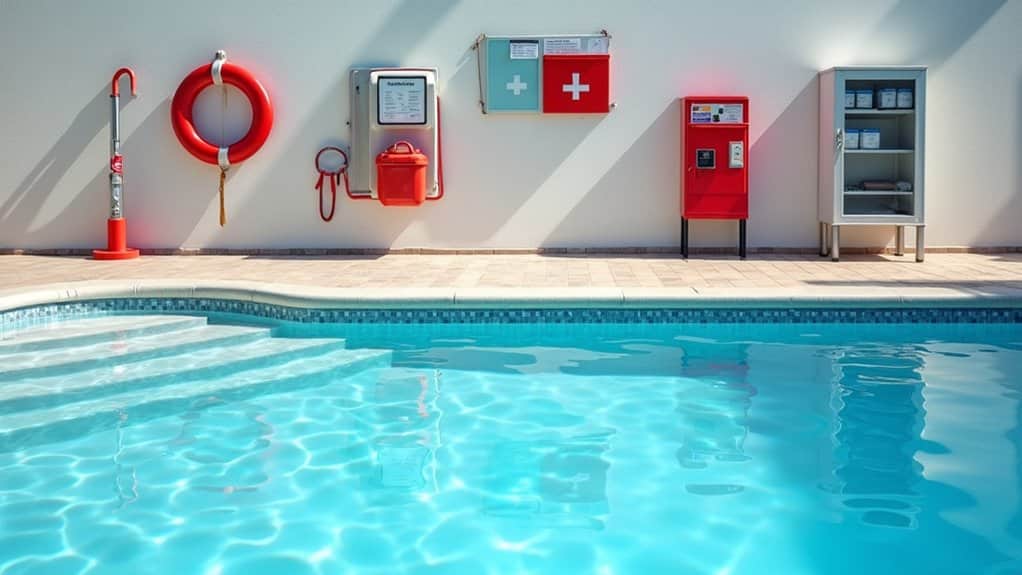
While maintaining a swimming pool requires regular maintenance, having the right safety equipment is absolutely vital for preventing and responding to emergencies. You’ll need a ring buoy with a rope, a telescopic rescue pole, and a fully stocked primary aid kit within easy reach. Install safety signage that clearly displays pool rules, emergency contact numbers, and CPR instructions.
Your essential equipment checklist should also include a pool alarm system, proper lighting, non-slip surfaces around the pool area, and a lockable safety cover. Don’t forget to keep rescue equipment mounted in visible locations where you can quickly access it. You’ll also want to maintain proper fencing with self-closing, self-latching gates that meet local safety codes. These items aren’t optional they’re vital for protecting everyone who uses your pool.
Common Pool Emergencies and Warning Signs
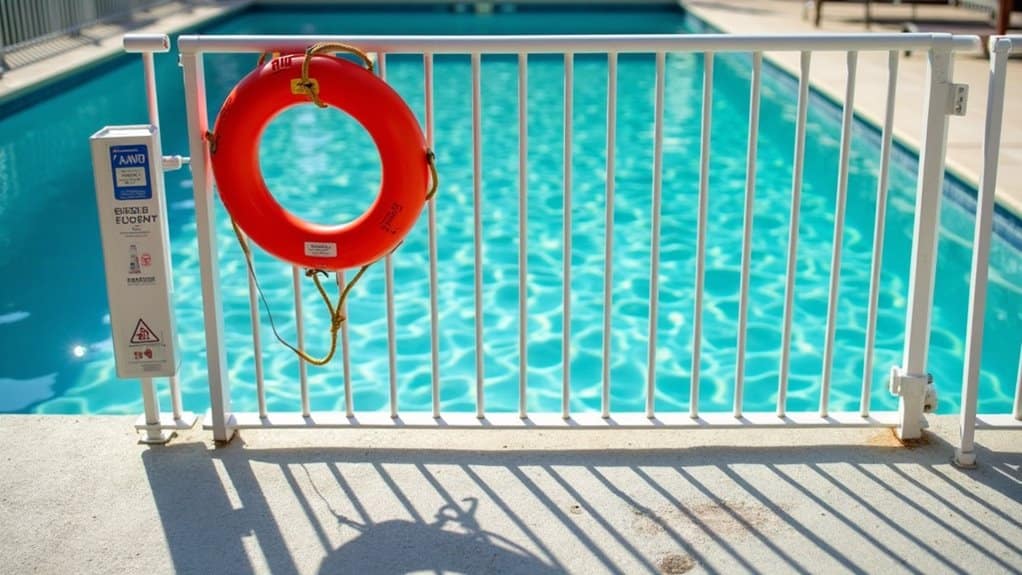
Although swimming pools provide endless enjoyment, they can become dangerous in seconds if you don’t recognize the warning signs of potential emergencies. For effective drowning prevention, watch for swimmers who are gasping, have their head tilted back, or are moving vertically in the water rather than horizontally. It’s crucial to maintain constant supervision of anyone in the water, especially children, and to set clear rules about pool usage. Additionally, learning basic life-saving skills can be immensely beneficial. By following essential swimming pool safety tips, you can significantly reduce the risk of accidents and ensure a fun, safe environment for everyone.
Injury awareness includes monitoring for signs of electrical hazards, such as tingling sensations or sudden power failures near the pool. You’ll also need to check for entrapment risks, including loose or missing drain covers. Watch for chemical imbalance indicators like burning eyes, strong chlorine odors, or cloudy water. Other critical warning signs include muscle cramps, exhaustion, or disorientation among swimmers. If you spot unusual behavior, skin discoloration, or someone struggling to maintain proper breathing, take immediate action. Additionally, it’s vital to establish clear safety protocols to ensure all staff members are trained in recognizing and addressing these hazards. Implementing regular inspections and maintenance routines can significantly aid in preventing electrical hazards in pools, creating a safer environment for everyone.
Creating Your Pool Emergency Action Plan
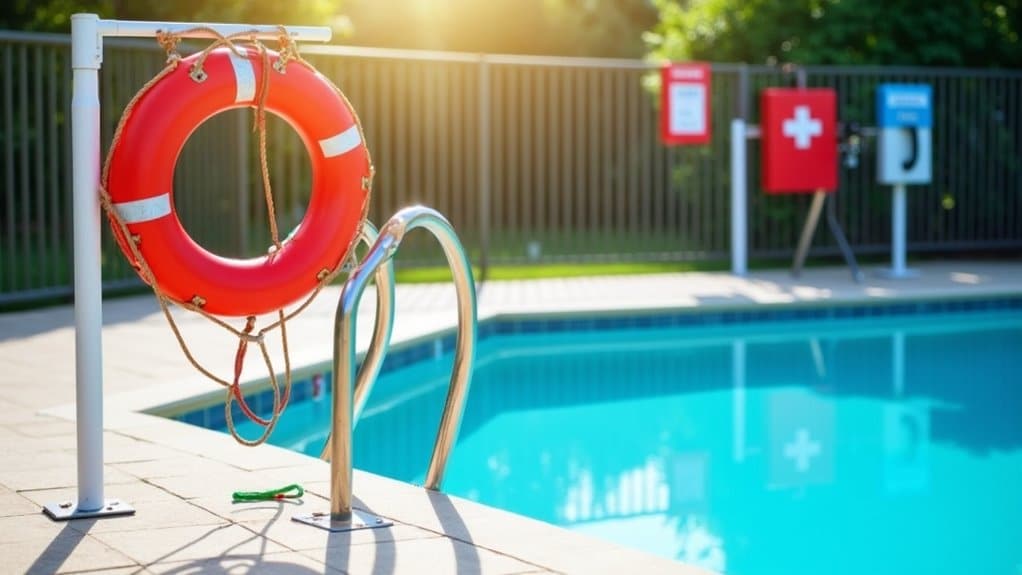
Since every pool presents unique safety challenges, creating a thorough emergency action plan is essential for preventing and responding to accidents. Begin by mapping out emergency roles for all staff members or responsible adults, clearly defining who’ll handle rescue operations, who’ll call 911, and who’ll manage crowd control.
Establish specific communication strategies, including predetermined whistle signals or verbal commands that everyone understands. Post emergency contact numbers, facility address, and CPR instructions in visible locations. You’ll need to document the locations of rescue equipment, primary aid supplies, and emergency exits.
Practice your emergency action plan regularly through drills and scenario training. Update your plan whenever you make changes to your facility or identify new potential hazards. Keep a written copy readily accessible to all authorized personnel.
Life-Saving Techniques for Pool Rescues
Quick action and proper technique can mean the difference between life and death during a pool emergency. You’ll need to master essential rescue techniques and stay current with CPR guidelines to respond effectively.
| Rescue Phase | Action Required | Key Points |
|---|---|---|
| Recognition | Assess situation | Look for signs of distress |
| Response | Alert others | Activate emergency response |
| Reach/Throw | Use rescue tools | Keep personal safety foremost |
| Retrieval | Remove from water | Support head and neck |
| Resuscitation | Begin CPR if needed | Follow current protocols |
Always approach water rescues with a “reach or throw, don’t go” mindset unless you’re properly trained. Remember to position yourself safely on the pool deck, use available rescue equipment, and maintain visual contact with the victim. If the person’s not breathing, begin CPR immediately while someone calls emergency services.
Pool Chemical Safety and Emergency Response
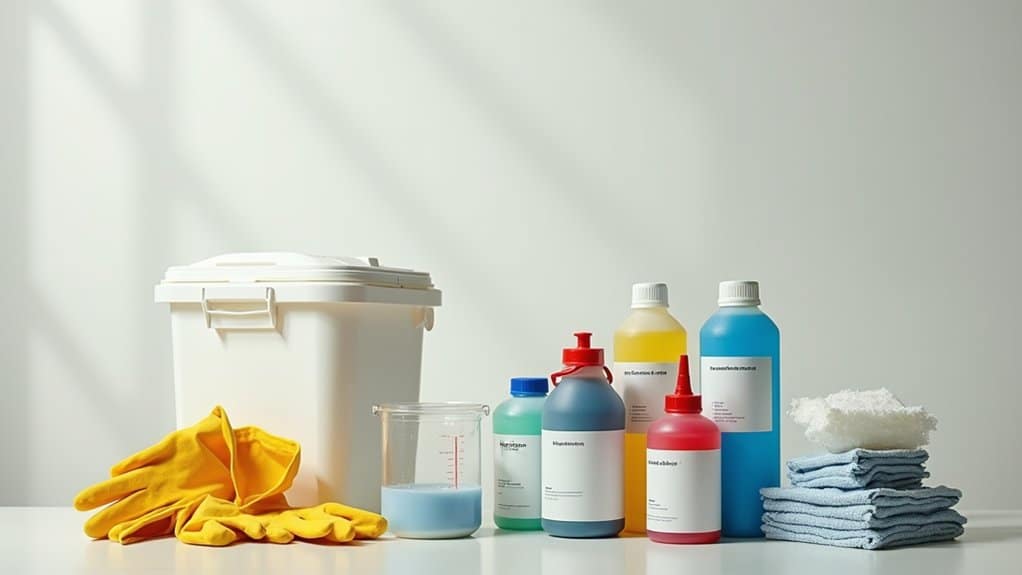
Maintaining proper chemical safety at swimming pools requires vigilant attention and precise handling protocols. You’ll need to understand both preventive measures and emergency procedures to guarantee everyone’s safety around pool chemicals. If you’re responsible for pool maintenance, always wear appropriate protective equipment and follow strict storage guidelines.
Pool chemical safety demands constant diligence and expert protocols to protect both maintenance staff and swimmers from potential hazards.
- During chemical exposure incidents, immediately move affected persons away from the area, remove contaminated clothing, and flush the exposed area with clean water for at least 15 minutes.
- Keep detailed records of all pool chemicals, including Safety Data Sheets (SDS), and store them in a well-ventilated, dry area away from direct sunlight.
- Never mix different pool chemicals together, as this can create dangerous gases – if accidental mixing occurs, evacuate the area immediately and contact emergency services.
Weather-Related Pool Hazards and Safety Protocols
Weather conditions pose significant risks to pool safety and require specific protocols to protect swimmers and staff. You’ll need to monitor weather forecasts regularly and establish clear evacuation procedures for severe conditions.
For lightning safety, verify you’re following the 30/30 rule: clear the pool when you see lightning or hear thunder, and don’t allow swimming to resume until 30 minutes after the last thunder or lightning. Install a reliable weather alert system and post visible storm preparedness guidelines near the pool area.
During high winds, remove loose furniture and equipment that could blow into the pool. You should also have protocols for extreme heat, including mandatory rest periods and hydration breaks. Keep emergency supplies readily available, including first aid kits and emergency communication devices specifically designated for weather-related incidents.
Frequently Asked Questions
How Long Should Children Wait to Swim After Eating a Meal?
The old rule about waiting an hour after eating before swimming isn’t strictly necessary for swimming safety. You can swim after a meal, but it’s smart to practice moderate meal timing. If you’ve had a large meal, wait 30 minutes to let initial digestion occur. You’ll feel more comfortable and avoid potential cramping. For light snacks, you don’t need to wait at all – just make sure you’re not uncomfortably full before entering the water.
What’s the Ideal Water Temperature for Safe Recreational Swimming?
For safe and comfortable swimming, you’ll want to maintain ideal swimming temperatures between 77-82°F (25-28°C). If you’re engaging in vigorous exercise, temperatures closer to 77°F are best. Be aware of health risks: water that’s too cold can cause muscle cramping and hypothermia, while temperatures above 84°F may lead to overheating and fatigue. For young children and elderly swimmers, aim for the warmer end of this range, around 82°F.
Can Pool Lights Cause Electrical Hazards During Thunderstorms?
Yes, pool lights can create serious electrical hazards during thunderstorms. You’ll need to exit the pool immediately when you hear thunder or see lightning, as water conducts electricity effectively. For proper electrical safety, turn off all pool equipment, including lights, pumps, and filters. As part of your storm preparedness plan, you should wait at least 30 minutes after the last thunder before resuming pool activities to guarantee your safety.
Should Infants Wear Special Diapers Designed for Swimming Pools?
Yes, you should always use specially designed swimming diapers for your infant in pools. Regular diapers aren’t made to contain waste in water – they’ll swell up and potentially leak, creating serious health hazards for other swimmers. For ideal infant safety, use snug-fitting swim diapers that are specifically designed to prevent waste from entering the pool water. You’ll find these available in both disposable and reusable options at most baby supply stores.
How Often Should Pool Depth Markers Be Inspected and Repainted?
You’ll need to inspect your pool’s depth markers monthly and repaint them at least annually as part of regular pool safety maintenance. Check for fading, chipping, or poor visibility, especially in high-traffic areas. If you notice any deterioration, don’t wait for the annual repainting address it immediately. Proper depth maintenance helps prevent accidents and guarantees swimmers can easily identify water levels. In commercial pools, local regulations may require more frequent inspections and repainting.