Always wear proper PPE including goggles, chemical-resistant gloves, and protective clothing when handling pool chemicals. Store chemicals in a well-ventilated area between 55-85°F, away from direct sunlight and heat sources. Never mix different chemicals together, and maintain strict separation of products. Keep detailed logs of all chemical applications and tests. Follow manufacturer dilution ratios precisely. Understanding additional safety protocols will help prevent dangerous chemical reactions and accidents.
Understanding Common Pool Chemical Hazards
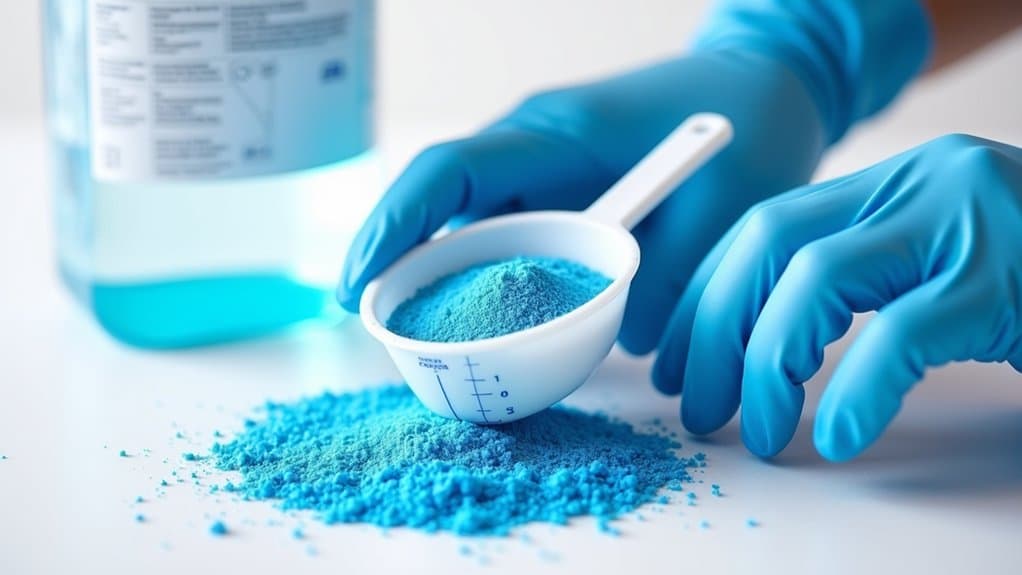
While pool chemicals are essential for maintaining water safety, they pose serious hazards that require careful handling and awareness. You’ll need to understand that mixing different types of chemicals, especially organic and inorganic chlorinating agents, can trigger explosive chemical reactions. When these products interact with water or humidity, they can release dangerous chlorine gas that causes severe respiratory problems. Highly concentrated products require strict adherence to dilution ratios to prevent accidents. Proper chemical storage in cool, dry, well-ventilated areas away from sunlight is crucial for preventing dangerous decomposition.
Be alert to toxic exposure risks, as direct contact with these chemicals can result in eye burns, skin irritation, and breathing difficulties. Wearing proper personal protective equipment is essential when handling any pool chemicals. Never store incompatible chemicals near each other, and always clean equipment between uses to prevent cross-contamination. Watch for signs of chemical decomposition, as aged products can become unstable and release harmful gases. Keep storage areas well-ventilated to prevent dangerous gas accumulation.
Proper Chemical Storage Requirements
You’ll need to maintain your chemical storage room between 55-85°F using dedicated climate control systems to prevent dangerous temperature fluctuations that can destabilize pool chemicals. Your storage facility must feature non-combustible flooring materials, leak-tested sumps, and proper ventilation systems to handle toxic fumes and prevent gas accumulation. Install clear signage, secure doors with restricted access, and guarantee your storage room’s design includes sloped floors that direct any accidental spills toward appropriate containment drains. Regular water entry inspections are critical to identify and seal any potential moisture pathways that could compromise chemical safety. Always keep chemical containers stored on leak-proof secondary containment shelving to prevent hazardous spills from reaching the ground.
Temperature Control Guidelines
Maintaining proper temperature control in chemical storage areas stands as a critical safety requirement for pool chemicals. You’ll need to keep storage spaces below 95°F, utilizing temperature monitoring techniques and climate-controlled storage when possible. Direct sunlight and heat sources like radiators must be avoided to prevent chemical degradation.
For liquid chlorine and other heat-sensitive products, you’ll want to implement specific precautions. Use thermal barriers and proper ventilation to manage heat buildup, and don’t stack containers in ways that trap warmth. It is crucial to monitor temperatures closely during summer months and maintain consistent climate conditions year-round. Following these guidelines helps maintain website security measures and protects against potential chemical hazards. You should also keep humidity levels low, as moisture can trigger unwanted chemical reactions. Store your chemicals in their original, tightly sealed containers, and replace any damaged packaging immediately. For beginners seeking guidance, the Pool School section provides comprehensive safety information about chemical handling and storage. Additionally, always ensure you read the instructions carefully before attempting to safely add chlorine to pool water, as improper handling can lead to dangerous situations. Regularly check expiration dates on your chemical products to ensure efficacy and safety.
Storage Room Design Requirements
Beyond temperature control, proper storage room design serves as the foundation for safe chemical handling. Your storage area design must include segregated spaces for different chemical types, secondary containment systems, and adequate ventilation. You’ll need to designate high-hazard occupancy classifications to accommodate larger chemical quantities while guaranteeing proper chemical segregation. Fire suppression equipment should be strategically placed throughout the storage facility.
| Design Element | Requirement |
|---|---|
| Ventilation | Separate HVAC system with emergency cutoff |
| Access Control | Restricted entry with locked doors |
| Safety Features | Emergency showers and eyewash stations |
| Containment | Secondary containment systems for spills |
| Signage | Clear hazard warnings and evacuation routes |
Install proper lighting for clear visibility and position safety equipment near storage areas for quick access. Don’t forget to maintain updated safety data sheets (SDS) and verify your design complies with local fire codes and ASHRAE standards.
Personal Protective Equipment Essentials
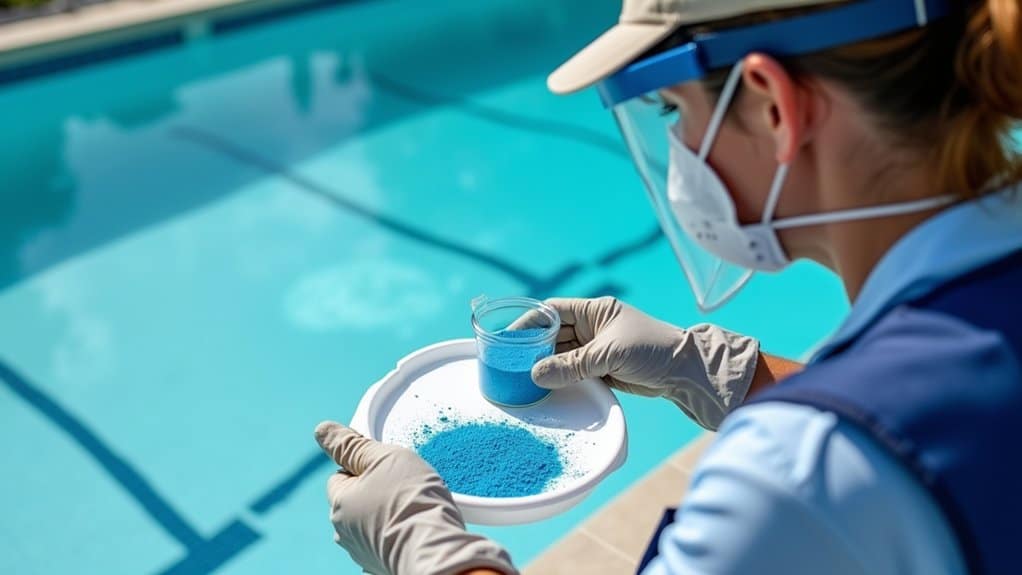
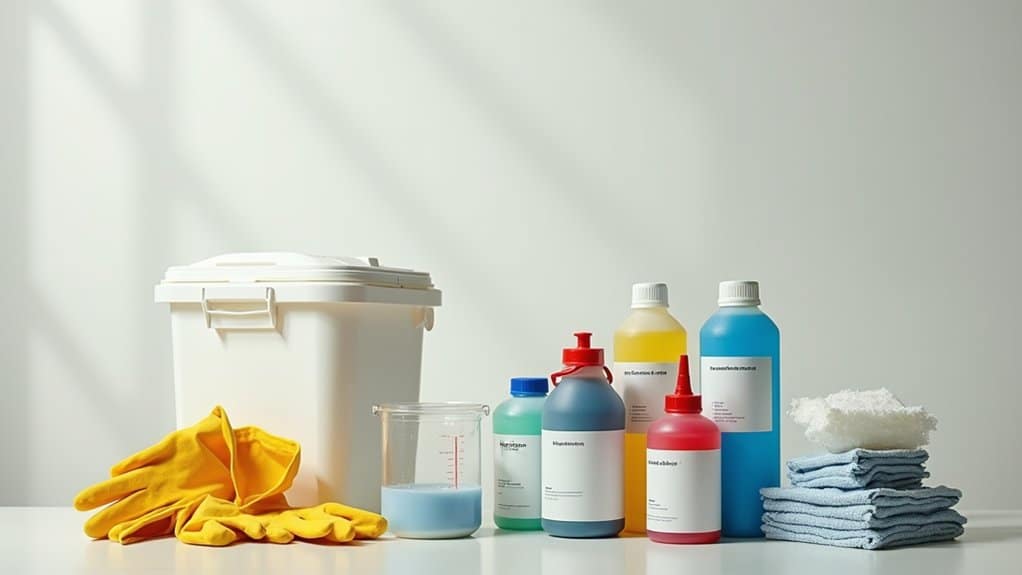
The proper use of personal protective equipment (PPE) stands as your first line of defense when handling pool chemicals. When making your PPE selection, you’ll need safety goggles, chemical-resistant gloves, protective clothing, and appropriate respiratory protection. A reliable solution is keeping your gear in a resealable orange bucket for safe, organized storage of all components. Always inspect your PPE before use, checking for tears, cracks, or signs of degradation. Reviewing Safety Data Sheets will help ensure you have all necessary protective gear for specific chemicals. Don’t compromise on proper fit – guarantee your goggles seal completely and masks are properly secured. Working in a well-ventilated area is essential when handling pool chemicals while wearing PPE. You’ll need to wear PPE during all chemical handling tasks, including mixing, adding chemicals to water, and cleaning up spills. Keep your equipment clean by washing reusable items after each use, and store them in a dry, ventilated area away from chemicals. Remember to designate specific PPE for different chemicals to prevent cross-contamination and maintain equipment integrity.
Safe Chemical Handling Procedures
When handling pool chemicals safely, you’ll need to implement an extensive system of controls and procedures. Always store chemicals in separate, clearly labeled containers with secondary containment systems to prevent cross-contamination and spills. Personal protective equipment should be cleaned regularly and kept readily available for use. Minimize chemical exposure by using closed systems or scoops, and remember to add chemicals to water, not vice versa. Wear appropriate safety protective equipment including goggles, chemical-resistant gloves, and fresh air masks when handling any pool chemicals. Keep all chemical containers tightly sealed to maintain effectiveness and prevent dangerous reactions. Additionally, ensure you follow proper steps for measuring pool chemicals to maintain balance and safety in your pool environment. It’s crucial to use clean and precise measuring tools to avoid inaccuracies that could lead to unsafe water conditions.
Ensure proper ventilation in storage areas through mechanical or natural airflow systems, and install emergency HVAC cutoffs to manage airborne concentrations. Implement automatic shut-offs for chemical feed pumps and maintain regular safety audits of equipment. Keep Safety Data Sheets readily accessible and review them before handling any chemicals. Track chemical quantities, document maintenance schedules, and update procedures whenever new guidelines emerge. These practices will help maintain a safe chemical handling environment.
Emergency Response and Spill Management
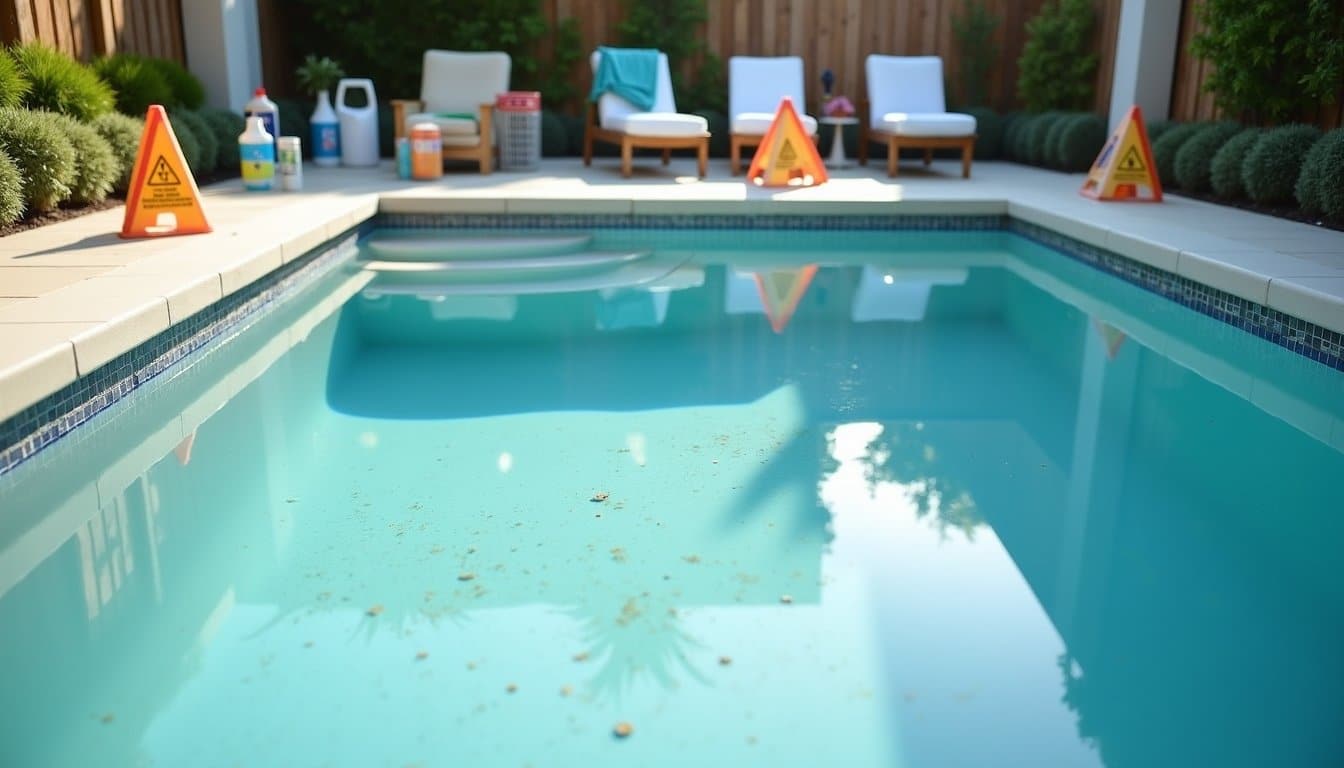
Proper chemical handling practices must be supported by robust emergency response protocols. Your facility should maintain detailed spill response plans that include cleanup procedures, containment strategies, and clear evacuation protocols. Chemical safety data sheets should be prominently posted near storage areas for quick reference during emergencies. Keep spill kits stocked with chemical-specific absorbents and neutralizing agents in easily accessible locations.
When managing a chemical incident, you’ll need to act swiftly. With 4,500 pool injuries occurring annually from chemical accidents, immediate response is critical. Immediately contain spills using appropriate barriers, wear full PPE including chemical-resistant gloves and goggles, and avoid using water which may react with chemicals. Coordinate evacuations through trained staff and secure affected areas with warning signs. After the incident, document all details thoroughly, including chemical types and volumes involved. You’ll need to report to relevant authorities and review your response effectiveness to strengthen future emergency preparedness. Additionally, prioritize staff training on pool chemical safety tips to ensure everyone is well-prepared to handle potential incidents. Regular drills can reinforce the importance of quick decision-making under pressure.
Ventilation and Air Quality Control
Maintaining effective ventilation systems stands paramount in preventing hazardous chemical vapor accumulation and ensuring safe air quality in pool facilities. Your ventilation design must separate chemical storage areas from main building systems while maintaining minimum airflow rates of 1 CFM per square foot or 10 air changes hourly.
| Component | Requirement | Safety Measure |
|---|---|---|
| Storage Rooms | Dedicated Ventilation | Direct Outside Exhaust |
| Chlorine Areas | Low Return Vents | Flow-Sensing Shutoffs |
| Acid Storage | High Return Vents | Secondary Containment |
| Chemical Zones | 40°F Minimum Temp | Emergency Disconnects |
| Air Systems | ASHRAE Compliance | Regular Inspections |
You’ll need to monitor air velocity consistently and position return vents based on vapor density low for chlorine and high for acid. Don’t forget to install check valves in chemical feed lines and maintain proper lighting for clear label visibility.
Equipment Maintenance Safety Protocols
You’ll need to establish a strict preventive maintenance schedule for all pool chemical equipment, including pumps, feeders, and monitoring systems. Your testing requirements must include monthly validation of auto-shutoff mechanisms, pump alarms, and control systems to guarantee proper chemical dosing and safety protocols. Remember to document all equipment checks, repairs, and replacements in a maintenance log while immediately addressing any signs of wear or malfunction to prevent chemical handling accidents.
Preventive Service Scheduling
When it comes to pool chemical safety, establishing a robust preventive service schedule is crucial for maintaining equipment integrity and preventing hazardous malfunctions. Set up annual inspections with certified technicians to assess your equipment’s condition and replace worn components before they fail. Don’t forget to schedule service reminders for regular maintenance tasks like pump cleaning and seal lubrication.
You’ll need to align your preventive maintenance with seasonal demands and guarantee professionals handle complex repairs involving electrical systems or chemical injectors. Follow manufacturer guidelines for equipment servicing to maintain warranty coverage. Keep detailed records of all maintenance activities and schedule regular feed system recalibration to maintain proper chemical dosing. Remember to conduct frequent visual inspections for corrosion, cracks, or loose connections between scheduled professional services.
Equipment Testing Requirements
Regular equipment testing forms the cornerstone of pool chemical safety protocols. You’ll need to perform systematic inspections of all critical components, including pumps, filters, and chemical feed systems. Document your findings in detailed maintenance logs while guaranteeing easy access to safety data sheets (SDS) in your work area.
Start by verifying pump performance and conducting chemical testing to confirm proper dosing levels. Calibrate your testing equipment regularly to maintain accuracy, and inspect all safety features, including emergency shutoffs and ventilation systems. Don’t forget to check spill containment measures and guarantee proper PPE is readily available near chemical storage areas. Follow local codes when performing these assessments, and maintain thorough records of all equipment tests, calibrations, and maintenance procedures.
Record Keeping and Chemical Documentation
Proper record keeping forms the foundation of safe pool chemical management. You’ll need to maintain detailed logs of all chemical tests, applications, and maintenance procedures. Track your daily chemical tests, including pH, chlorine levels, and total alkalinity, using state-approved documentation templates. Don’t forget to record the exact amounts and times of chemical additions.
Your chemical tracking system should include supervisor credentials, bather counts, and equipment maintenance schedules. Documentation accuracy is essential when logging incidents like fecal contamination or illness outbreaks. Keep thorough records of storage conditions, PPE usage, and chemical segregation practices. Make sure you’re following your state’s specific testing frequency requirements for example, conducting three daily tests for pools or checks at two-hour intervals for hot tubs.
Training Requirements for Pool Operators
All public pool operators must meet strict certification requirements to guarantee safe facility management. You’ll need to complete a thorough 14-hour training curriculum that covers essential safety protocols and chemical handling procedures. The certification process requires you to be at least 16 years old and pass a written exam with a minimum score of 70%.
| Requirement | Details |
|---|---|
| Age | 16+ years |
| Course Length | 14 hours |
| Exam Score | 70% minimum |
| Certification Period | 3 years |
| On-Site Staffing | 1 certified operator |
Your training will focus on water quality management, emergency response, and safety regulations. Once certified, you must maintain valid documentation on-site and stay current with local health department requirements. Remember, certification renewal is necessary every three years to ensure you’re up-to-date with evolving safety standards.
Frequently Asked Questions
How Long Can Pool Chemicals Be Stored Before They Expire?
Your pool chemical shelf life varies considerably depending on the type and proper storage conditions. You’ll get 3-5 years from granular chlorine and up to 5 years from trichlor tablets when you store them correctly. Liquid chlorine won’t last as long, expiring within weeks or months. Store your chemicals in cool, dark places with air-tight containers to maximize their lifespan. You’ll need to check for signs of degradation like clumping or discoloration regularly.
Can Pool Chemicals Be Mixed With Household Cleaners for Better Results?
Never mix pool chemicals with household cleaners this is extremely dangerous and potentially lethal. Pool chemical interactions with common household cleaners can release toxic gases like chloramine or chlorine gas. You’ll risk severe respiratory problems, chemical burns, and even explosions. There aren’t any benefits to combining these substances; instead, you’re creating household cleaner dangers that could harm you and your family. Stick to using pool chemicals exactly as directed.
What Should I Do if Pool Chemicals Accidentally Freeze?
If your pool chemicals freeze, don’t rush the chemical thawing process. Allow them to thaw naturally at room temperature never use heat or hot water to speed it up. Once thawed, carefully inspect the containers for damage and check the chemicals for any changes in consistency or appearance. If you notice clumping, separation, or container damage, opt for safe disposal following local hazardous waste guidelines and purchase new chemicals.
How Often Should Chemical Storage Containers Be Replaced?
You’ll need to replace your chemical storage containers based on their specific type and usage. Generally, replace plastic containers every 2-3 years, or sooner if you notice signs of wear like cracks, discoloration, or deteriorating seals. For metal containers, inspect monthly for rust or corrosion. Always follow manufacturer’s safe storage guidelines and replace immediately if you spot damaged labels, compromised integrity, or any containers that have been exposed to extreme conditions.
Can I Use Swimming Pool Test Strips Past Their Expiration Date?
You shouldn’t use expired test strips for pool testing, as they won’t provide accurate readings of your water chemistry. Even if they’ve been stored properly, the reagents in test strips break down over time, compromising their testing accuracy. Unreliable results can lead to improper chemical adjustments, putting swimmers at risk. Instead, you should always use fresh test strips within their expiration date to guarantee safe and accurate water monitoring.