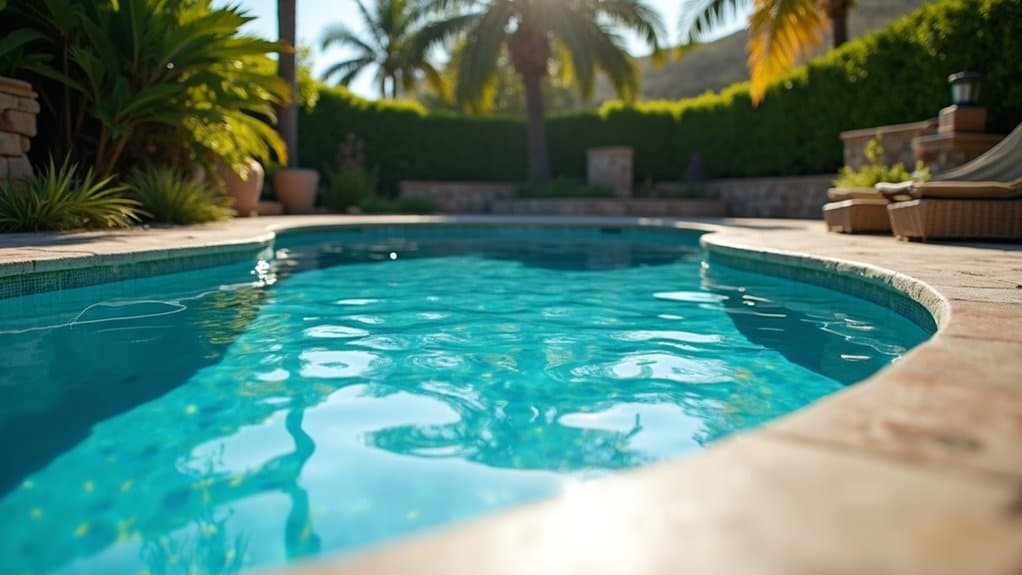
Swim jets create a continuous swimming current in your exercise pool through a powerful pump system that draws water through intake ports and propels it out through specialized nozzles. You’ll find the current strength can be adjusted via a control panel to match your desired workout intensity. The system combines water with air bubbles for smoother flow patterns, while digital controls let you customize flow direction and velocity. Understanding the technical aspects of swim jet mechanics will improve your training experience.
Key Takeaways
- Swim jets use powerful pumps to draw water through intake ports and expel it through nozzles, creating a current to swim against.
- Different jet types (propeller-driven, air-induction, or high-volume) produce varying current strengths and patterns for different training needs.
- Water velocity and flow patterns can be adjusted via control panels to accommodate different swimming abilities and workout intensities.
- Jets can be customized with programmable settings for interval training and specific stroke practice, saving multiple user profiles.
- The system combines water and air through specialized nozzles to create a smooth, consistent current for continuous swimming exercise.
The Basic Mechanics Behind Swim Jets
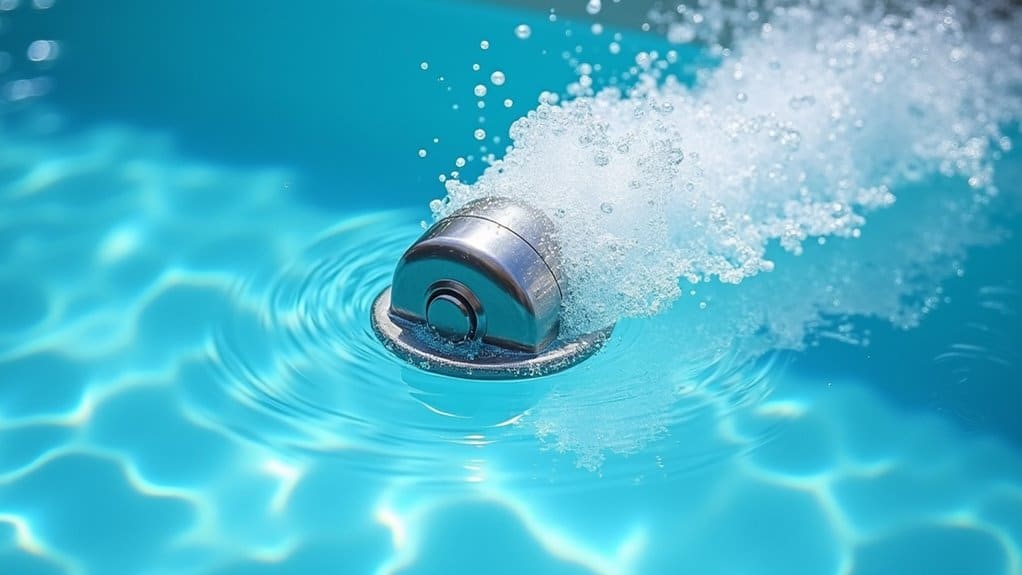
A swim jet system consists of three core components: a pump, intake ports, and discharge nozzles. The pump creates powerful suction that draws water through the intake ports, typically located along the pool’s sides. This water then gets propelled through the discharge nozzles at high velocity, creating a strong current for you to swim against.
The system operates on basic hydrodynamic principles, where the water flow creates resistance proportional to the pump’s power output. You’ll find that most systems allow you to adjust the current’s strength by controlling the pump’s speed or the nozzles’ direction. The discharged water stream maintains a consistent flow pattern, enabling you to practice different swimming strokes or engage in aquatic exercises without reaching the pool’s end. Moreover, the adjustable flow settings emulate realistic swimming conditions, providing an experience similar to how an infinity pool operates. This design not only enhances your training routine but also promotes stamina building and improved technique.
Components of a Swim Jet System
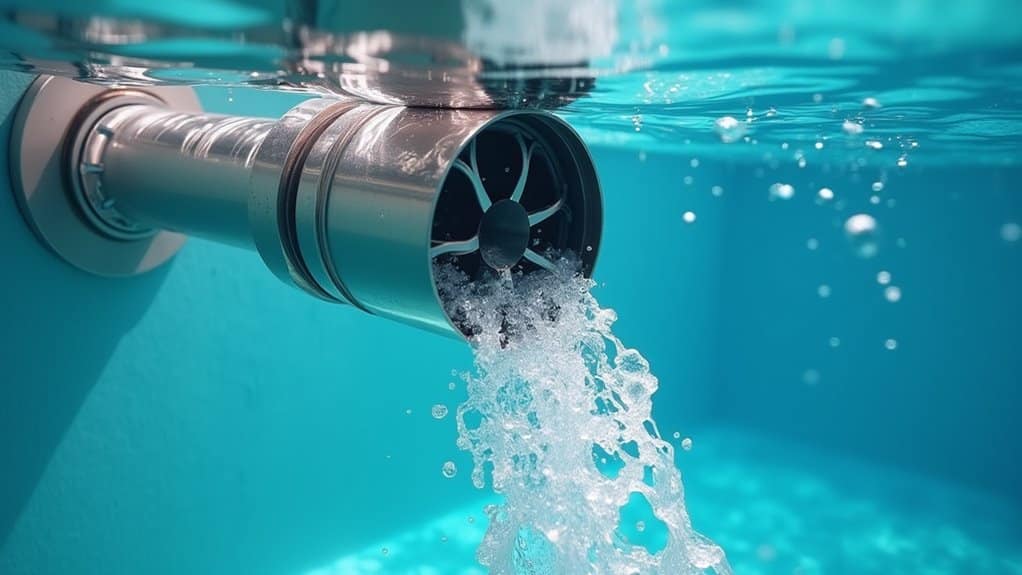
While understanding the basic mechanics provides a foundation, examining each component of a swim jet system reveals how these parts work together to create an effective swimming environment. You’ll find that the core swim jet components include a powerful pump system, intake grates, plumbing networks, and specialized nozzles designed for ideal jet propulsion.
The pump housing contains an impeller that draws water through the intake grates, while the plumbing network channels this water to the jet nozzles. You’ll notice that the nozzles are precisely engineered to control water flow direction and velocity. A control panel lets you adjust the system’s power output, and air injection systems mix air with water to create a smoother, more comfortable swimming experience. These components work in concert to deliver consistent water resistance for your workout.
Types of Swim Jets Available
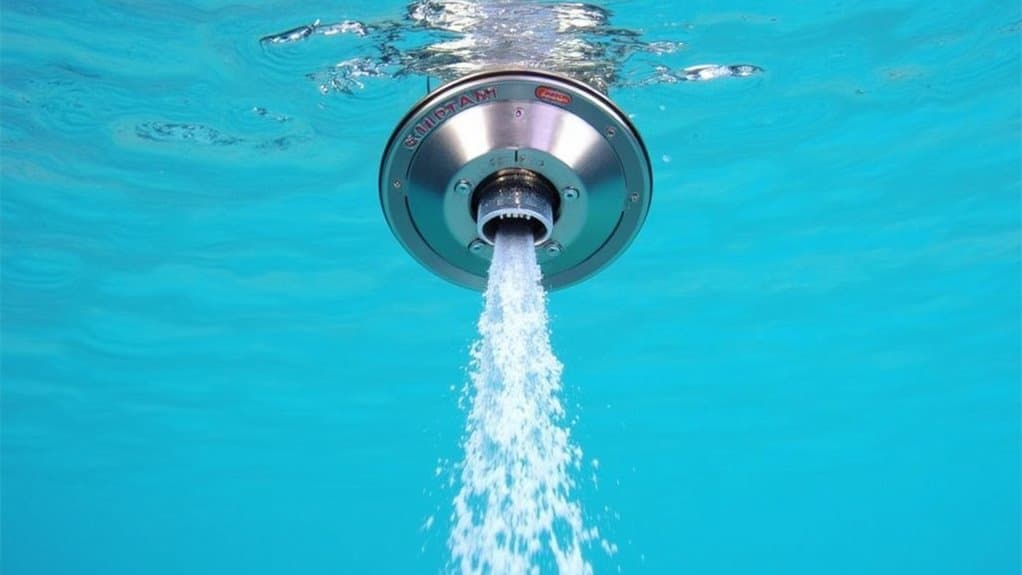
Several distinct swim jet configurations are available in today’s market, each offering unique performance characteristics and training benefits. As you investigate swim jet types, you’ll encounter varying jet technology designs that can greatly impact your swimming experience.
Modern swim jet systems provide diverse training options, with each configuration delivering distinct performance benefits for different swimming needs.
Current jet technology options include:
- Propeller-driven systems that generate wide, deep currents ideal for serious training and competitive swimming
- Air-induction jets that combine water with air bubbles to create a softer, more buoyant flow pattern
- High-volume pumps that produce powerful, focused streams suitable for resistance workouts
- Hydraulic-powered units delivering consistent, adjustable water flow patterns for precision training
You’ll need to evaluate these swim jet types based on your specific training goals, pool size, and desired workout intensity to select the most appropriate system for your needs. Additionally, consider how each type of swim jet integrates with your existing setup and whether it can accommodate future upgrades. The benefits of a spool setup can enhance your training experience by allowing for easier adjustments to flow intensity, providing a more tailored workout.
Installation Requirements and Considerations
Once you’ve selected the appropriate swim jet system for your needs, proper installation becomes the next key factor in ensuring peak performance. You’ll need to carefully evaluate your installation location, considering both structural support requirements and accessibility for maintenance. The chosen spot must accommodate the jet housing, pump system, and associated plumbing components.
Plumbing considerations include ensuring adequate water flow capacity, proper pipe sizing, and strategic placement of valves and filters. You’ll need to maintain specific minimum distances between jets and pool walls while accounting for ideal water return paths. The electrical requirements demand professional installation to meet local safety codes, including proper grounding and GFCI protection. Furthermore, you’ll want to verify that your pool’s shell can support the mounting hardware and withstand the forces generated by the jet system.
Power and Performance Specifications
Performance metrics of swim jet systems are defined by their power output, water velocity, and flow rate specifications. You’ll find that power ratings typically range from 2 to 5 horsepower for residential units, while commercial systems can exceed 10 horsepower. These specifications directly impact your swimming experience and training effectiveness.
Key performance metrics to evaluate when assessing swim jet systems:
Thorough evaluation of swim jet systems requires careful analysis of flow rates, velocity, efficiency, and thrust capabilities.
- Flow rate capacity, measured in gallons per minute (GPM), typically ranging from 200-800 GPM
- Water velocity potential, which can reach speeds up to 8 feet per second
- Pump efficiency ratings, indicating energy consumption and operational costs
- Thrust force generated, measured in pounds of resistance against the swimmer
Your swim jet’s performance capabilities should align with your intended use, whether for casual exercise, professional training, or therapeutic purposes.
Benefits for Different Exercise Routines
While traditional swimming pools limit exercise options, swim jets transform your pool into a versatile fitness center that accommodates diverse workout routines. You’ll gain access to customizable resistance levels for aerobic workouts, allowing you to adjust the water flow intensity to match your fitness goals. The adjustable current provides an ideal environment for resistance training, enabling you to build strength through water-based exercises.
For rehabilitation exercises, you can utilize the controlled resistance to support joint mobility and muscle recovery while minimizing impact. The jets create a consistent flow that’s perfect for aquatic fitness activities like water jogging, core strengthening, and endurance training. You’re able to perform stationary swimming against the current, which improves cardiovascular conditioning and muscle tone without the need for continuous turns at pool ends. Additionally, the controlled environment of the pool allows for a safe and effective workout while enjoying the chemical free swimming pool benefits. This encourages longer training sessions and enhances overall well-being without the irritation often associated with traditional swimming pools.
Maintenance and Care Guidelines
Regular maintenance of swim jet systems guarantees peak performance and extends equipment lifespan. You’ll need to follow specific maintenance schedules and cleaning techniques to guarantee your swim jets continue operating efficiently.
- Check and clean your jet inlet screens monthly to prevent debris buildup that can restrict water flow and strain the motor
- Inspect seals and gaskets quarterly for signs of wear or damage, replacing them promptly to prevent water leakage
- Test water chemistry weekly and maintain proper pH levels (7.2-7.6) to prevent corrosion of jet components
- Schedule professional servicing annually to assess motor performance, calibrate pressure settings, and verify electrical connections
For maximum results, document all maintenance activities and keep detailed records of any repairs or part replacements. This systematic approach helps you track system performance and anticipate potential issues before they become serious problems.
Energy Efficiency and Operating Costs
Operating costs for swim jet systems depend primarily on your pool’s power source, motor efficiency rating, and usage patterns. You’ll find that modern swim jets typically consume between 2-5 kilowatts per hour of operation, translating to approximately $0.25-$0.60 per hour based on average electricity rates.
To enhance energy savings, you’ll want to select a system with variable speed motors and high-efficiency pumps. These components can reduce power consumption by up to 30% compared to standard models. When conducting a cost analysis, factor in both direct electricity expenses and potential utility demand charges during peak hours. You can optimize operating costs by scheduling your swim sessions during off-peak periods and maintaining proper water chemistry, which helps your system operate at peak efficiency.
Customization Options and Settings
Modern swim jet systems offer extensive customization through digital controls and programmable settings that let you fine-tune your aquatic workout. Custom swim jets feature adjustable flow patterns that adapt to your specific training needs and skill level.
- Control the water velocity from gentle resistance for rehabilitation to powerful currents for advanced training
- Adjust the width and direction of the water stream to target different muscle groups and swimming styles
- Program interval training sequences with automated speed variations and timed rest periods
- Save multiple user profiles with preferred settings for different family members
The precision controls allow you to create consistent, repeatable workout conditions. You’ll find touchscreen interfaces that display real-time feedback on flow rates, energy usage, and workout duration. These customization features transform your exercise pool into a versatile training environment that grows with your abilities.
Safety Features and Best Practices
While swim jets provide an excellent workout environment, thorough safety features and protocols are vital for risk-free operation. You’ll need to familiarize yourself with the emergency shut-off switch locations and maintain proper distance from the jet outlets during operation. Never block or tamper with the intake grates, as they’re essential safety components.
Establish clear safety protocols, including regular equipment inspections and proper chemical maintenance. You should post emergency procedures in visible locations and guarantee all users understand basic operational guidelines. Don’t exercise alone, and keep safety flotation devices nearby. If you’re new to swim jets, start at lower speeds until you’re comfortable with the water resistance. Always monitor unusual sounds or vibrations from the system, and shut down the jets immediately if you notice any operational irregularities.
Frequently Asked Questions
Can Swim Jets Help Improve Specific Swimming Strokes Like Butterfly or Breaststroke?
You can effectively use swim jets to refine your stroke technique for butterfly and breaststroke. The consistent swim resistance helps you focus on proper arm positioning, body rotation, and kick timing. You’ll get immediate feedback when your form breaks down against the current. However, you’ll need to adjust the jet speed carefully – too strong can disrupt your natural rhythm, while too weak won’t provide enough resistance for meaningful technique improvements.
What’s the Average Lifespan of a Swim Jet System?
You can expect your swim jet system to last 10-15 years with proper maintenance. To enhance longevity, you’ll need to regularly clean filters, check pump seals, and inspect electrical connections. Replacement costs typically range from $2,000-$5,000 for complete system overhaul. Individual components like pumps may need earlier replacement, usually every 5-7 years. Following manufacturer maintenance tips, including annual professional inspections and water chemistry monitoring, will help extend your system’s lifespan.
Do Swim Jets Affect the Water Chemistry or Sanitization Requirements?
Swim jets will impact your pool’s water balance and may require more frequent chemical adjustments. The constant water movement increases chlorine depletion and can affect pH levels more rapidly than in standard pools. You’ll need to monitor sanitizer levels more closely and potentially increase your chemical maintenance schedule. The added aeration from jets can also accelerate water evaporation, which may require more frequent balancing of total dissolved solids.
Are Swim Jets Suitable for Children Learning to Swim?
You’ll need to exercise caution when allowing children to use swim jets for swimming lessons. While jets can provide a controlled environment for practice, they generate strong currents that may overwhelm young swimmers. Always guarantee proper supervision and start with the lowest jet settings. For beginners, it’s recommended to focus on basic swimming skills without jets initially. Consider swim safety measures like flotation devices and maintaining clear communication with your child while using jets.
Can Multiple People Use Swim Jets Simultaneously for Group Exercises?
You can organize group workouts with swim jets, but you’ll need to take into account the pool’s size and jet configuration. Most exercise pools accommodate 2-3 people comfortably for synchronized swimming or group exercises. However, the jet stream’s effectiveness diminishes when shared between multiple users. For best results, you’ll want to position participants in a staggered formation rather than side-by-side to guarantee each person receives adequate water resistance.