Your pool’s chemical costs will typically range from $500-$3,600 annually, depending on your pool size, type, and sanitization system. You’ll need essential chemicals like chlorine ($15-$80), stabilizers ($20-$30), and shock treatments ($25-$50) for proper maintenance. While professional servicing costs $100-$300 monthly, DIY maintenance can save you around $1,200 per year. Smart technology and seasonal management strategies can help you optimize these expenses and enhance your pool’s efficiency.
Essential Pool Chemicals: A Cost Breakdown
Three primary factors drive pool chemical costs: the type of chemicals needed, your pool’s size, and local water conditions. Your pool’s essential chemical requirements include sanitizers like chlorine ($15-$80) and bromine ($30-$50), which form the foundation of pool chemical safety. Stabilizers ($20-$30) and shock treatments ($25-$50) maintain proper chemical balance, while clarifiers ($20-$30) guarantee water clarity. Professional servicing can ensure optimal chemical balance at higher monthly rates of $100-$300. DIY maintenance can save homeowners approximately $1,200 annually on chemical and service costs.
For maximum economic efficiency, you’ll also need algaecides ($14-$60), metal removers ($15-$30), and stain removers ($15-$40). These costs vary based on your pool’s volume and usage patterns. A typical 15,000-gallon pool requires monthly chemical investments ranging from $80-$150, though this fluctuates with seasonal demands and water quality. Regular testing and proper chemical storage help optimize your chemical usage and reduce overall expenses. Deep cleaning procedures should be performed every 1-2 weeks to maintain proper sanitation and chemical balance.
Monthly vs. Annual Chemical Expenses
When planning your pool’s chemical budget, understanding both monthly and annual expenses helps you make informed financial decisions. Your monthly budgeting typically ranges from $15-$50 for basic DIY maintenance, while service-inclusive plans run $80-$150. However, larger pools or those requiring frequent treatments can push costs to $100-$200 monthly. Basic DIY chemical supplies can cost around $114 annually. If you encounter any security restrictions while accessing online pool maintenance resources, remember to contact the site owner with relevant details for assistance.
For annual forecasting, expect to spend $500-$800 for moderate-sized pools, though heated or saltwater systems may exceed $1,000 yearly. Concrete pools demand considerably higher investments, often reaching $2,400-$3,600 annually due to increased pH management needs. You’ll notice seasonal variations, with summer months requiring 20-30% more sanitizer use. Trusted pool experts can provide guidance on selecting the most cost-effective chemical solutions. Consider implementing cost-saving strategies like using chlorine stabilizers and bulk purchasing to reduce your chemical expenses by up to 50% throughout the year. Additionally, maintaining a pool chemicals checklist ensures you’re using the right chemicals and amounts for your pool type and conditions. Regularly reviewing it helps prevent overuse, saves money, and keeps your pool water clean and balanced.
Factors Affecting Chemical Pricing
Regional supply chains directly impact your chemical costs, with areas farther from production facilities typically seeing higher prices due to increased transportation expenses. You’ll notice seasonal price swings as demand peaks during summer months, often leading to temporary shortages and price spikes in high-volume markets. Recent supply chain disruptions have created additional volatility in chemical pricing across many regions. The quality grade of chemicals you select also affects pricing, with commercial-grade products generally costing more than residential options due to higher concentration levels and stricter quality control standards. Major retailers like Walmart Pool Essentials consistently offer competitive pricing options for residential pool owners. Annual chemical expenses vary significantly between pool types, with chlorine tablets costing between $175 to $750 per year for traditional chlorine pools.
Regional Supply Chains
Supply chain dynamics greatly influence pool chemical pricing across different regions, with factors like transportation infrastructure, regulatory compliance, and raw material availability playing essential roles. Regional sourcing and logistics challenges directly impact what you’ll pay for pool chemicals in your area. The industry’s projected growth to $2.30 billion in 2025 is creating additional pressure on supply chains to meet increasing demand. Supply chain disruptions continue to cause significant volatility in material costs across all regions. The rapid growth of chemical e-commerce sales is reshaping distribution networks and warehouse requirements for pool chemicals.
Key regional supply chain factors affecting your costs:
- 3PL providers now handle 60% of chemical storage, optimizing distribution but potentially increasing prices in areas with limited warehouse options
- Port modernization efforts and infrastructure upgrades are reducing costs in coastal regions while inland areas face higher transportation fees
- Strict OSHA and REACH compliance requirements add 20-30% to storage costs, particularly affecting North American and European markets
- Asia-Pacific’s growing demand creates price pressure in regions competing for the same raw materials and shipping capacity
Seasonal Market Fluctuations
Market dynamics throughout the year create predictable patterns in pool chemical pricing, with several key factors driving these seasonal fluctuations.
You’ll notice that seasonal demand considerably impacts restocking schedules and pricing strategies, particularly during peak swimming months. Pool chemical companies are increasingly using data-driven systems to anticipate these fluctuations, helping them optimize inventory and adjust prices accordingly. As the market continues its projected 4.56% CAGR growth through 2033, you’re likely to see more sophisticated pricing models emerge. Due to ongoing industry challenges, suppliers are dealing with volatile chemical costs that require careful inventory management. The heightened focus on water quality standards has further intensified market demand for premium treatment solutions.
Technology now enables suppliers to implement dynamic pricing based on real-time demand analytics, helping them balance profitability with market conditions. While traditional pricing structures remain prevalent, you’ll find that many companies are adopting hybrid approaches that combine fixed rates with seasonal adjustments to better manage supply chain costs and customer expectations. The industry’s growth is particularly strong in North American markets, where abundant raw materials and mature manufacturing processes drive competitive pricing.
Quality Grade Differences
When evaluating pool chemical costs, understanding quality grade differences becomes essential as they significantly impact both short-term pricing and long-term maintenance expenses. Your quality evaluation should focus on concentration levels and formulation types, as professional-grade products typically offer superior value despite higher upfront costs.
During your product comparison process, consider these critical factors:
- Professional-grade chemicals contain 2-3x higher active ingredient concentrations
- Superior formulations include built-in stabilizers and pH balancers
- Lower-quality products require more frequent dosing, increasing annual costs
- Professional products reduce supplementary chemical needs
For example, maintaining proper calcium hardness levels between 200-400 PPM is crucial for preventing both surface erosion and scale formation, making higher-quality products a worthwhile investment.
Choosing Between Sanitizer Systems
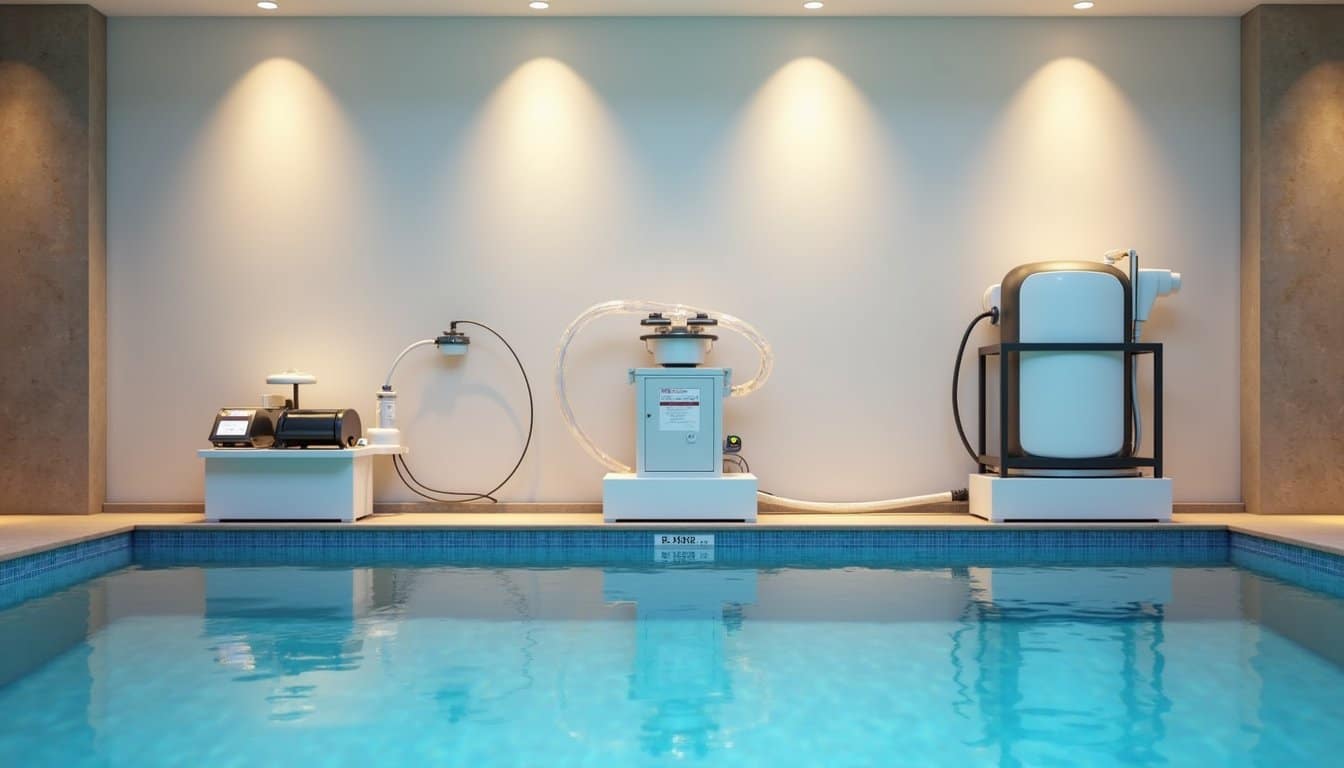
Selecting the right sanitizer system for your pool requires careful evaluation of health implications, maintenance demands, and long-term costs. Traditional chlorine options, while cost-effective initially, come with higher health risks and daily maintenance needs. Salt chlorine generators offer a softer water feel and reduced maintenance but require significant upfront investment and periodic cell replacement.
Ozone systems provide a safer alternative with moderate effectiveness, though they still need supplemental chemicals. UV treatment delivers reliable sanitization with low health risks but demands regular lamp maintenance. The newest technology, oxygenated nanobubbles, stands out with minimal health concerns and exceptional effectiveness, though it carries higher initial costs.
When comparing these options, you’ll need to balance your budget against desired water quality, maintenance commitment, and health considerations for your specific situation.
Smart Technology & Cost Optimization
Modern pool management has evolved beyond basic timers and test strips, with smart technology offering unprecedented control over operational costs. By integrating smart sensors and automated adjustments into your pool system, you’ll dramatically reduce chemical waste while optimizing energy consumption.
Smart pool technology revolutionizes maintenance through automated sensors, delivering precise control and significant cost savings in chemical and energy usage.
Here’s how smart technology transforms your pool’s cost efficiency:
- AI-powered chemical monitoring eliminates overuse by precisely dosing sanitizers based on real-time water analysis
- Remote control systems slash energy bills by scheduling equipment operation during off-peak hours
- Automated pH management prevents chemical waste through predictive adjustments before issues escalate
- Variable-speed pumps cut electricity costs by up to 80% while extending equipment life
These technological advances not only streamline maintenance but also provide detailed insights through mobile dashboards, ensuring your pool operates at peak efficiency year-round.
Seasonal Chemical Management Strategies
Building on smart technology’s efficiencies, proper seasonal chemical management maximizes your pool’s performance while minimizing costs throughout the year. Your chemical balance requirements will shift dramatically as you shift through seasons, requiring strategic adjustments to your maintenance routine. Monitoring water temperature, rainfall, and usage patterns will help you maintain ideal pool chemical levels. Regular testing and timely adjustments not only enhance water clarity and safety but also prolong the life of your pool equipment.
Start spring by stabilizing alkalinity and pH levels, then focus on increasing chlorine and cyanuric acid for summer’s intense UV exposure. During peak swimming months, you’ll need to test chlorine levels twice weekly and maintain higher filtration rates. As autumn approaches, prioritize pre-winter chemical treatments and debris removal. In winter, you’ll reduce chemical usage while maintaining minimal circulation to prevent freeze damage.
Make seasonal adjustments to your chemical program by following the sequence: alkalinity first, then pH, and finally chlorine. This systematic approach optimizes chemical effectiveness and reduces waste.
Environmental Options & Long-Term Savings
You’ll find significant cost savings by shifting to eco-friendly pool systems like natural pools, mineral-based sanitizers, or saltwater conversion, which reduce your long-term chemical expenses while protecting the environment. Smart monitoring systems paired with these natural alternatives help you maintain ideal water chemistry with minimal chemical input, leading to better resource management and decreased waste. UV and ozone treatments, combined with plant-based filtration methods, can slash your chemical costs by up to 80% while providing cleaner, healthier water for swimmers. Additionally, using eco-friendly methods alongside common pool cleaning essentials can extend the life of your pool equipment and reduce replacement costs. By relying less on harsh chemicals, you can maintain a clean, sustainable pool that enhances the swimming experience and supports a healthier environment for surrounding wildlife.
Eco-Friendly Pool Systems
Today’s eco-conscious pool owners can considerably reduce their environmental impact while cutting long-term costs through innovative sustainable systems. By integrating eco-friendly materials and sustainable practices, you’ll transform your pool into an environmentally responsible investment that pays dividends over time.
- Install a saltwater chlorinator paired with UV sanitization to slash chemical usage by up to 80%, creating a gentler swimming environment while reducing your maintenance expenses
- Implement smart automation systems that optimize filtration cycles and water treatment, saving both energy and resources
- Upgrade to variable-speed pumps and LED lighting to dramatically decrease your pool’s energy consumption
- Choose recycled glass tiles and natural stone materials to minimize environmental impact while ensuring long-term durability
These eco-friendly systems don’t just protect the environmen they’ll markedly reduce your ongoing maintenance costs while enhancing your pool’s performance.
Natural Sanitizer Alternatives
While traditional chlorine-based systems remain common, natural sanitizer alternatives offer pool owners significant environmental and financial advantages. You’ll find substantial saltwater benefits through electrolysis-based sanitation, which breaks down sodium chloride into natural disinfectants while reducing chemical usage and maintenance costs. For even greater eco-friendly results, consider mineral alternatives like Pool FROG or Nature 2, which can cut chlorine consumption by 50% through ionization.
Plant-based filtration systems and UV/ozone treatments provide additional chemical-free options. Living pools use aquatic vegetation for natural purification, while UV-C light destroys microbes without additives. By implementing these solutions alongside sustainable practices like regular pH testing and oxygen-based shocking, you’ll minimize chemical expenses while creating a healthier swimming environment.
Smart Monitoring Benefits
Smart monitoring systems deliver considerable environmental and financial benefits through automated chemical management and real-time parameter tracking. With smart sensors continuously analyzing your pool’s chemistry, you’ll markedly reduce chemical waste while maintaining ideal water quality.
- You’ll prevent chemical over-dosing through automated adjustments, reducing both environmental impact and unnecessary expenses
- Your equipment’s lifespan extends dramatically as balanced parameters prevent corrosion and wear
- You’ll achieve up to 30% energy savings through smart pump integration and automated scheduling
- Your pool maintenance becomes predictive rather than reactive, eliminating costly emergency treatments
The precision of smart monitoring guarantees you’re using exactly what you need, when you need it. By integrating with UV sanitizing systems and variable-speed pumps, you’ll maximize efficiency while minimizing your environmental footprint.
Commercial vs. Residential Chemical Budgets
Understanding the stark differences between commercial and residential pool chemical budgets is essential for effective cost planning. While residential usage typically requires $100-150 monthly for chemicals, commercial pools demand $200-300 due to higher bather loads and stricter commercial regulations.
| Factor | Residential | Commercial |
|---|---|---|
| Chemical Type | Trichlor Tablets | Liquid/Cal-Hypo |
| Annual Usage | 18-54.5kg | 3x more per size |
| Monitoring | Self-managed | Automated systems |
You’ll find that commercial facilities require automated dosing systems and detailed documentation to maintain compliance, while residential pools often rely on floating feeders or basic chlorinators. The cost disparity stems from usage patterns commercial pools operate year-round with hundreds of daily users, while residential pools typically run seasonally with limited family use.
Frequently Asked Questions
How Long Can Chemicals Be Stored Before They Lose Effectiveness?
Your chemical shelf life varies considerably based on type and storage conditions. You’ll get up to 5 years from granular chlorine and algaecides, 3-5 years from chlorine tablets, and 2-3 years from pH balancers when stored properly. However, liquid chlorine loses effectiveness quickly, dropping to 50% potency within 6 months. To maximize longevity, you’ll need to store chemicals in cool, dry, dark places below 77°F in airtight containers.
Can Pool Chemicals Be Mixed to Save Money on Separate Purchases?
Never mix pool chemicals to save money this practice is extremely dangerous. Chemical interactions can trigger violent reactions, release toxic gases, or cause fires. Instead, focus on safer cost saving strategies like purchasing pre-mixed solutions, using automatic feeders, or buying compatible multi-functional products. You’ll protect yourself while optimizing your budget. Always store chemicals separately in their original containers and follow manufacturer guidelines strictly.
What Safety Equipment Is Required When Handling Pool Chemicals?
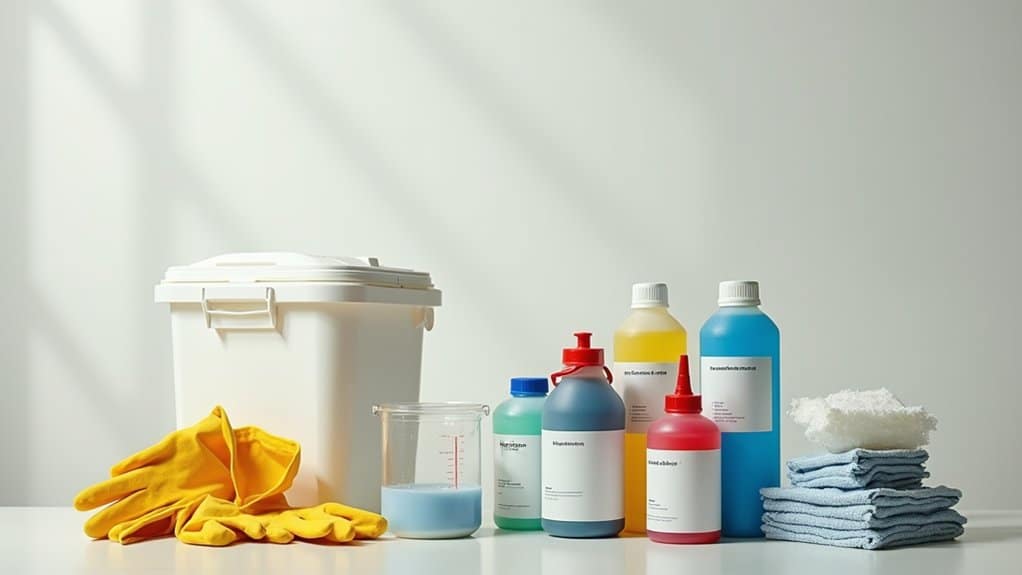
You’ll need essential protective gear when handling pool chemicals: safety goggles, chemical-resistant gloves, and protective coveralls or aprons. Always follow safety protocols by ensuring access to emergency equipment like eyewash stations and chemical safety showers. Keep respiratory protection handy for toxic vapors, and maintain quick access to Safety Data Sheets (SDSs). Never handle chemicals without proper ventilation and spill containment systems in place.
How Do Local Water Quality Conditions Affect Chemical Consumption Rates?
Your local water hardness greatly impacts how quickly you’ll consume pool chemicals. High calcium and magnesium levels force you to use more sanitizers and pH balancers to maintain proper chemistry. You’ll need to adjust your chemical dosing based on your source water’s natural mineral content. If you’re in an area with hard water, you’ll typically use 20-30% more chemicals to achieve and maintain proper pH balance and sanitization levels.
Do Generic Pool Chemicals Perform as Well as Name-Brand Products?
While generic pool chemicals can provide adequate sanitization, they often lack the consistency and reliability of name-brand products. You’ll find that branded chemicals typically offer more stable pH levels and longer-lasting effectiveness. Though you might save money initially with generics, you could face increased maintenance costs due to variable performance. Name brands also provide expert support and tailored recommendations for your specific pool type, ensuring peak chemical performance and equipment longevity.