Close your inground pool well before overnight temperatures consistently drop below freezing. Don’t wait for the first hard frost. Start early to protect plumbing, fittings, and equipment from freeze damage, save money, and cut spring startup labor. Clean the water, balance your chemistry, add closing chemicals, lower the water 6 to 12 inches below the skimmer, blow out lines, and secure your cover. The details ahead show you exactly how to do each step right.
Key Takeaways
- Close your pool before overnight temperatures consistently drop below freezing to protect plumbing, fittings, and equipment from freeze damage.
- Clean the water thoroughly by removing debris, brushing walls, and vacuuming the floor to reduce staining and organic buildup.
- Balance water chemistry first, setting pH to 7.2 to 7.4, alkalinity to 80 to 120 ppm, and calcium hardness to 200 to 400 ppm.
- Lower the water level 6 to 12 inches below the skimmer, then shock, add algaecide, and circulate before sealing.
- Blow out plumbing lines, drain equipment, install winter plugs, and secure a tight cover in one continuous pass.
Why should you close an inground swimming pool for the winter
Closing an inground pool before winter protects your plumbing, fittings, and equipment from freeze damage. When water sits in lines and vessels during sustained freezing, you risk cracked pipes, split housings, and failed components. Closing before overnight temperatures consistently drop below freezing reduces that risk substantially.
Winterizing also controls water chemistry and biology during months of inactivity. A clean, balanced pool resists algae growth driven by falling leaves and reduced sunlight, so you avoid a green, staining mess at spring reopening.
Timing your closing correctly delivers real savings. You prevent expensive repairs to plumbing and equipment, cut chemical waste, and shorten spring startup labor. Start early, once water use ends and temperatures trend downward, to lock in these protective and financial benefits.
When should you close your inground pool for winter
Close your inground pool before overnight temperatures consistently drop below freezing. Start winterizing early, once water use ends and temperatures trend downward. A full closing must happen before sustained freezing sets in, because early action reduces the chance of line damage, cracked fittings, and equipment failure. Don’t wait for the first hard frost.
Closing early also limits algae growth from falling leaves and reduced sunlight. Plan enough time to clean, balance, and lower the water level correctly before you seal the system.
Cover maintenance continues through the season. Check the cover regularly, clear debris, and remove standing water so it stays tight. Acting ahead of the cold protects your pool through months of inactivity.
How do you balance and treat the water before closing
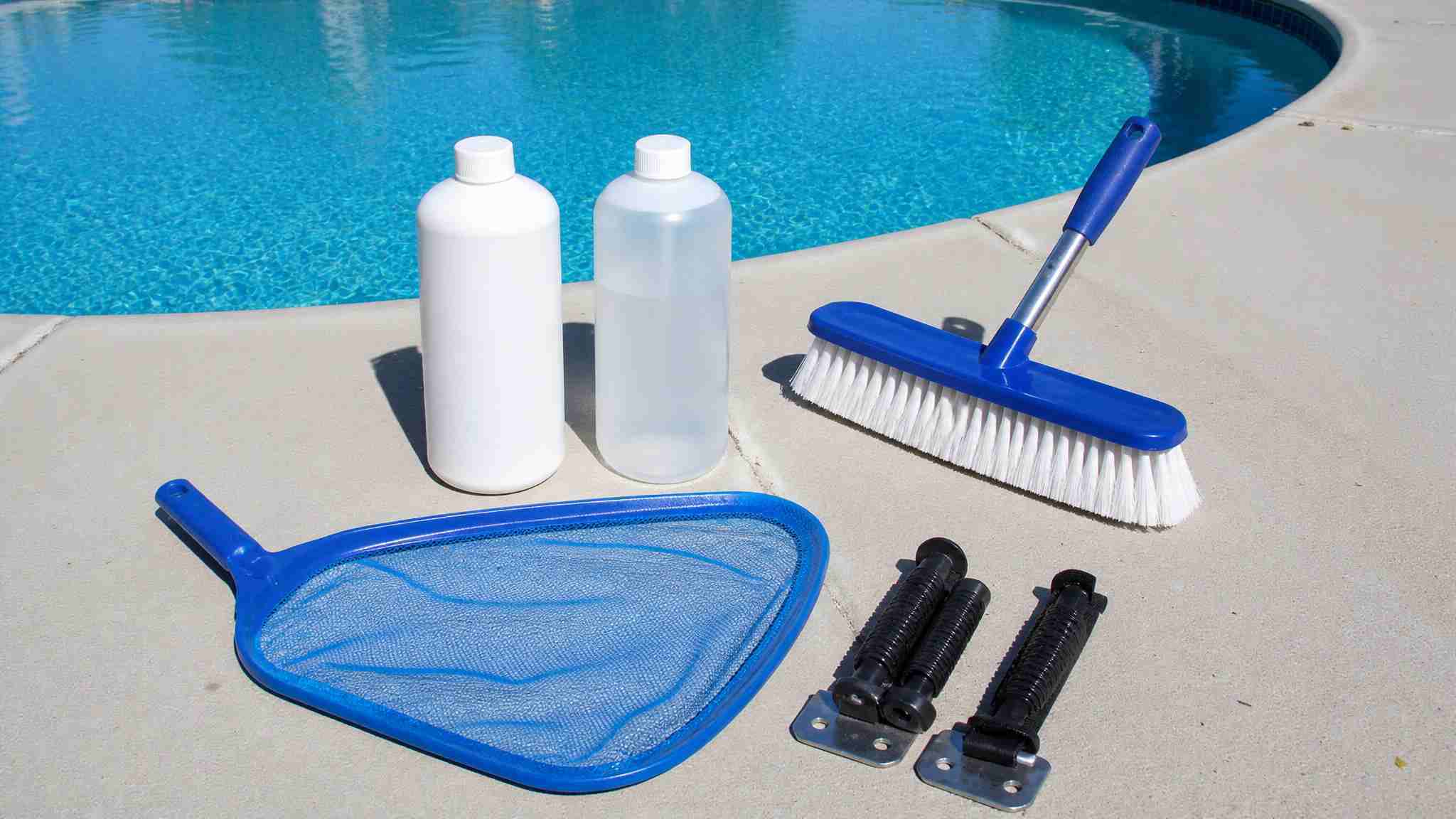
Balance and treat the water by cleaning the pool, correcting the chemistry, and adding closing chemicals in the right order. Remove leaves and debris from the water, floor, skimmer, and tile line. Brush the walls and vacuum the floor to cut staining and organic buildup. Test and correct your chemistry before adding closing products, so circulation can distribute everything evenly.
Clean first, correct your chemistry next, then add closing chemicals in order, so circulation carries protection through every inactive month.
- Adjust pH balance to 7.2 to 7.4.
- Set total alkalinity to 80 to 120 ppm.
- Bring calcium hardness to 200 to 400 ppm.
- Add a shock treatment, then algaecide.
Run the pump for one complete cycle after adding closing chemicals, letting them circulate and settle. If iron, copper, or hard water’s a concern, add a metal sequestrant. Balanced, treated water protects your pool through months of inactivity.
How do you close an inground swimming pool for the winter step by step
Close an inground swimming pool for winter by following a fixed sequence, where each step builds on the last. Start by cleaning debris, then balance the water. Add winter chemicals and run the pump one full cycle. Next, lower the water below the skimmer and return lines. Blow out the plumbing, plug the fittings, and drain all equipment. Finally, install the cover and secure it.
| Step | Action | Detail |
|---|---|---|
| 1 | Clean | Remove debris, brush, vacuum |
| 2 | Balance | Set pH, alkalinity, hardness |
| 3 | Treat | Shock, algaecide, circulate |
| 4 | Lower | Drop 6 to 12 inches below skimmer |
| 5 | Protect | Blow lines, drain equipment |
After winterizing is done, install the cover, tighten it, and anchor it against wind.
What equipment and covers do you need for winterizing
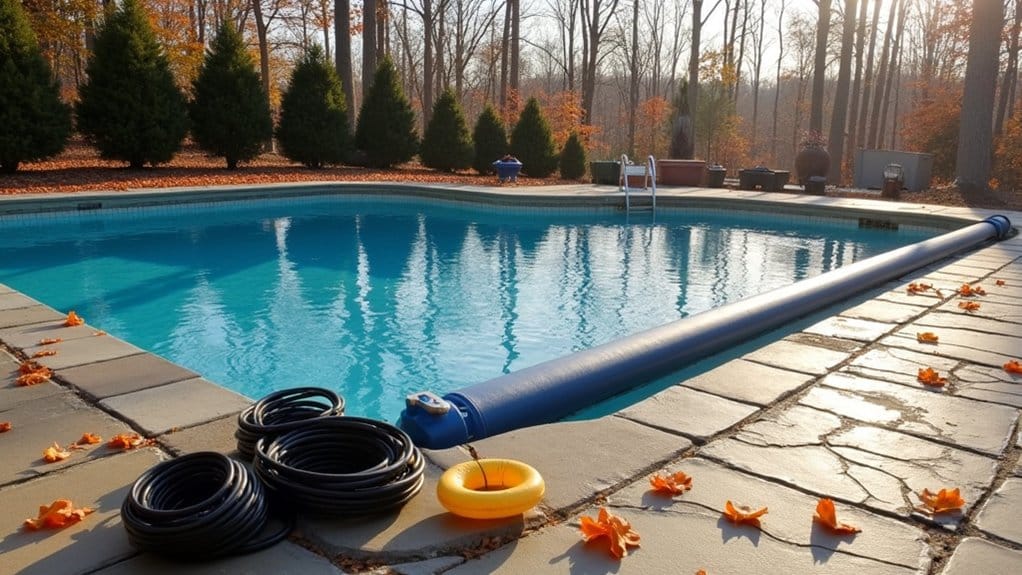
Winterizing an inground pool requires a winter cover, sealing hardware, blowout equipment, and securing accessories. Inground pool closing runs smoother when every tool sits ready at the deck. You’ll seal fittings, blow out plumbing, and cover the shell in one continuous pass, so missing equipment stalls the whole job and exposes lines to freeze risk during the off-season.
Seal fittings, clear plumbing, cover the shell in one continuous pass, missing equipment stalls the job and risks frozen lines.
Assemble the following before you start:
- Winter cover, mesh or solid safety cover, matched to your water level and anchoring method.
- Sealing hardware, winter plugs, skimmer guards, and return-line stoppers.
- Blowout equipment, an air compressor or blower to clear each line.
- Securing accessories, water bags or anchors, plus a cover pump for solid covers.
Confirm each item works before shutdown.
How do you protect pipes and plumbing from freezing
Protect pipes and plumbing from freezing by removing standing water and sealing your lines. Start by removing skimmer baskets, drain plugs, and return fittings. Blow out each line with air, forcing water from the plumbing, then plug every line to keep it clear. Drain all vessels that hold water fully, pumps, filters, heaters, and salt cells. Standing water inside these housings expands when it freezes, splitting pipes and cracking casings.
Consult your equipment manuals to shut down and store each component correctly, since procedures vary by model. Set your valves to the proper position before you finish, and verify no water remains trapped anywhere in the system.
Removing every trace of standing water and sealing your lines is what prevents freeze damage through months of inactivity.
How do you maintain your closed pool through winter
Maintaining your closed pool through winter centers on the cover and the water beneath it. Your closed pool isn’t fully hands-off; periodic checks protect the shell, cover, and chemistry through months of inactivity. Keep the cover tight and clear so it doesn’t sag or strain the anchors.
- Remove standing water and leaf buildup from the cover regularly to prevent sagging and damage.
- Inspect anchors, water bags, or securing straps and re-tension a loose cover.
- Check the water level periodically and confirm it stays below the skimmer and return lines.
- Monitor water chemistry when accessible, watching for algae growth or clarity loss under the cover.
Consistent inspections keep your pool protected until spring reopening.
Conclusion
Closing your inground pool properly before winter protects it from freeze damage and makes reopening in spring far easier. Balancing the water, lowering the level as needed, clearing the lines, adding winter chemicals, and fitting a secure cover all work together to keep your pool safe through the cold months. A little care now saves time, money, and headaches later. When you are ready for a pool built for easy, season-to-season care, Cristallo Pools designs and builds custom inground gunite pools crafted for lasting quality.
Call Today and Enjoy a Low-Maintenance Pool
From seasonal care to year-round enjoyment, quality construction makes every part of pool ownership simpler. At Cristallo Pools in Palm Beach County Estates, FL, our skilled team delivers dependable New Pool Construction built around lasting enjoyment. Call +1 (561) 766-0353 today and turn your backyard into a private retreat.
Frequently Asked Questions
Can I Close My Inground Pool Myself or Hire a Professional?
You can close it yourself if you’re comfortable with the steps. Clean and balance the water, add closing chemicals, lower the level below the skimmer and returns, then blow out and plug the lines. Drain your pump, filter, heater, and salt cell fully. If you’re unsure about blowing out plumbing or draining equipment, hire a professional, improper work risks split pipes and cracked housings that’ll cost you far more later.
How Much Does It Typically Cost to Winterize an Inground Pool?
The cost to winterize an inground pool depends on your pool’s size, the equipment you have, and whether you do it yourself or hire a service. A do-it-yourself closing mainly costs the price of winterizing chemicals, plugs, and a cover, often in the low hundreds of dollars. A professional closing service typically ranges from around $150 to $400 or more, depending on your region and pool features. A quality cover is a separate, one-time expense. For an exact price, ask a local pool company what their closing service includes.
Should I Completely Drain My Inground Pool for Winter?
No, don’t completely drain your inground pool. Lower the water level below the skimmer and return lines instead, typically 6 to 12 inches below the tile line or skimmer, depending on your cover type. Mesh safety covers often need a lower level than solid covers. Fully draining creates unnecessary stress on the pool shell and risks structural damage. Keep enough water to support the shell while protecting your plumbing from freeze damage.
What Happens if I Forget to Winterize My Pool?
You’ll risk significant freeze damage if you skip winterizing. Water left in lines expands as it freezes, cracking pipes and fittings. Pumps, filters, heaters, and salt cells that still hold water can split their housings. You’ll also face algae growth, staining, and organic buildup from unbalanced, uncirculated water. Without a cover, debris accumulates and sunlight fuels contamination. Come spring, you’re looking at costly repairs and a difficult, expensive reopening.
Can I Use My Pool Heater to Prevent Freezing Instead?
You shouldn’t rely on your heater to prevent freezing. It’s not a substitute for proper winterization. A heater only protects while it’s running and power stays on; any outage, mechanical failure, or fuel interruption leaves your lines and equipment exposed to freeze damage. Instead, drain and blow out your plumbing, remove standing water from the pump, filter, and heater, then plug the fittings. That’s how you reliably prevent split pipes.