Seven essential pool chemicals work together to maintain safe, pristine swimming conditions. You’ll need chlorine (1-3 ppm) as your primary sanitizer, shock treatments for eliminating contaminants, pH balancers (7.2-7.8 range), alkalinity adjusters (80-120 ppm), calcium hardness products (150-300 ppm), algaecides for prevention, and metal control agents to prevent staining. Understanding these fundamentals and their precise applications will transform your pool maintenance from complex to manageable. Regular testing and monitoring of essential water chemistry levels are crucial for achieving optimal results. By keeping track of these chemicals, you can easily address any imbalances before they escalate into larger problems.
Why Chlorine Remains the Gold Standard for Pool Sanitation
Despite advances in pool sanitization technology, chlorine maintains its position as the leading choice for pool disinfection due to its proven efficacy and cost-effectiveness. When you add chlorine to your pool, it forms hypochlorous acid, a powerful disinfectant that eliminates harmful pathogens like E. coli and norovirus while oxidizing organic contaminants from swimmers. Regular pool water testing is essential to prevent unpleasant odors and cloudy conditions. The proper maintenance of chlorine levels (1-3 ppm) is crucial for minimizing skin irritation while ensuring effective sanitation. Modern saltwater pool systems generate chlorine directly from ordinary salt, offering a continuous supply of sanitizer.
The chlorine advantages extend beyond basic sanitation. You’ll find it’s particularly effective at maintaining water clarity and preventing disease outbreaks in high-traffic facilities. Public health regulations mandate its use because it meets stringent safety standards while operating at an ideal pH range of 7.2-7.6. While alternative sanitizers exist, chlorine’s established track record, regulatory compliance, and lower maintenance costs make it the most practical choice for ensuring safe, clean pool water.
Maximizing Pool Safety With Shock Treatments
While maintaining proper chlorine levels forms the foundation of pool sanitation, shock treatments serve as an essential supplementary measure to eliminate stubborn contaminants and restore water clarity. Regular shocking helps extend pool equipment life through proper chemical maintenance. Small children and seniors should be kept away from the pool area during treatment as they are more sensitive to exposure. Applying shock in the evening hours recommended helps prevent rapid degradation from sunlight exposure. To maximize safety when applying shock treatment techniques, you’ll need to follow strict protocols for safe chemical handling and timing.
Key steps for effective shock treatment include:
- Test and balance water chemistry first, ensuring pH levels are between 7.2-7.6 and alkalinity at 80-120 ppm
- Apply shock during dawn or dusk, distributing it evenly around the pool’s perimeter while wearing protective gear
- Run the pump for at least 8 hours post-treatment and wait 24 hours before swimming, confirming chlorine levels have dropped below 4 ppm
Always store chemicals properly and keep emergency contacts readily available for immediate response to accidental exposure.
The Critical Role of Ph Balancers in Water Chemistry
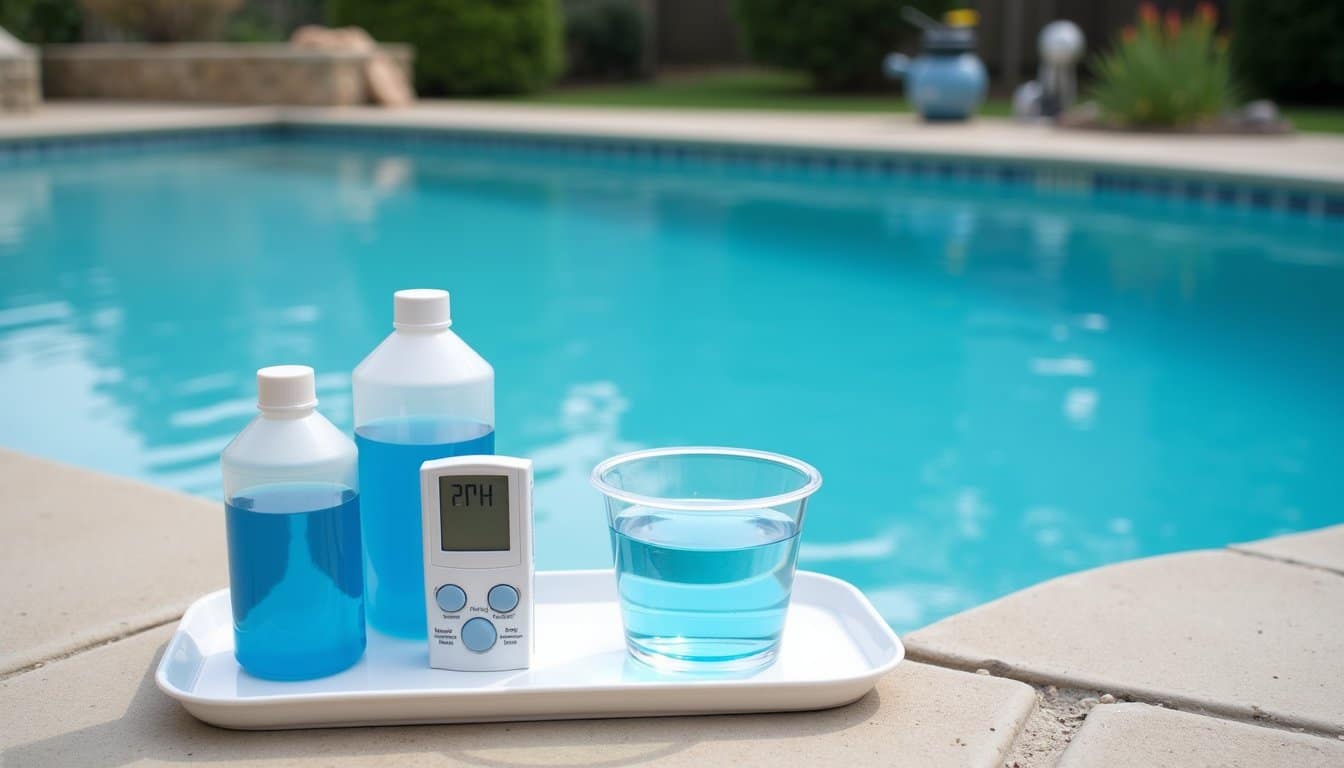
Beyond shock treatments, maintaining proper pH levels stands as a cornerstone of pool water chemistry. pH balancers serve as key regulators that keep your pool’s chemical composition within the ideal range of 7.2-7.8 ppm, directly impacting both sanitizer effectiveness and swimmer comfort. Regular monitoring through pH control probes helps maintain precise chemical dosing for optimal results. Celebrating National Swimming Pool Day each July helps raise awareness about proper pool maintenance and chemistry.
The pH significance extends to protecting your pool’s infrastructure while maximizing chlorine’s sanitizing power. Consistent circulation through your pool’s filtration system ensures pH adjustments distribute evenly throughout the water. You’ll need two types of balancers: pH raisers (sodium bicarbonate or carbonate) for low levels and pH reducers (muriatic acid or ACID Magic) for high readings. When implementing pH adjustment techniques, test levels twice weekly and add chemicals gradually to avoid overcorrection. Remember that proper pH balance prevents calcium scaling at high levels and surface corrosion at low levels, while maintaining optimum total alkalinity (60-180 ppm) helps stabilize these adjustments long-term.
Maintaining Proper Alkalinity for Pool Stability
Testing your pool’s alkalinity weekly with a liquid test kit or DPD strips guarantees you’ll catch imbalances before they impact water chemistry and equipment. You’ll need to add sodium bicarbonate at approximately 1.5 pounds per pool when levels drop too low, or use diluted muriatic acid when they climb too high. Regular monitoring combined with precise chemical adjustments helps maintain the critical alkalinity buffer that prevents pH fluctuations and protects your pool’s surfaces and equipment. Maintaining alkalinity levels between 80 to 120 ppm is essential for optimal pool performance and water quality. For accurate results, consider using a digital tester as it provides the most precise alkalinity readings among all testing methods. Low alkalinity can lead to swimmer discomfort including itchy skin and stinging eyes while swimming.
Testing Alkalinity Levels Daily
Proper alkalinity management serves as the cornerstone of pool water chemistry, with daily monitoring vital for maintaining the ideal range of 80-120 parts per million (ppm). Regular alkalinity testing helps prevent pH fluctuations and protects your pool’s equipment from corrosive damage. Professional testing may be required for more robust analysis of complex water chemistry issues. Testing should be conducted at least weekly for consistent water quality maintenance.
For accurate alkalinity measurement, you’ll need reliable buffer solutions and testing equipment. Here’s what you should monitor:
- Total Alkalinity (TA) levels after any pH adjustments to guarantee proper stabilization
- Daily readings during high-use periods or extreme weather conditions
- Chemical balance using liquid test kits rather than strips for precision
Don’t rely solely on test strips, as they’re less accurate than liquid reagent kits. After making alkalinity adjustments, wait 24-48 hours before retesting to allow proper chemical distribution throughout your pool water.
Balancing With Chemical Adjusters
After identifying your pool’s alkalinity levels, you’ll need the right chemical adjusters to maintain ideal water chemistry. Understanding chemical interactions between different adjusters is vital for proper balance. Follow dosage guidelines carefully to avoid overcorrection. Regular testing helps maintain free chlorine levels between 1-2 ppm. For enhanced security while managing pool chemicals online, many retailers use security services to protect their websites from potential threats.
| Adjuster Type | Recommended Application |
|---|---|
| Soda Ash | Add directly to pool while pump runs |
| Baking Soda | Distribute through skimmer |
| Dry Acid | Add slowly, allow full dissolution |
| Muriatic Acid | Dilute first, add to deep end |
| Stabilizer (CYA) | Pre-mix, add via skimmer |
You’ll need to run your pump for 2-4 hours after adding any chemical adjuster to guarantee proper distribution. Always wear protective gear when handling these chemicals, and store them in sealed containers away from moisture. Test water 24 hours after treatment to confirm desired levels have been achieved.
Signs of Imbalanced Alkalinity
Recognizing the signs of imbalanced alkalinity helps prevent serious damage to your pool’s ecosystem and equipment. When alkalinity levels fluctuate, you’ll notice visual and physical indicators that require immediate attention.
Key warning signs include:
- Green water or cloudy water appearance, indicating oxidation reactions and suspended particles from improper alkalinity levels
- Surface stains and corrosion on metal components, particularly when alkalinity drops too low
- Reduced chlorine effectiveness, leading to potential pathogen growth and algae proliferation
You’ll also experience operational impacts like pH instability, making chemical adjustments more challenging. Equipment damage accelerates when alkalinity remains unbalanced, causing premature wear on filters, heaters, and pool surfaces. Watch for mineral deposits and scale buildup, especially around fittings and on pool walls, as these indicate high alkalinity conditions.
Essential Calcium Hardness Products for Pool Protection
Maintaining the right calcium hardness levels is essential for protecting your pool’s surfaces and equipment from corrosion and damage. You’ll need calcium chloride-based products with 83-87% concentration, which quickly dissolve and work universally with all pool types.
For effective pool maintenance, keep calcium hardness between 150-300 ppm, adjusting specifically for your pool type: 175-200 ppm for vinyl liners and 250-300 ppm for concrete pools. To raise levels, broadcast the product directly while your pump runs, using 3 pounds to increase hardness by 25 ppm per 10,000 gallons. You’ll need to test weekly and make gradual adjustments to maintain ideal levels. Regular monitoring prevents scaling issues above 500 ppm and protects against corrosion below 150 ppm, ensuring your pool’s longevity and proper sanitizer effectiveness.
Powerful Algaecides for Crystal Clear Water
Understanding your pool’s algaecide needs starts with distinguishing between preventive options like weekly Polyquat treatments and targeted solutions for active infestations, such as copper-based formulas for black algae or silver treatments for mustard algae. You’ll need to carefully measure dosages based on your pool’s volume and the selected algaecide’s concentration, with most preventive treatments requiring weekly application and aggressive treatments demanding 24-48 hour monitoring periods. To maximize effectiveness, you can choose from four primary algaecide types Quaternary ammonium, Polyquat, metallic, and sodium bromide each offering specific benefits for different algae scenarios and pool surfaces.
Preventive Vs Treatment Options
While algae prevention is typically more cost-effective than treatment, pool owners need both preventive and treatment algaecides in their maintenance arsenal. Preventive strategies focus on regular application of Quat or Poly-Quat algaecides during low-occupancy periods, combined with sodium bromide to enhance chlorine’s effectiveness.
For established blooms, treatment methods require more aggressive approaches:
- Metallic algaecides containing copper or silver compounds deliver maximum potency against black, yellow, and green algae
- High-concentration polymer formulations clear blooms twice as efficiently as standard Quats
- Combined treatments utilizing chlorine shock with algaecides penetrate stubborn biofilms
You’ll achieve ideal results by implementing both prevention and treatment protocols, ensuring proper chemical balance while maintaining a systematic approach to pool maintenance. Consider evaluating the cost factors for pool chemicals, as they can significantly impact your overall maintenance budget. By selecting quality products that offer long-lasting effects, you can reduce the frequency of chemical purchases and achieve a more cost-effective solution.
Dosage and Application Timing
Proper algaecide dosing and timing make the difference between effective treatment and wasted product. When calculating initial dosage, you’ll need 200 mL for pools under 40,000 L, while larger pools up to 80,000 L require 400 mL. For maintenance, scale your dosage calculations to 100-200 mL weekly, depending on pool size.
Your application strategies should align with specific conditions. During high temperatures or heavy usage, increase treatment frequency to 3-5 day intervals. For severe algae outbreaks, you’ll need to apply maximum doses up to 1 gallon per 50,000 gallons. Always premix copper-based algaecides with water before application, and distribute the solution around your pool’s perimeter. Remember to run your filtration system during treatment to guarantee even distribution throughout the water.
Algaecide Types and Benefits
Selecting the right algaecide type stands as a critical factor in maintaining crystal-clear pool water. For ideal algaecide effectiveness, you’ll need to understand the distinct benefits each formulation offers for your specific needs.
- Quaternary Ammonium (Quat) algaecides provide cost-effective prevention during routine maintenance, though they won’t tackle severe blooms effectively.
- Polymer (Poly-Quat) formulations deliver superior results, clearing pools twice as fast as Quats while remaining pH-neutral and non-staining.
- Metallic (copper-based) options offer the most potent solution against stubborn black and yellow algae, but require careful seasonal application to avoid staining.
Remember to match your algaecide choice with your pool’s material type avoid metallic formulations on plaster or fiberglass surfaces. For year-round protection, incorporate winterizing treatments to prevent dormant algae growth during off-season periods.
Understanding Water Clarifiers and Metal Control Agents
Maintaining crystal-clear pool water requires a thorough understanding of metal control agents and water clarifiers, which work together to prevent staining, scaling, and cloudiness. Metal sequestration plays an important role in preventing unsightly pool staining caused by copper, iron, and manganese deposits.
You’ll find several effective options for metal control: sequestering agents that bind metals in solution, physical removal systems like CuLator with replaceable cartridges, and chemical removers that neutralize fresh stains. For initial treatment, you’ll need 1.25 lb of product per 10,000 gallons, followed by 0.5 lb maintenance doses during spring start-ups. When selecting a metal control agent, consider your sanitizer system’s compatibility particularly with BAQUACIL products, which aren’t chlorine-compatible. It’s vital to apply these treatments during pool start-up or when adding fresh water. In addition to using effective metal control options, ensure you follow a complete pool maintenance checklist to keep your water clear and safe. Regular testing of your pool’s pH and alkalinity levels is essential, as imbalances can lead to metal issues and other complications.
Frequently Asked Questions
Can I Mix Different Brands of Pool Chemicals Together?
While you can mix different brands of pool chemicals with matching formulations, you’ll need to carefully verify chemical compatibility first. Don’t mix stabilized with unstabilized chlorine products, regardless of brand. For your safety, keep shock treatments from different manufacturers separate, and never combine chlorine with acid. Always check product labels for specific safety precautions, and maintain proper storage protocols to prevent dangerous chemical reactions.
How Long Should I Wait Between Adding Different Pool Chemicals?
For chemical interaction safety, you’ll need to wait 10-15 minutes between adding different pool chemicals, allowing each treatment to fully circulate. If you’re using Cal Hypo shock, extend this wait time to 12+ hours before adding other chemicals. You should always add chemicals one at a time and follow specific timing guidelines: add acid-based treatments first, then wait before introducing alkalinity or calcium-based products. Never combine chemicals during application.
What Chemicals Should I Add First When Opening My Pool?
When starting your pool opening chemical sequence, you’ll first need to test and balance your total alkalinity (80-120 ppm), as it affects all other chemical levels. Next, adjust your pH to 7.2-7.6. Then add calcium hardness increaser if needed (200-275 ppm). Follow with metal remover and stain preventer, allowing 8-12 hours circulation. Finally, verify proper cyanuric acid levels (30-50 ppm) before adding chlorine shock treatment.
Should Pool Chemicals Be Stored Together in the Pump House?
Don’t store your pool chemicals together in the pump house, as this practice violates basic storage safety principles. You’ll need to keep incompatible chemicals separated to prevent dangerous reactions. Your pump house likely lacks proper ventilation and temperature control. Instead, store your chemicals in a dedicated, well-ventilated space that’s dry, cool, and locked. Always check chemical compatibility charts and maintain proper spacing between different products to guarantee safe storage.
Do Pool Chemicals Expire, and How Should They Be Disposed Of?
Yes, pool chemicals do expire at different rates. You’ll find liquid chlorine degrades fastest (90% within a year), while trichlor tablets and granular chlorine can last 3-5+ years when properly stored. For safe chemical disposal methods, you’ll need to follow local hazardous waste guidelines. Don’t dump chemicals into water systems; instead, neutralize them with equal parts water and dispose of them in sealed containers marked “hazardous.” Always wear protective gear during disposal.