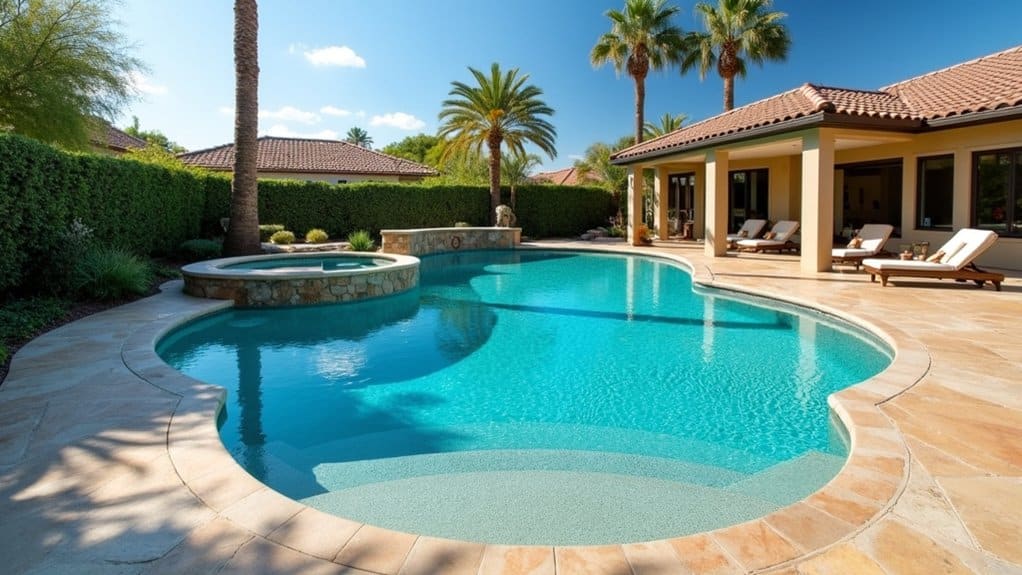
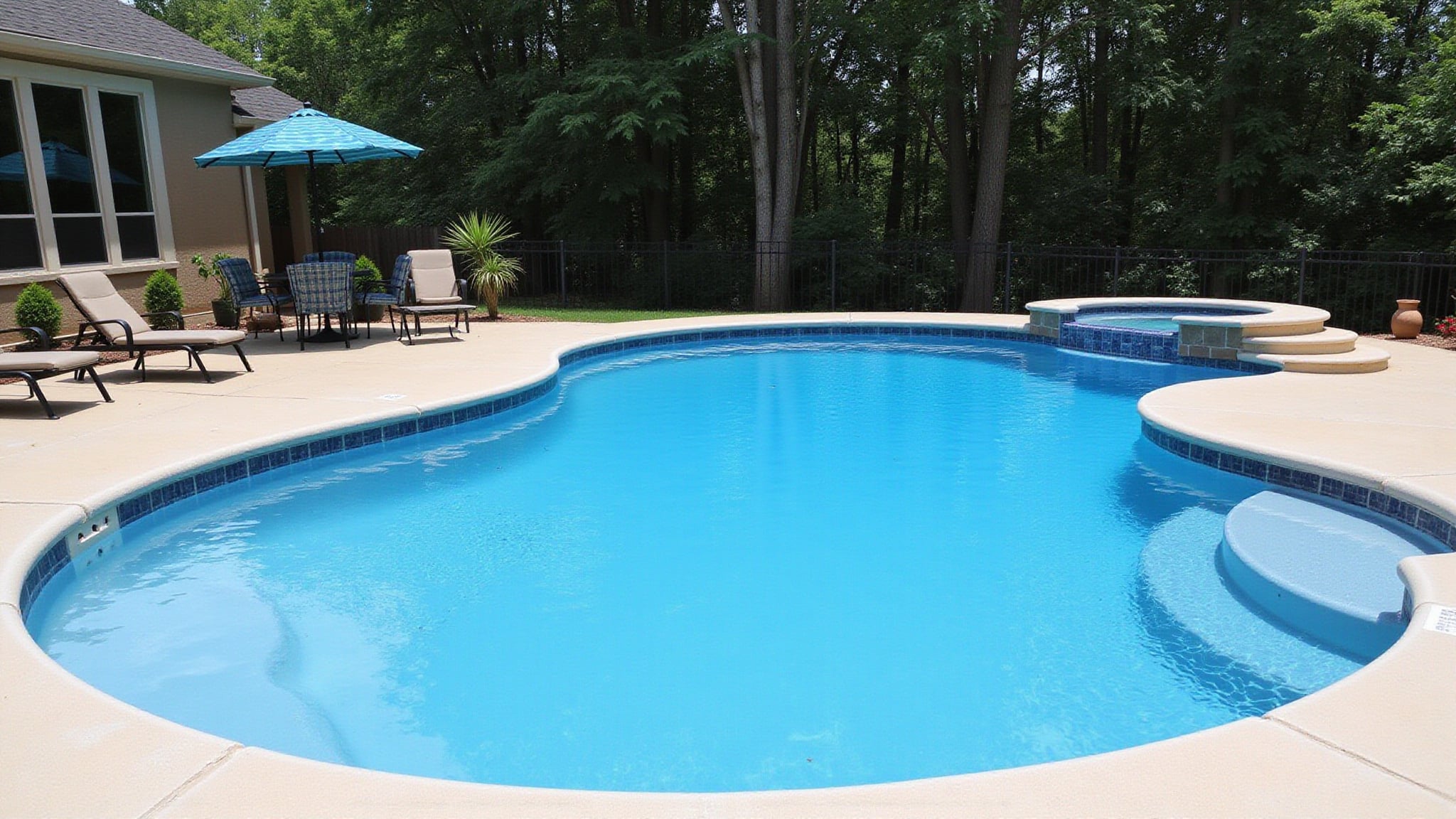
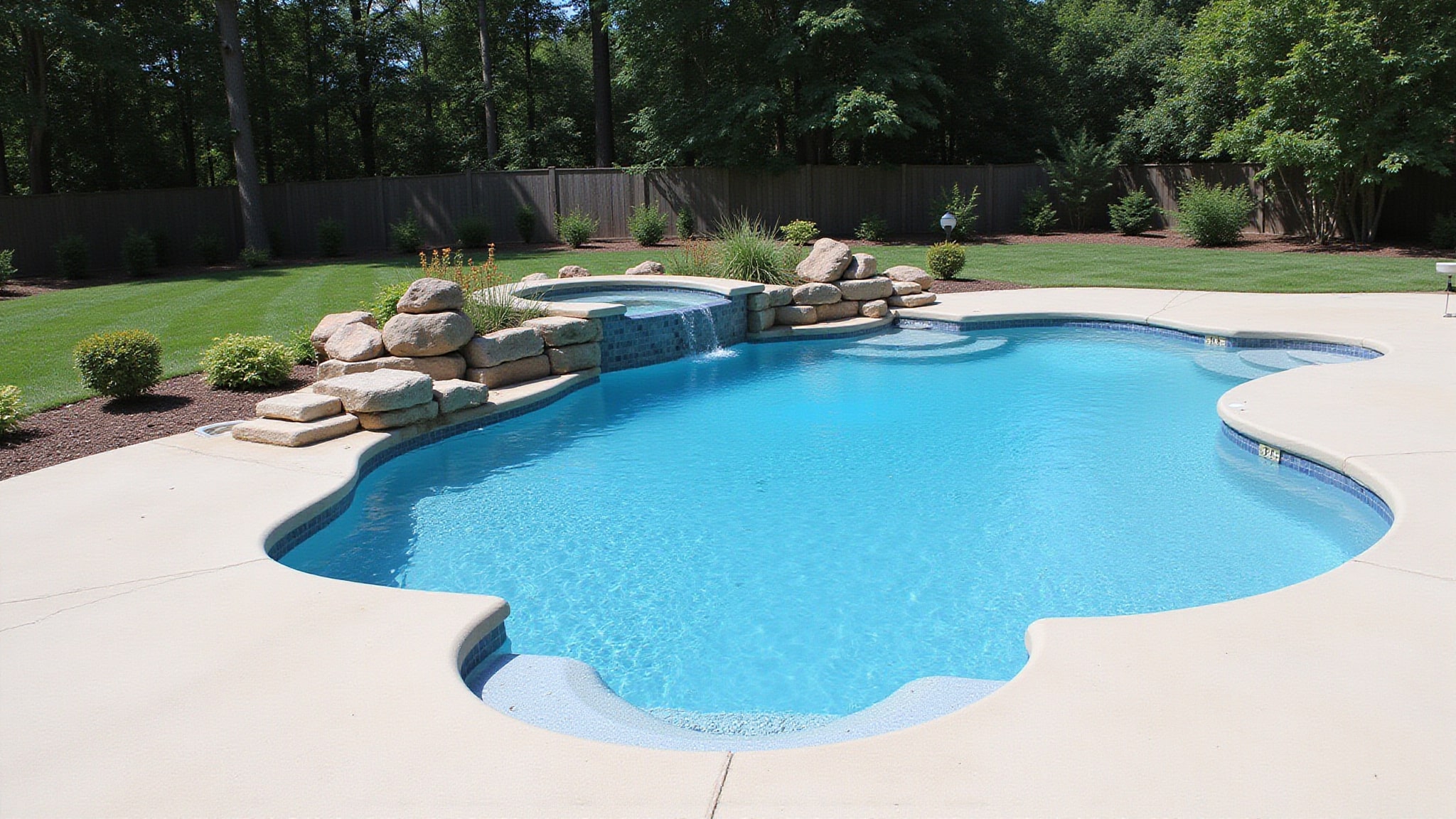
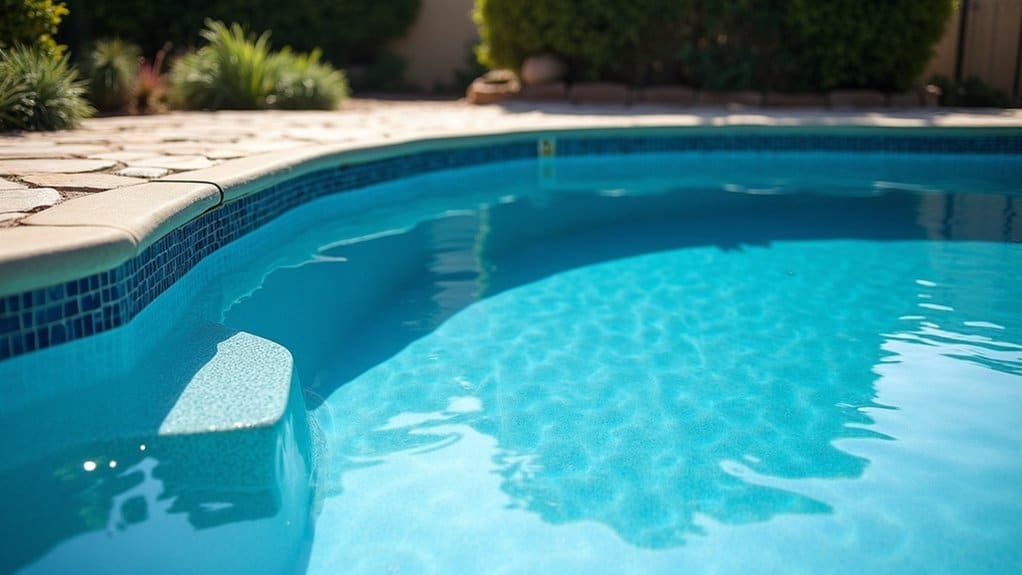
Your vinyl pool liner will typically last 6 to 12 years, depending on installation quality, chemical management, and UV exposure. Inground liners average 5 to 9 years, while above-ground versions push 6 to 10. Maintaining pH between 7.2, 7.6 and free chlorine at 1.0, 2.0 ppm greatly slows plasticizer degradation. Don’t confuse warranty coverage, often 15 to 20 years, with actual serviceable life. Understanding the key failure triggers below will help you maximize every year of liner performance.
Most Vinyl Pool Liners Last 6 to 12 Years
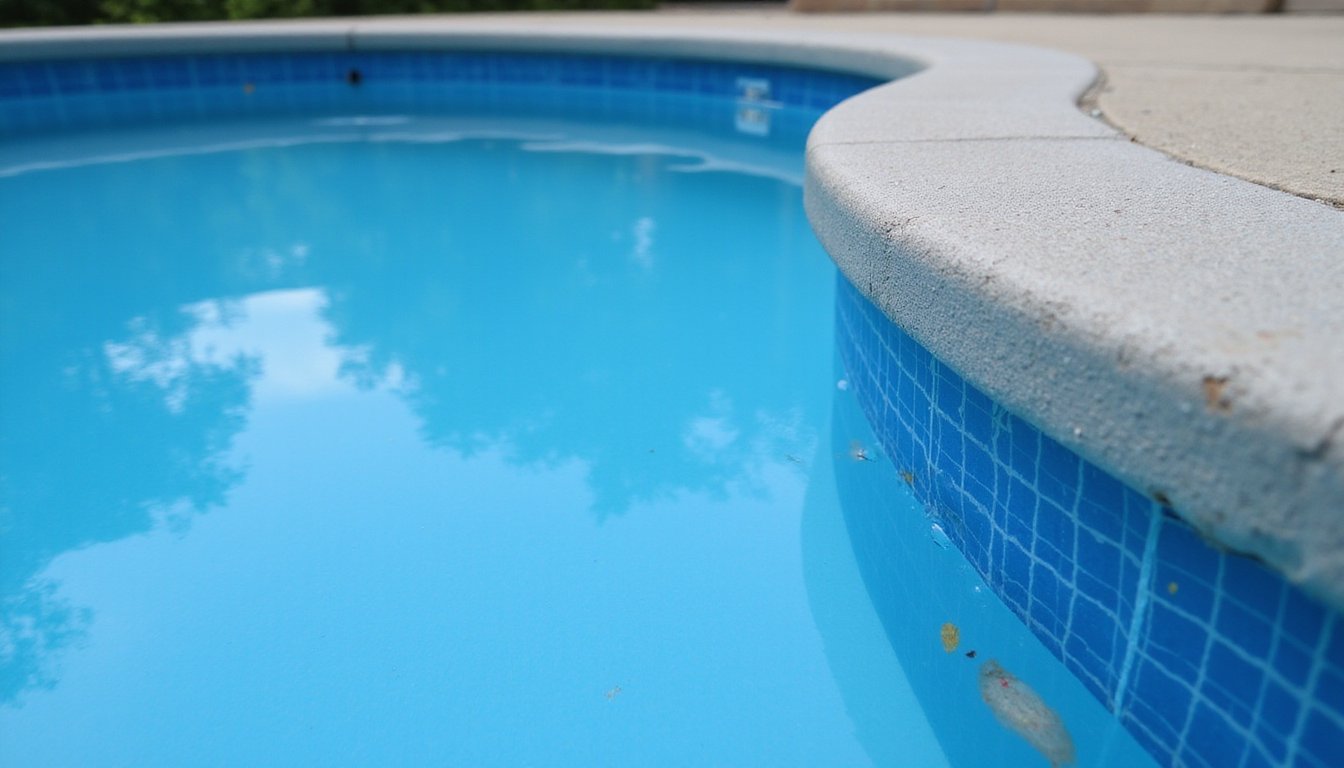
So how long do vinyl pool liners last in practice? Your specific outcome depends on water chemistry management, UV exposure levels, climate severity, and maintenance consistency. Inground liners typically fall within a 5 to 9 year window, while above-ground installations average 6 to 10 years. Some sources extend inground performance to 10 to 15 years under ideal conditions. You shouldn’t conflate warranty coverage with serviceable life, they’re fundamentally different metrics. Consistent chemical balance and reduced sun exposure remain your most effective tools for pushing lifespan toward that upper range. Maintaining ideal pH levels between 7.4 and 7.6 helps prevent premature sagging and wrinkling that can shorten your liner’s functional life.
What Makes a Vinyl Liner Fail Early
While most vinyl liners degrade gradually over years of normal use, specific failure modes can cut that timeline remarkably short. Improper installation, incorrect measurements, unsmoothed substrates, or delayed filling, creates stress points that compromise vinyl liner durability from day one.
Chemical mismanagement accelerates degradation considerably. Low pH corrodes vinyl bonds, while direct chlorine tablet contact bleaches and weakens the material. You’ll see wrinkling, puckering, and premature brittleness when water chemistry stays unbalanced across multiple seasons. Performing weekly pH testing and monthly calcium hardness checks helps catch imbalances before they cause lasting damage.
Sharp debris trapped beneath the liner, corroded fittings, and abrasive cleaning tools introduce puncture and tear risks you can’t always detect early. Groundwater pressure causes floating and re-stretching cycles that fatigue the material. Complete pool drainage shrinks older liners irreversibly. Each factor compounds the others, pushing failure well ahead of expected service life.
Water Chemistry Tips to Protect Your Liner
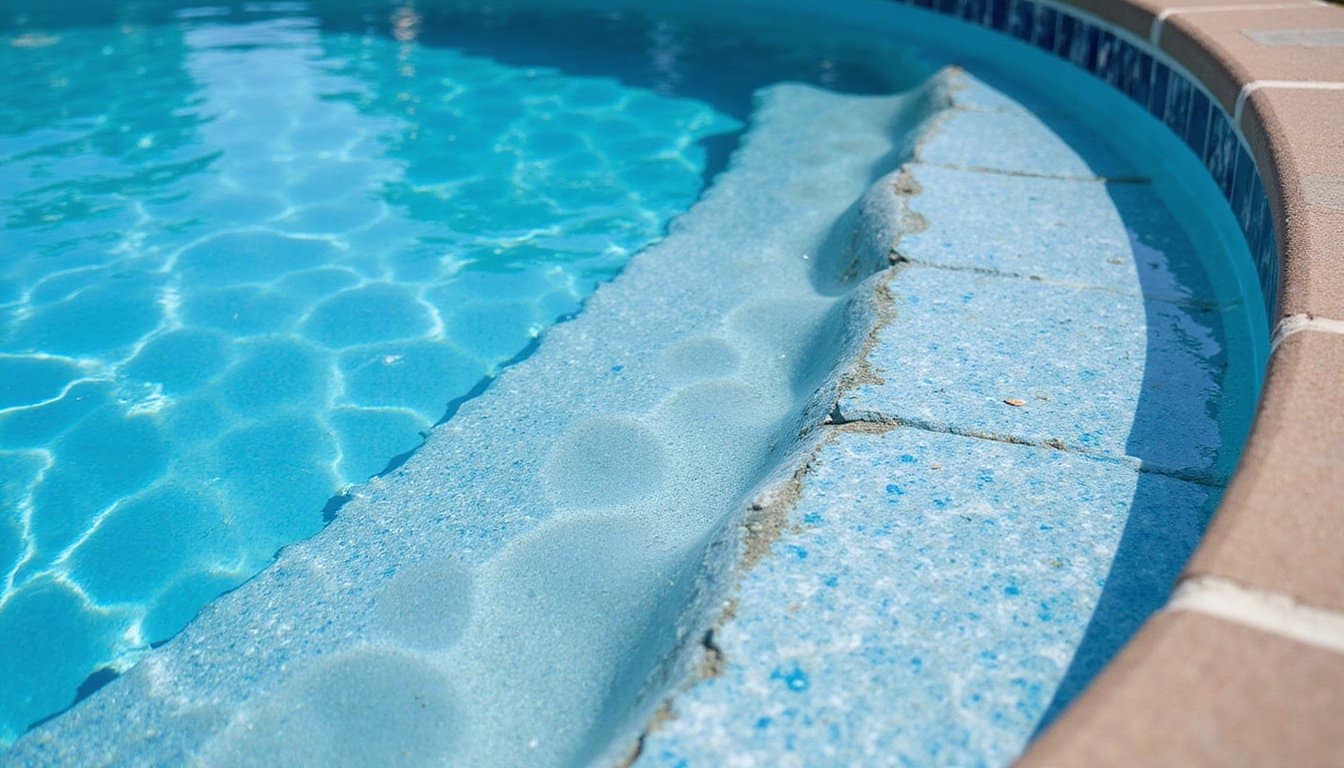
Because water chemistry directly controls how fast vinyl degrades, maintaining precise chemical balance isn’t optional, it’s the single most effective way to extend your liner’s service life. Keep pH between 7.2, 7.6, free chlorine at 1.0, 2.0 ppm, total alkalinity at 80, 120 ppm, and calcium hardness at 150, 250 ppm. Test 2, 3 times weekly during swim season.
Over-chlorination strips plasticizers from vinyl, accelerating brittleness and bleaching. Never allow undissolved chlorine to contact liner surfaces directly. Low pH creates acidic conditions linked to wrinkling and hardening, both precursors to premature failure. Avoid large doses of hydrochloric acid, which can damage liner print.
Disciplined pool maintenance means incremental chemical adjustments with full circulation between doses. Monitor dissolved metals and maintain cyanuric acid at 25, 50 ppm. These protocols directly impact liner longevity, converting predictable chemistry into measurable years of extended service.
UV, Chemicals, and Tools That Damage Liners
Chemical imbalances, particularly increased chlorine concentrations and low pH levels, accelerate plasticizer degradation in your vinyl liner, leading to brittleness, discoloration, and premature seam failure. UV exposure compounds this damage by breaking down the liner’s protective coating, especially at the waterline where reflected radiation intensifies surface deterioration. Aggressive scrubbing and abrasive cleaning tools further strip UV-resistant finishes, leaving compromised areas even more vulnerable to chemical and solar degradation.
Chemical Imbalance Effects
When water chemistry drifts outside recommended parameters, it attacks your vinyl liner at the molecular level, stripping plasticizers, degrading print layers, and accelerating material fatigue far faster than normal aging alone. Chemical imbalance effects represent the single largest controllable threat to pool liner lifespan.
Three critical parameters demand consistent monitoring:
- pH below 7.0 causes fading, wrinkling, and vinyl hardening through acidic corrosion, while levels above 7.6 promote scaling and material expansion.
- Free chlorine sustained above 20 ppm produces yellowing, dulling, and plasticizer extraction, over-shocking is a primary culprit.
- Calcium hardness below 150 ppm creates aggressive water that leaches flexibility compounds, while levels exceeding 300 ppm deposit crusty scale on liner surfaces.
Maintaining balanced water within recommended ranges directly prevents premature cosmetic and structural degradation.
UV and Tool Damage
Beyond chemical imbalance, UV radiation and physical tool contact inflict distinct but equally damaging wear patterns on vinyl liners, often in ways you won’t notice until the material’s already compromised. UV damage pool liners by degrading plasticizers, causing brittleness and irreversible fading. Meanwhile, abrasive maintenance tools create micro-punctures that propagate under hydrostatic pressure.
| Damage Source | Primary Effect | Mitigation Strategy |
|---|---|---|
| UV exposure | Plasticizer breakdown, fading | UV-inhibitor liners, pool covers |
| Abrasive tools | Surface scratches, punctures | Rounded-edge, vinyl-safe equipment |
| Sunscreen contact | Print disturbance, discoloration | Pre-swim absorption period |
You should inspect high-exposure zones, waterline, shallow-end floors, fitting penetrations, quarterly. When you detect early-stage vinyl patch failures, clean the substrate thoroughly, cut rounded corners, and guarantee proper overlap for lasting adhesion.
Signs Your Pool Liner Needs Replacing
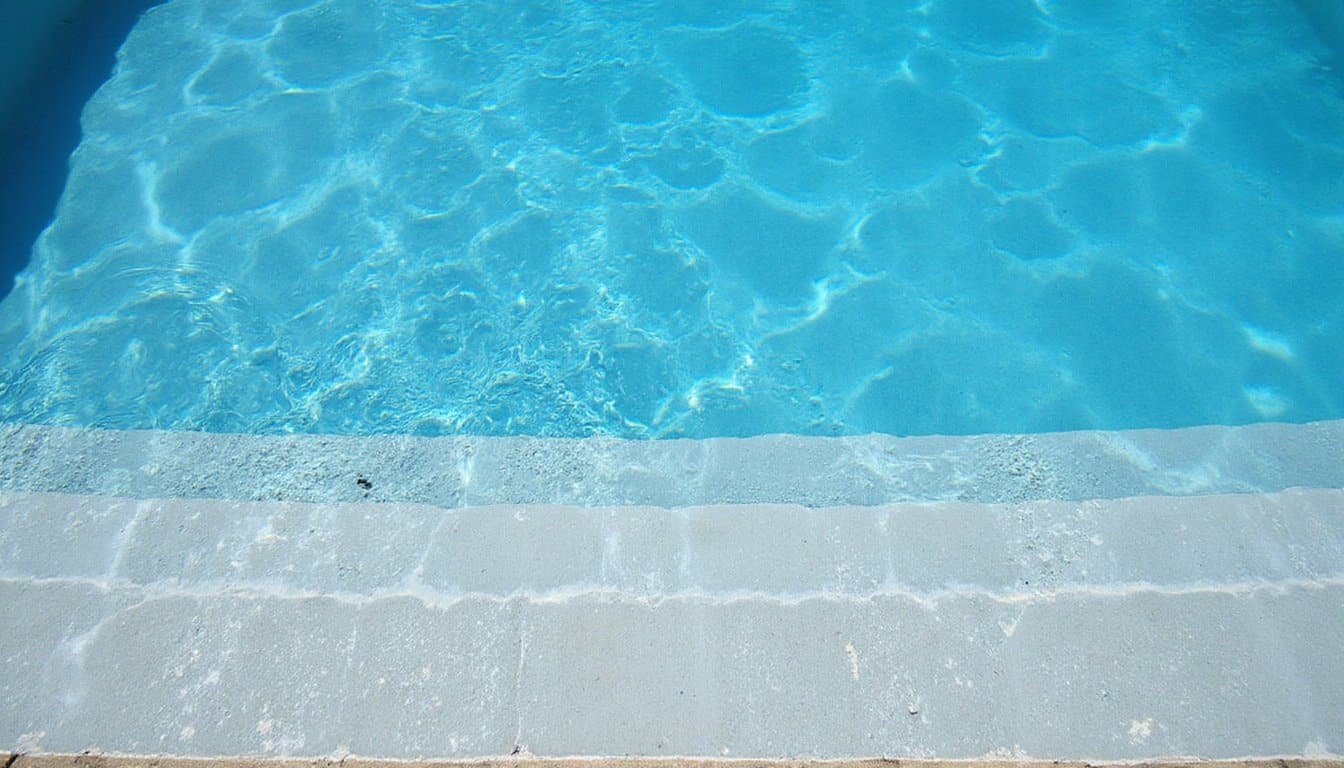
Your liner communicates its deterioration through three primary indicators you shouldn’t ignore. Progressive UV-induced fading and color loss signal polymeric breakdown, while cracks and tears confirm the vinyl’s plasticizers have depleted beyond functional thresholds. Bead slippage, where the liner detaches from the coping track, indicates material shrinkage or elasticity failure that typically warrants full replacement.
Fading And Color Loss
Three primary mechanisms drive color loss:
- UV degradation, Prolonged sunlight exposure bleaches printed patterns, particularly in direct-sun zones.
- Chemical attack, Chlorine levels exceeding 3 ppm accelerate below-waterline fading, especially without proper circulation post-treatment.
- Material composition, Low-cost vinyl printed on white stock reveals fading faster as the base color shows through diminished patterns.
You’ll typically notice uneven discoloration at the waterline and shallow areas first. This localized fading often indicates chemical imbalance rather than uniform aging across the liner’s surface.
Cracks And Tear Development
As vinyl liners age past the 6- to 12-year mark, the material loses elasticity and becomes increasingly brittle, creating conditions where cracks and tears develop under normal pool use. UV degradation and chemical exposure accelerate this breakdown, particularly at seams, folds, and high-stress zones where liner wear and tear concentrates first. Vinyl liner pool pricing breakdown can vary significantly based on factors such as size, thickness, and custom design options. Homeowners should also consider installation costs, as hiring a professional can impact the overall budget.
Small cracks may be patchable with repair kits, but larger or expanding tears typically warrant full replacement. If you’re observing multiple failure points or recurring damage, patching becomes inefficient and risks structural compromise. Water loss exceeding one inch per week, beyond normal evaporation, often confirms active liner breaches. A cracked liner that goes unreplaced allows water migration into wall panels, foundations, and subsoil, escalating repair costs considerably. Don’t delay inspection once brittleness or visible cracking appears.
Bead Slippage Issues
When the liner bead repeatedly slips out of the coping track, it’s often a clear signal that the vinyl has lost the elasticity needed to hold its shape. You should treat bead slippage as a replacement warning sign, especially when it occurs across multiple sections of the pool wall.
Three indicators confirm the liner’s beyond repair:
- Recurring slippage after re-seating, the material’s too stretched to maintain a secure lock.
- Accompanying wrinkles or sagging, the liner’s exceeded its design tolerances.
- Brittle or stiff vinyl texture, UV and chemical degradation have compromised material pliability.
On liners exceeding 10 years, widespread bead failure typically reflects irreversible material fatigue. You’re better served budgeting for full replacement rather than investing in repeated temporary resets.
Vinyl Liner Warranties vs. Real-World Lifespan
Although vinyl liner warranties often span 15 to 20 years, they don’t reflect the liner’s actual service life, most liners deliver roughly 8 to 12 years of reliable performance before degradation compromises function.
| Warranty Coverage | Real-World Performance |
|---|---|
| Covers manufacturing defects only | Affected by chemistry, UV, and usage |
| Highly prorated over time | Full replacement cost falls on you |
| Excludes punctures, chemical damage | These are the primary failure modes |
Your vinyl pool liner warranty won’t compensate for fading, chemical burns, or accidental tears, the exact conditions that typically end a liner’s useful life. Treat warranty length as a contractual ceiling, not an expected lifespan. Budget for replacement based on observed condition, not coverage duration.
Build the Perfect Pool With Trusted Experts
Choosing the right pool type is one of the biggest decisions you’ll make for your backyard, and the right team makes the entire process easier. At Cristallo Pools in Jupiter, FL, our award-winning team delivers expert New Pool Construction with craftsmanship, vision, and a personalized approach. Call +1 (561) 766-0353 today and start building the backyard of your dreams.
Frequently Asked Questions
Can You Install a New Vinyl Liner Over an Existing Old One?
You shouldn’t install a new vinyl liner over an existing one. Layering traps moisture, debris, and uneven spots beneath the new membrane, causing wrinkles, poor seam alignment, and accelerated wear. Liner manufacturers and professional installers consistently recommend full removal, followed by re-grooming the pool base, applying fresh liner padding, and vacuum-fitting the replacement for a clean stretch. Skipping proper surface preparation compromises fit, shortens service life, and can void your warranty.
How Long Does It Take to Replace a Vinyl Pool Liner?
Professional inground liner replacement typically takes one to three days for the actual installation work. You’ll need to account for draining, old liner removal, faceplate and gasket extraction, shell inspection, and any necessary wall repairs before hanging the new liner. Factor in measurement, fabrication lead times, and scheduling, and your full project timeline can stretch to two to three weeks from start to swim-ready completion.
Does Liner Thickness Actually Make a Noticeable Difference in Lifespan?
Thickness provides a modest durability advantage, but it won’t dramatically extend your liner’s service life. You’ll gain better puncture resistance moving from 20-mil to 27- or 30-mil material, yet real-world longevity depends more heavily on water chemistry management, UV exposure, installation quality, and routine maintenance. A poorly balanced pool will degrade a 30-mil liner faster than proper chemical stewardship preserves a 20-mil one. Consider thickness one variable among several critical factors.
Are Patterned Vinyl Liners Less Durable Than Solid-Colored Ones?
Patterned liners aren’t inherently less durable than solid-colored options. Your liner’s structural longevity depends far more on vinyl formulation, seam integrity, water chemistry, and UV exposure than on pattern selection. However, printed designs can fade more visibly under chronic high chlorine levels above 5 ppm or intense UV degradation, making wear appear accelerated. Solid liners show scum lines and uneven aging more readily. Ultimately, pattern choice affects aesthetics more than core PVC performance.
What Does a Vinyl Pool Liner Replacement Typically Cost?
You’ll typically spend $2,581 on average for a full liner replacement, with most projects landing between $1,244 and $3,967. Inground liners run $1,200 to $2,100 for material alone, while above-ground units cost $500 to $900. Factor in draining, surface prep, refilling ($100, $500), and chemical rebalancing ($50, $150), and larger custom installs can push $8,000 to $9,000. Off-season scheduling often yields better labor rates.