You’ll want to hold your indoor pool room at 50% RH in winter and up to 60% in summer, while keeping air temperature 2°F above water temperature to cut evaporation. Direct warm supply air at windows first, delivering 3, 5 CFM per square foot of glass, to prevent condensation on cold surfaces. Size your dehumidifier to the calculated moisture load plus a 10, 15% safety factor. Below, you’ll find the specific strategies to dial in each variable.
Keep Your Indoor Pool Humidity Between 50% and 60
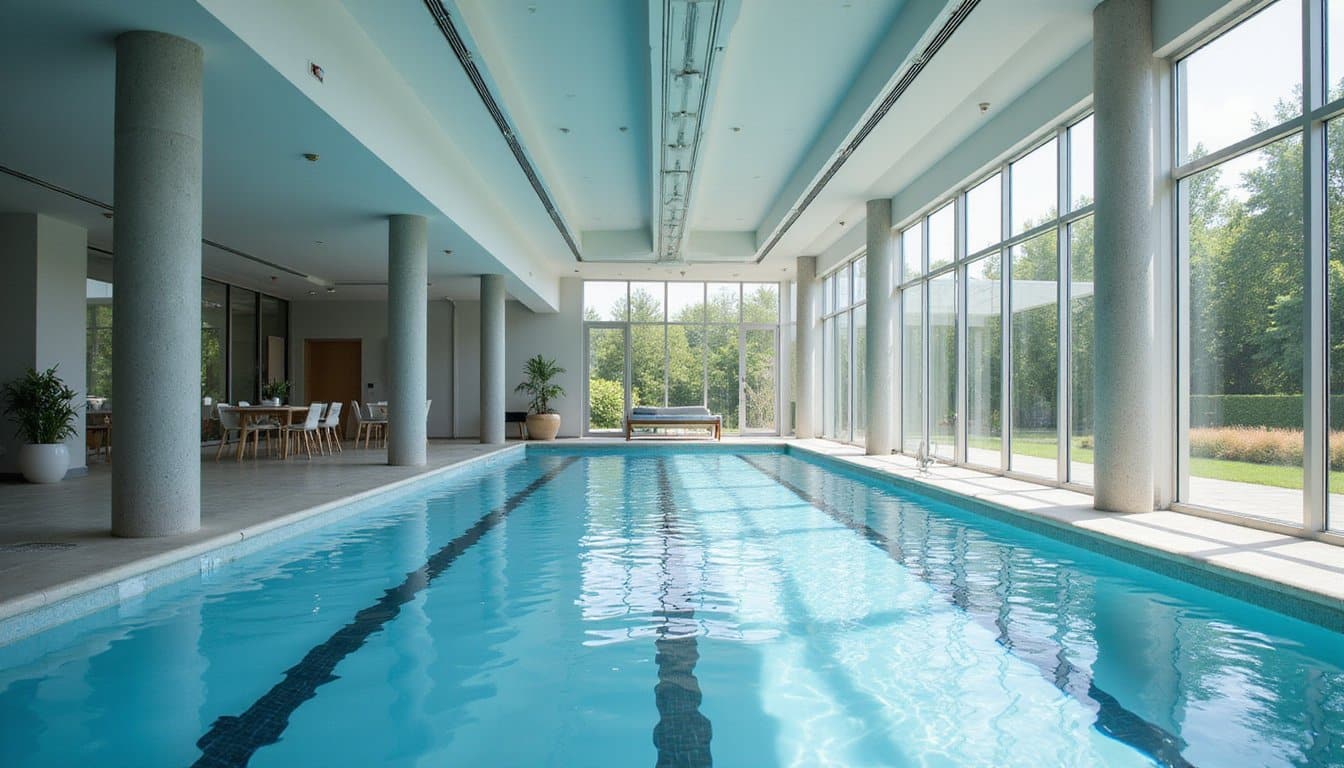
Dialing in your indoor pool humidity levels requires continuous humidity monitoring pool enclosure-wide, not just a single sensor near the return duct. You’ll want readings at windows, exterior walls, and ceiling zones where condensation appears first. Seasonal flexibility matters too: target 50% RH during winter to offset cold-surface condensation risk, then allow 60% RH in summer to reduce equipment demand without sacrificing moisture control. Keeping air temperature 2 degrees above water temperature is essential, since even a small drop can increase humidity load by 35%, placing significant strain on your dehumidification system.
Set Pool Air Temperature 2°F Above the Water
Because air temperature directly governs how fast moisture leaves the pool surface, most mechanical engineers target a room setpoint 2°F above the water temperature, a rule of thumb that cuts evaporation, lowers the latent load on your dehumidification system, and eliminates the chill swimmers feel when they exit the pool.
Cap air temperature at 86°F regardless of water setpoint; exceeding that threshold compromises occupant comfort without meaningful gains in condensation prevention indoor pools depend on. For effective pool room climate control, plan for programming drift, water temperatures trend roughly 2°F warmer over a facility’s life, so size equipment accordingly. Always consult dehumidifier manufacturers to verify moisture load calculations before finalizing system capacity.
This setpoint strategy works in both Fahrenheit and Celsius and directly supports your broader indoor pool humidity control goals by keeping evaporation rates predictable and energy consumption measurable.
Direct Airflow to Windows, Walls, and Breathing Zones
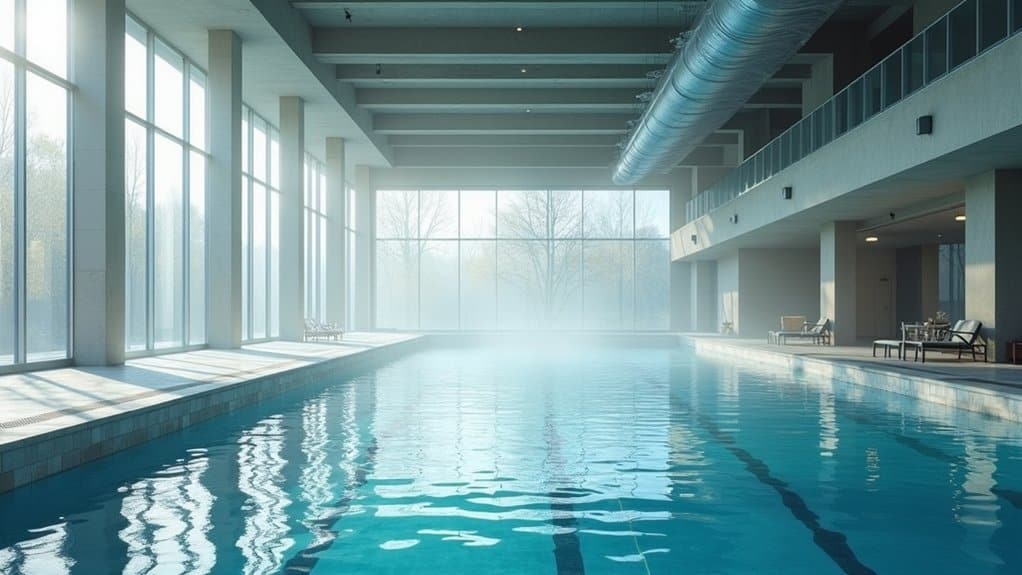
Direct warm supply air at windows first. Natatorium humidity systems should deliver 3, 5 CFM per square foot of glass surface, creating a continuous air blanket that keeps glass above dew point. Any untreated section will sweat.
Supply breathing-zone air at deck level to support occupant comfort. Aim for 4, 6 air changes per hour while positioning return grilles to prevent short-circuiting. Poor return placement creates stagnant pockets where pool room condensation control fails entirely.
Cover every micro-zone, swimmers, spectators, exterior surfaces, with balanced, well-directed airflow. When condensation appears on walls or ceilings, it typically signals inadequate warm air coverage that must be corrected before moisture damages the building envelope.
Prevent Condensation Damage in Your Pool Room
When relative humidity drifts above 60%, moisture begins collecting on the coldest surfaces in your pool room, windows, skylights, exterior doors, and under-insulated wall sections. Map your space dew point against every enclosure surface to identify condensation hotspots before damage occurs. Thermally broken window frames and emergency exit doors reduce surface temperature differentials that trigger moisture accumulation.
Install vapor barrier systems on walls and ceilings with the retarder positioned on the warm side to contain moisture within the controlled envelope. Your dehumidification system should maintain negative pressure so opening a door pulls dry air inward rather than pushing humid air into adjacent spaces. Proper indoor pool air balance guarantees consistent airflow blankets exterior glass with warm supply air, preventing the corrosion, mold, and structural decay that unchecked condensation accelerates.
Size Your Indoor Pool Dehumidifier to the Moisture Load
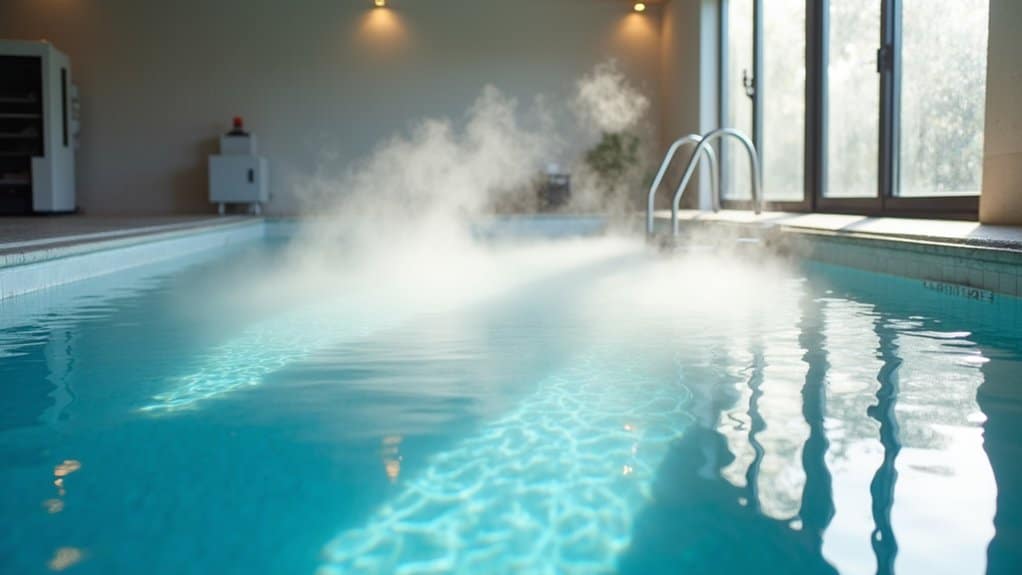
Every dehumidifier must match the moisture load it’s fighting, undersized units can’t hold humidity targets, while oversized units waste capital and cycle inefficiently. Your pool dehumidification system must remove moisture at the same rate your indoor pool generates it.
Calculate total moisture load from three sources: pool evaporation, occupants, and ventilation air. Evaporation dominates, multiply pool surface area by 0.1, then by 24 hours for daily output. Adjust for water temperature, room temperature, and activity factor. Each active swimmer adds roughly 1.0 lb/hr through splashing and surface disturbance.
Don’t ignore ventilation air. Use the formula: moisture (lbs/hr) = CFM × Δgrains ÷ 1,555. Outdoor air adds load in summer but provides a dehumidification credit in winter.
Apply a 10, 15% safety factor to your final total moisture load before selecting equipment capacity.
Spot the Signs of Indoor Pool Humidity Problems
Because humidity problems rarely announce themselves with a single dramatic failure, you need to recognize the early warning signs before moisture damages your pool enclosure. A properly sized dehumidifier for pool room applications should prevent these symptoms entirely.
| Warning Category | Key Indicators |
|---|---|
| Condensation | Foggy windows, dripping glass, wet floors |
| Structural Damage | Peeling paint, rust on hardware, damp drywall |
| Air Quality | Strong chlorine odors, breathing difficulty, eye irritation |
| Mechanical Failures | Frequent compressor cycling, overflowing drain pans, coil corrosion |
For effective mold prevention pool room environments require humidity at 50, 60%. When you spot persistent condensation or musty odors, your system’s undersized or malfunctioning. Addressing these signals early supports energy efficient humidity control and prevents costly structural repairs downstream.
Call Today and Plan a Pool Built for Every Season
Indoor pools deliver year-round enjoyment, but only when built with the right design, ventilation, and finishes. At Cristallo Pools in Jupiter, FL, our skilled team delivers dependable Design and Planning built around your space, lifestyle, and luxury standards. Call +1 (561) 766-0353 today and turn your indoor pool dream into a reality.
Frequently Asked Questions
How Much Can a Pool Cover Reduce Indoor Pool Evaporation?
A proper pool cover can cut your indoor pool’s evaporation by 50% to 95%, depending on cover type, fit, and how consistently you use it. Rigid and automatic covers outperform standard blanket-style options. You’ll see the biggest gains by keeping the cover on whenever you’re not swimming, since exposed water surface drives your room’s moisture load. That directly lowers dehumidification demand, eases equipment strain, and helps you hold that 50, 60% RH target.
Do Seasonal Weather Changes Affect Indoor Pool Humidity Control Needs?
Yes, seasonal weather changes directly affect your humidity control needs. In winter, cold surfaces increase condensation risk, so you’ll want to target around 50% RH and keep room air 2, 4°F above water temperature. In summer, you can allow RH to rise toward 60% since condensation risk drops, though warmer outdoor air adds dehumidification load. Your HVAC system should adjust ventilation rates, preheating, and dew point management seasonally.
What Moisture-Resistant Building Materials Work Best for Indoor Pool Rooms?
You’ll get the best results from fiberglass-reinforced panels, PVC-based finishes, and cement board for walls and ceilings, they far outperform gypsum, which deteriorates quickly under constant humidity. Use closed-cell spray foam insulation (permeance ~1.0) with a continuous interior vapor barrier to block moisture migration. For flooring, install 100% waterproof systems over sealed underlayment membranes with proper expansion gaps. Pair these materials with mechanical dehumidification for complete protection.
How Often Should Indoor Pool HVAC Systems Be Professionally Serviced?
You should schedule professional HVAC servicing at least twice per year, once in spring and once in fall, to align with cooling and heating season startups. If your system runs 24/7 to maintain that 50, 60% humidity target, you’ll want quarterly service instead. Between visits, check filters monthly and inspect drain lines regularly. Older equipment or high-occupancy facilities typically demand shorter intervals to prevent costly breakdowns and efficiency losses.
Can Smart Automation Systems Improve Indoor Pool Humidity Management?
Yes, smart automation systems greatly improve indoor pool humidity management. You can monitor and adjust your natatorium’s conditions remotely via smartphone, tablet, or computer, enabling real-time responses to fluctuating moisture loads. These systems continuously track relative humidity, temperature, and airflow, automatically coordinating dehumidifiers, ventilation, and energy recovery equipment to maintain the 50, 60% target range. They’ll also flag abnormal readings and equipment malfunctions through automated alerts.