Your gunite pool requires precise chemical balancing to protect its porous concrete surface and maintain water quality. You’ll need to maintain TDS levels between 500-5000 ppm, calcium hardness at 200-275 ppm, and pH between 7.4-7.6. Test alkalinity weekly, aiming for 80-120 ppm, and keep cyanuric acid between 30-50 ppm. Regular monitoring and adjustments prevent scale formation and surface damage, while proper chemical management guarantees your pool’s longevity and pristine condition.
Essential Chemical Balancing for Gunite Pool Longevity

While maintaining a gunite pool requires attention to multiple chemical parameters, understanding the proper balance of total dissolved solids (TDS) serves as a fundamental starting point. You’ll need to maintain TDS levels between 500-5000 ppm through regular monitoring and adjustment. When your pool’s TDS monitoring indicates levels exceeding 5000 ppm, implement a partial drain and refill to dilute the concentration. Total alkalinity levels should be maintained between 80-150 ppm for optimal water chemistry.
Though TDS management isn’t as crucial as other chemical parameters, it still plays an essential role in your pool’s overall health. High TDS levels can lead to cloudy water and reduced sanitizer effectiveness. Regular water dilution helps prevent these issues while maintaining ideal swimming conditions. Testing with pool test strips provides a quick and convenient method for monitoring TDS levels. pH balance testing should be performed daily to maintain levels between 7.2 and 7.6 for proper sanitization. Remember to test TDS levels monthly and keep detailed records to track any developing trends that might require intervention.
The Critical Role of Calcium Hardness in Gunite Surfaces
Because gunite pools rely heavily on their plaster coating for structural integrity, maintaining proper calcium hardness levels becomes essential for long-term surface protection. You’ll need to maintain levels between 200-275 ppm to prevent both calcium leaching and scale formation in your gunite pool’s plaster surface. For optimal protection in areas like Yardley, PA, regular monitoring is especially important due to significant sun exposure. The recommended range helps prevent the formation of cloudy, murky water that occurs when levels exceed 400 ppm.
Low calcium hardness can trigger aggressive water conditions, leading to etching prevention challenges. You’ll notice signs like pitting, tile grout deterioration, and persistent cloudiness when levels drop too low. Conversely, excessive calcium creates scale buildup that can damage equipment and clog plumbing systems. Using temporary calcium reducers will not provide lasting results, as the calcium eventually returns to the water.
Monitor your pool’s calcium hardness every 3-4 months, and adjust levels through partial drains or water replacement when necessary. If you’re dealing with high calcium content in your source water, consider alternative water supplies for ideal maintenance.
Proper Ph and Alkalinity Management Strategies
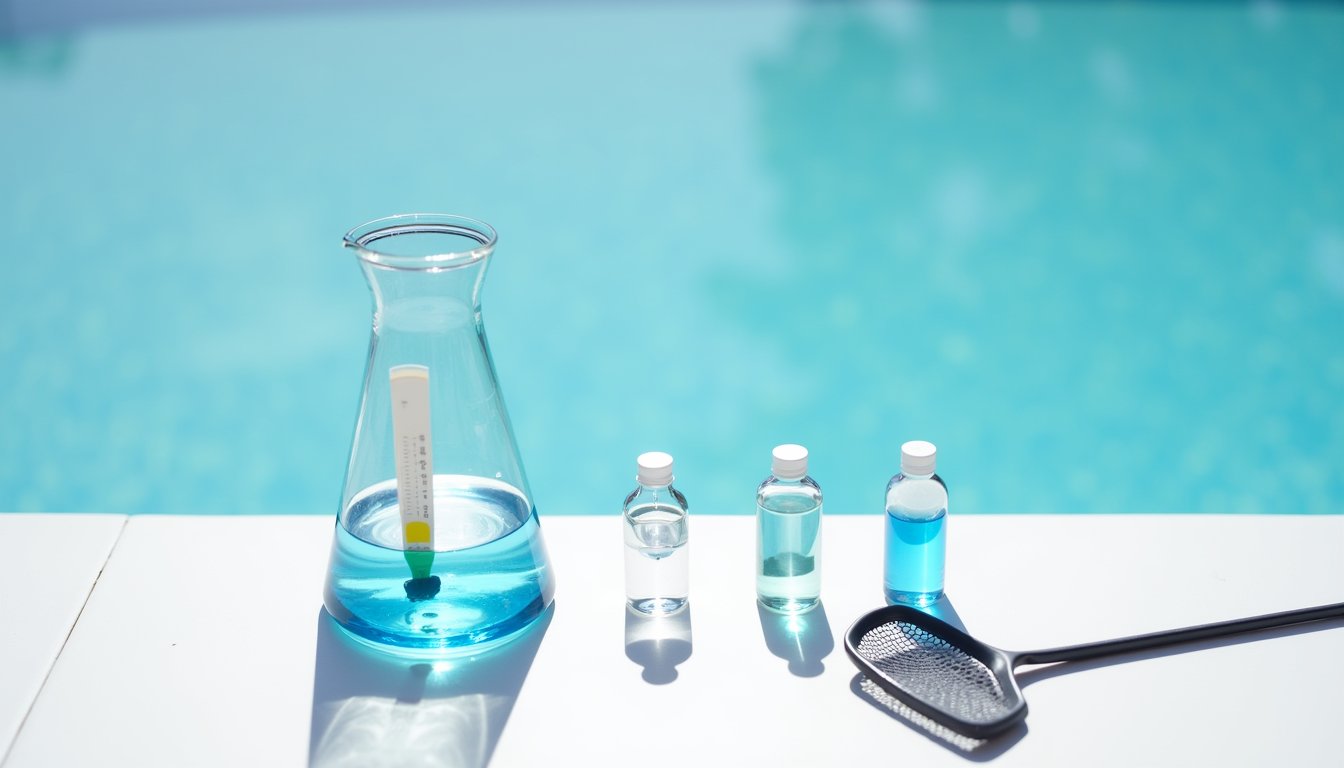
Since gunite pools depend heavily on precise chemical balances, maintaining proper pH and total alkalinity (TA) levels forms the cornerstone of effective pool maintenance. You’ll need to maintain TA between 80-120 ppm to effectively buffer pH changes and protect your pool’s surfaces and equipment. Regular alkalinity testing using pool test kits helps you monitor these critical levels weekly, as gunite’s porous nature makes it particularly susceptible to chemical imbalances. This precise balance acts as a buffer to prevent sudden fluctuations that could damage pool surfaces. Small adjustments are recommended over large chemical doses to maintain stability and prevent overcorrection. Testing the pool water daily monitoring helps ensure your gunite pool stays within the ideal pH range of 7.4-7.6.
When making pH adjustments, start by addressing TA levels first. Use sodium bicarbonate at 1.5 lbs per 10,000 gallons to raise TA by approximately 10 ppm. For simultaneous high TA and pH corrections, apply pH reducers like muriatic acid or phosphoric acid. Remember to test after each chemical addition, as gunite pools require precise, methodical adjustments to maintain ideal chemistry levels.
Chlorine and Stabilizer Requirements for Gunite Systems
As UV rays rapidly degrade chlorine in outdoor gunite pools, maintaining proper cyanuric acid (CYA) levels becomes essential for effective sanitization. You’ll need to maintain CYA levels between 30-50 ppm for ideal chlorine efficacy, while ensuring free chlorine remains at 7.5% of your CYA concentration. Pool conditioner helps protect chlorine from UV rays, making it last longer and reducing maintenance costs. Heavy rainfall can significantly dilute stabilizer levels, requiring additional CYA supplementation. Adding too much stabilizer can lead to chlorine lock, reducing the sanitizing power of your pool’s chlorine.
| Pool Type | Target CYA (ppm) | Min. Free Chlorine |
|---|---|---|
| Outdoor | 30-50 | 2-4 ppm |
| Saltwater | 60-80 | 4-6 ppm |
| Indoor | 0 | 1-3 ppm |
Monitor your CYA levels monthly, as they’ll accumulate over time. When levels exceed 100 ppm, you’ll need to partially drain and refill your gunite pool, as this is the only reliable method to reduce stabilizer concentration. Remember that stabilized chlorine acts more slowly than unstabilized versions, requiring double-dose shock treatments for effective sanitization.
Best Testing Practices and Chemical Adjustments
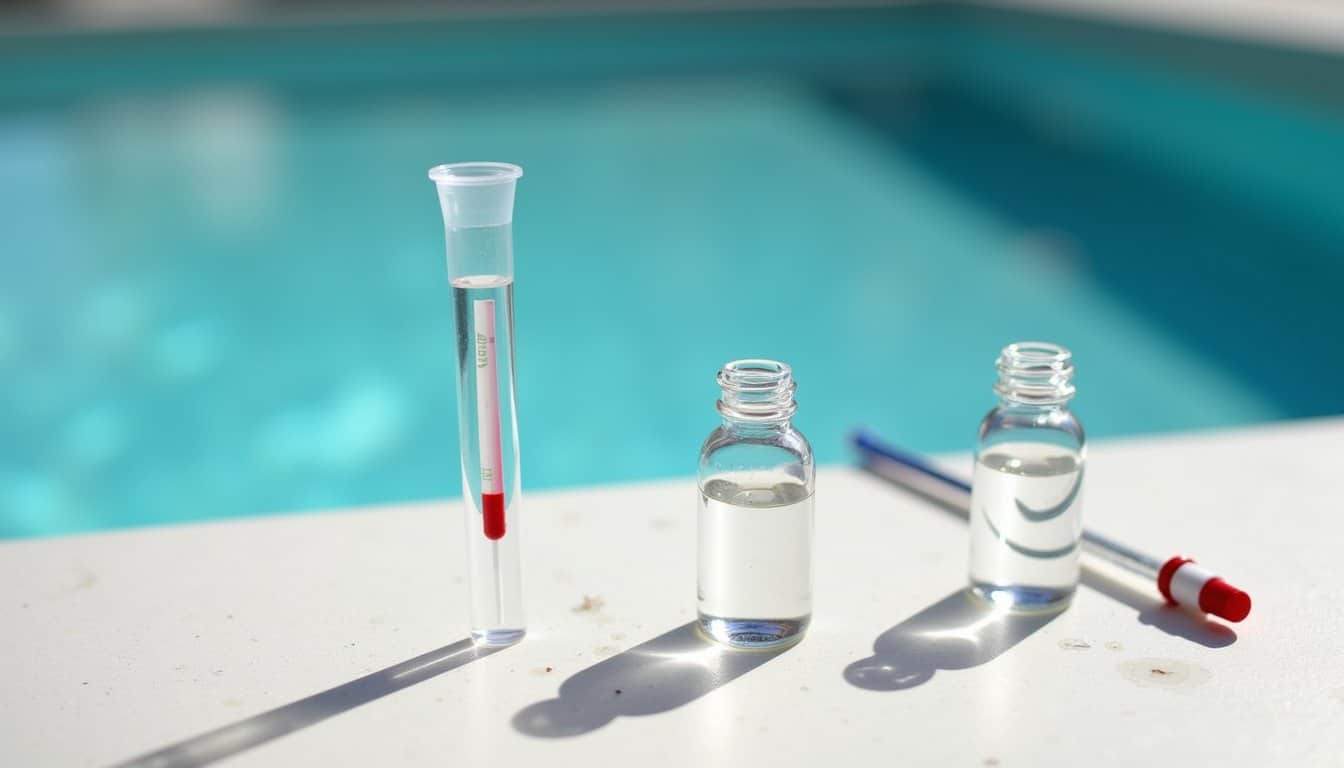
Regular water testing forms the cornerstone of proper gunite pool maintenance, building upon your stabilizer management routine. You’ll need to conduct weekly tests using reliable testing tools, with particular attention to measurement accuracy. While test strips offer quick results, liquid test kits provide superior precision for critical parameters. The Taylor K-2006 kit delivers FAS-DPD testing for the most accurate chlorine readings available. For optimal water quality and safety, increased testing frequency is necessary after heavy pool usage or rainfall. Maintaining proper chemical balance helps prevent skin irritation and other health issues for swimmers.
Begin your testing sequence by checking total alkalinity (80-120 ppm), followed by pH (7.2-7.8), calcium hardness (250-450 ppm), and cyanuric acid (30-50 ppm). Draw water samples from 18 inches below the surface to guarantee accurate readings. When making adjustments, use precise chemical calculations: 1 pound of baking soda per 10,000 gallons raises alkalinity by 10 ppm, while 1 cup of muriatic acid per 10,000 gallons decreases pH by 0.5 units.
Frequently Asked Questions
How Does Rainwater Affect the Chemical Balance in a Gunite Pool?
Rainwater dilution considerably disrupts your pool’s chemical equilibrium, causing immediate pH fluctuations. You’ll notice reduced sanitizer effectiveness as chlorine levels drop, while the introduction of acidic rain can lower your pool’s pH and alkalinity. This dilution effect also impacts your total dissolved solids levels and can compromise calcium balance. You’ll need to test and adjust your water chemistry promptly after rainfall to maintain proper sanitization and prevent surface damage.
Can Pool Chemicals Stain Gunite Surfaces Differently Than Other Pool Materials?
Yes, your Gunite pool’s porous surface reacts differently to chemicals compared to vinyl or fiberglass pools. Chemical reactions occur more readily in Gunite’s microscopic pores, leading to deeper penetration and more persistent stains. You’ll notice metals like copper and iron can bond more permanently to Gunite’s surface matrix. For effective staining prevention, you’ll need to maintain strict chemical balance and consider using metal sequestrants before adding oxidizing chemicals.
What Causes Dark Spots to Appear on Gunite Pool Walls?
You’ll typically find dark spots on gunite pool walls due to two main causes: black algae infestations and worn plaster exposing the darker gunite substrate. Poor surface maintenance accelerates both issues. When algae penetrates the porous surface, it creates chlorine-resistant colonies, while metal brushing and chemical imbalances can erode plaster layers. You’ll need professional testing to distinguish between biological growth and structural wear, as treatments differ markedly.
How Do Salt Chlorination Systems Impact Gunite Pool Surfaces Long-Term?
Salt chlorination systems can greatly impact your gunite pool’s surface texture over time. You’ll notice accelerated deterioration as salt corrosion attacks the calcium carbonate in your pool’s plaster, causing it to soften and erode. The process happens about five times faster than with traditional chlorine systems. To protect your investment, you’ll need to maintain precise salt levels (3,200-3,500 ppm) and regularly monitor your pool’s surface for signs of deterioration.
Should Chemical Adjustments Differ Between New and Aged Gunite Pools?
Yes, you’ll need to adjust your chemical approach based on your pool’s age. For new gunite pools, maintain higher alkalinity (200-250 ppm) and calcium hardness (200-250 ppm), while using regular chlorine instead of salt systems. As your pool ages, its chemical composition becomes more vulnerable to deterioration, requiring more frequent pH monitoring. You’ll also need to plan for resurfacing every 10-15 years, which impacts your pool’s chemical demands.