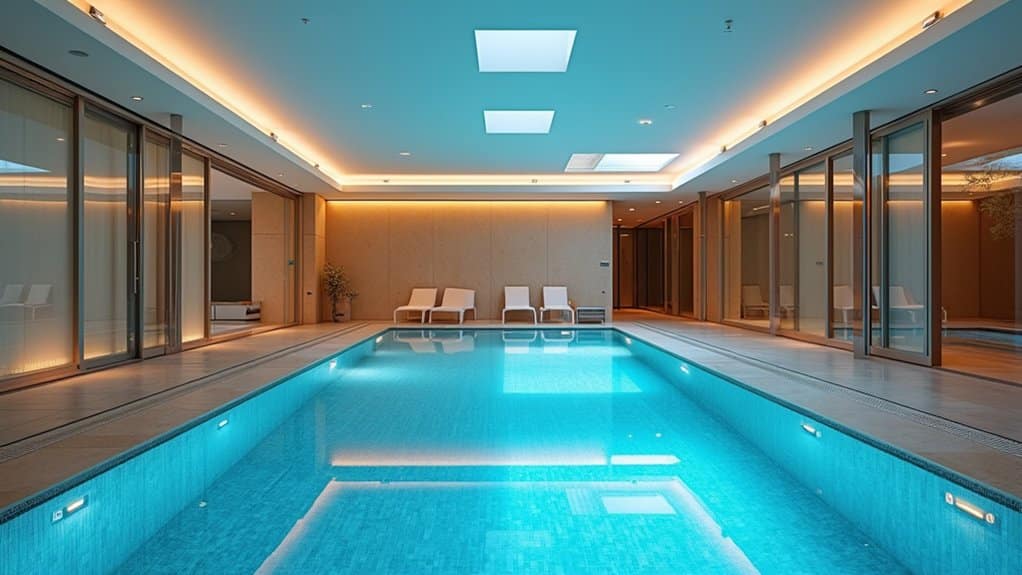
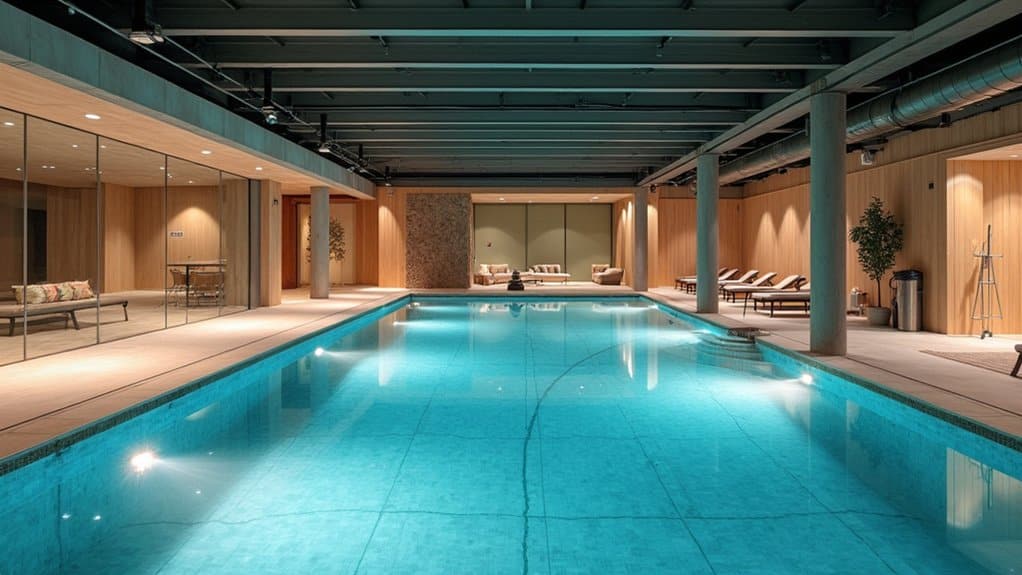
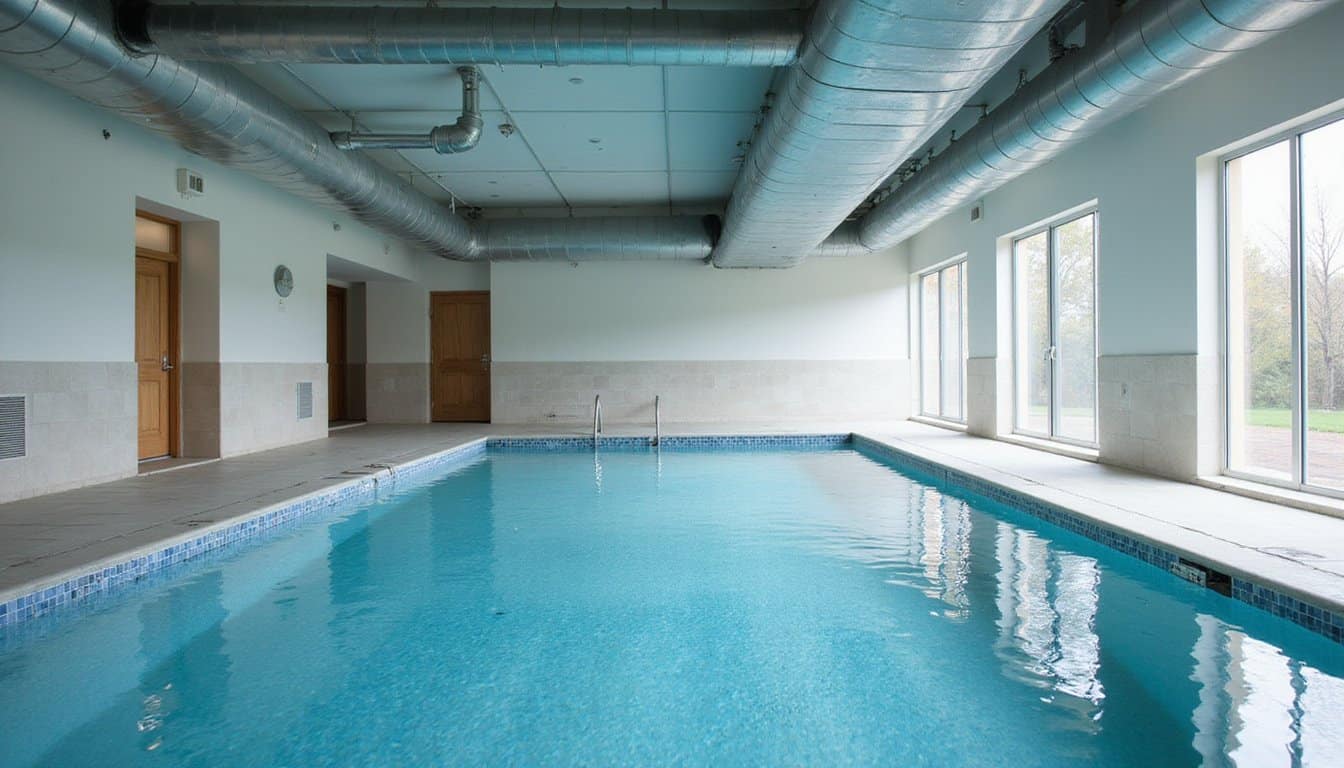
You’ll spend $35,000 to $65,000 on a typical vinyl liner pool, with the shell and installation eating up $22,000 to $50,000, roughly 60% or more of your total budget. Liner replacement runs $4,000 to $10,000 every 5 to 15 years. Extras like lighting ($450, $700 per light), jets ($400 each), and fencing ($2,400 average) can quietly push costs past $100,000. Understanding where each dollar goes helps you avoid the surprises most quotes won’t mention.
What Does a Vinyl Liner Pool Actually Cost?
Because vinyl liner pools sit at the lower end of inground pricing, they attract budget-conscious buyers, but the actual number on your contract depends on several moving parts. Most vinyl pool installation pricing falls between $35,000 and $65,000, though minimal builds can start around $22,000 and feature-rich projects push past $100,000.
Your vinyl liner pool cost breakdown shifts based on region, pool size, shape complexity, liner thickness, wall panel type, coping, and added features like steps or custom entries. A standard rectangular design costs less than a freeform layout requiring more engineering and labor. Compared to fiberglass pools, often $85,000 to $200,000 installed, vinyl liner pools deliver a lower entry point, making them the most accessible inground option when upfront budget is your primary constraint. High-quality vinyl liners also require no costly resurfacing and have an average lifespan of about 10 years before replacement is needed.
Shell and Installation: Your Biggest Upfront Expense
The steel or polymer wall panels bolted together at the bottom of your excavation represent the single largest line item in a vinyl liner pool build. Shell and installation are the biggest upfront cost drivers, typically running $22,000, $50,000 depending on size, shape, and wall material. Steel panels alone can cost $7,000, $15,000 before labor begins.
Excavation adds $800, $2,000 under favorable conditions, but difficult access, slopes, or heavy soil hauling push that figure higher fast. Rectangular shapes keep costs lower than freeform designs because both the dig and panel work are simpler. The concrete footer alone runs approximately $300, $800 total, an often-overlooked expense that supports the entire wall structure.
When reviewing inground vinyl pool pricing, expect the fully installed shell, including excavation, backfill, and structural support, to consume the majority of your budget before equipment, decking, or extras enter the conversation.
Vinyl Liner Replacement Costs You Can’t Ignore
Four costs that catch owners off guard:
- Pre-installation repairs to walls or floors before the new liner goes in
- Custom features like tanning ledges or full-width stairs that increase material and labor
- White goods replacement, main drain covers, skimmer plates, and return fittings
- Water refill and chemical balancing, adding $150, $650 combined
Planning for these expenses is what separates affordable pool ownership from a financial headache.
Extras That Quietly Double Your Vinyl Pool Budget
Once your base vinyl pool quote feels locked in, add-on features like underwater lighting, water jets, and waterline tile can quietly push the final number far beyond what you planned. Pool lights run $450, $700 each before electrical work. Jets cost about $400 apiece. Bubblers for tanning ledges add $450, $700 each. Waterline tile alone can hit $2,700, $3,200.
Then come the non-negotiables. Fencing averages $2,400, and pool enclosures range from $6,000 to $17,350. A gas line for your heater adds roughly $20 per linear foot. Filling the pool costs $600, $1,200.
These line items accumulate fast. Your total vinyl pool ownership cost can nearly double once extras stack up. Build every foreseeable add-on into your pool installation budget before breaking ground, not after.
Site Work, Permits, and Vinyl Liner Pool Cost Surprises

Before your liner ever ships, site work and permits can reshape your budget in ways that add-on features don’t. Excavation on sloped lots may require retaining walls and grading that push costs well beyond base estimates. Permits and inspections alone run $100 to $1,000, and electrical or plumbing trades often need separate licensing.
Here’s what catches most homeowners off guard:
- Site work on uneven terrain can add thousands before the shell is even set.
- Permit costs rarely appear in early quotes.
- Utility routing gets expensive when trenching runs long.
- Code-required fencing or safety covers aren’t optional, they’re mandatory budget items.
These surprises compound over time, especially when you factor in future liner replacement costs that already range from $4,000 to $10,000.
Vinyl Liner Pool Costs: Entry-Level to Premium
Vinyl liner pools span a wide cost range, from roughly $25,000 to $150,000+, depending on size, shape, materials, and feature depth.
Entry-level builds typically start around $25,000, $35,000 for basic packages with steel or polymer walls and standard equipment. Most standard installations land near $45,000, $65,000. Mid-range projects run $50,000, $65,000, adding upgraded lighting, heating, and custom shapes. Premium builds push $65,000, $150,000+ with automatic covers, salt systems, custom coping, and elaborate landscaping.
Don’t overlook liner and lifespan costs when budgeting. You’ll likely replace your vinyl liner pool’s liner every 5, 15 years at $3,000, $7,500 per changeout. That recurring expense makes the true ownership cost higher than the initial price tag suggests, so factor at least one replacement into your long-term financial plan.
Vinyl Liner vs. Fiberglass Pool Costs
Now that you’ve seen what vinyl liner pools cost on their own, the natural next question is how they stack up against fiberglass, the other major factory-produced pool option.
Vinyl installations typically run $40,000, $70,000, while fiberglass starts around $55,000, $100,000. But any vinyl pool cost calculator should factor in liner replacements every 8, 12 years at $5,000, $8,000 each, an expense fiberglass owners avoid entirely.
Here’s what affects vinyl pool pricing over time compared to fiberglass:
- Over 20 years, liner replacements add $10,000, $32,000 to your total investment.
- Ten-year vinyl ownership runs $52,125, $107,125 versus $85,000, $200,000 for fiberglass.
- Annual vinyl maintenance averages $1,200, $1,800, compared to $800, $1,200 for fiberglass.
- The upfront savings you pocket today shrink steadily with each replacement cycle.
Is a Vinyl Liner Pool Worth the Long-Term Cost?
How well does a vinyl liner pool hold its value over decades of ownership? Your liner pool construction costs typically range from $25,000 to $65,000, making vinyl the most affordable entry point. However, liner replacements every 7 to 10 years at $4,000 to $8,000 each shift the long-term equation markedly.
Over 25 years, one builder estimates total ownership reaching $118,600 when you factor in recurring replacements and vinyl pool maintenance expenses of $500 to $1,500 annually. A 10-year ownership window runs roughly $52,125 to $107,125 including installation and one replacement cycle.
The worth calculation depends on your timeline. If you’re prioritizing upfront affordability over lifetime cost, vinyl delivers clear value. If you’re planning 20-plus years of ownership, the cumulative replacement cycles can erode that initial savings advantage.
Build the Perfect Pool With Trusted Experts
Choosing the right pool type is one of the biggest decisions you’ll make for your backyard, and the right team makes the entire process easier. At Cristallo Pools in Jupiter, FL, our award-winning team delivers expert New Pool Construction with craftsmanship, vision, and a personalized approach. Call +1 (561) 766-0353 today and start building the backyard of your dreams.
Frequently Asked Questions
How Long Does a Vinyl Pool Liner Typically Last Before Replacement?
You can expect your vinyl pool liner to last roughly 7 to 15 years, with most homeowners replacing around the 10-year mark. Sun exposure, water chemistry, and installation quality heavily influence that timeline. If you maintain balanced pH, avoid concentrated chemical contact, and use a pool cover, you’ll push closer to 15 years. Budget $4,000, $10,000 for replacement so it’s a planned expense, not a surprise.
Does Liner Thickness Actually Affect How Long It Lasts?
Thicker liners offer slightly more longevity, but the difference isn’t as dramatic as you’d expect. A 20-mil liner typically lasts 10, 12 years, while a 27-mil liner may reach 16 years. However, installation quality and water chemistry consistently matter more than a few extra mils of material. A properly installed 20-mil liner can outlast a poorly installed 27-mil one, so don’t overspend on thickness while neglecting maintenance.
What Are the First Signs a Vinyl Liner Needs Replacing?
You’ll typically notice fading and discoloration first, signaling UV and chemical breakdown. Next, watch for brittleness, small cracks near the waterline, and wrinkles that won’t smooth out. If your liner slips from the bead track or you’re losing water beyond normal evaporation, you’re likely facing replacement. Budget $4,000, $10,000 for a full swap, catching these signs early helps you plan financially rather than reacting to a failure.
Can Proper Water Chemistry Extend My Vinyl Liner’s Lifespan?
Yes, proper water chemistry can greatly extend your liner’s lifespan. Keep your pH between 7.2, 7.6 and free chlorine at 1.0, 3.0 ppm to reduce chemical stress that causes fading, brittleness, and wrinkling. You’ll also want to avoid pouring undiluted chemicals directly onto the liner and test your water two to three times weekly. Well-maintained liners commonly last 10, 15 years, helping you delay that $4,000, $10,000 replacement cost.
Does Sun Exposure Significantly Shorten a Vinyl Pool Liner’s Life?
Yes, sun exposure greatly shortens your vinyl liner’s life. UV rays break down the material’s elasticity, causing fading, brittleness, and eventually cracks or tears. The top 6, 8 inches above the waterline typically take the most damage. You’ll notice fading first, then increasing vulnerability to punctures. Using a pool cover and choosing a thicker liner (27, 30 mil) can slow UV degradation, helping you push closer to that 15-year replacement cycle.