




Swimming wasn’t “invented” but evolved naturally as humans interacted with water. Evidence suggests swimming dates back to at least 10,000 BCE, with prehistoric humans using dog paddle-like movements for survival and hunting. By 6,000 BCE, Egyptian cave paintings depicted swimming figures, while formal aquatic practices emerged in Egypt and Mesopotamia around 3000 BCE. You’ll uncover how swimming transformed from a survival necessity into military training, recreational activity, and eventually competitive sport through human history.
Swimming in Prehistoric Civilizations

Evidence from archaeological findings suggests that swimming dates back to prehistoric times, potentially as early as 10,000 BCE. You’ll find that humans likely developed swimming skills out of necessity for survival, hunting, and crossing bodies of water. Cave paintings uncovered in Egypt’s “Cave of Swimmers,” dating to around 6,000 BCE, depict human figures in swimming motions, providing tangible evidence of prehistoric practices.
Ancient artwork from Mesopotamian, Egyptian, and Assyrian civilizations further confirms swimming’s widespread practice. These early swimmers didn’t use formal techniques; rather, they adopted natural movements resembling the dog paddle. Archaeological evidence indicates that some prehistoric communities near coastlines and rivers incorporated swimming into daily life, developing proficiency that would eventually evolve into more sophisticated forms in later civilizations.
Ancient Egyptian and Mesopotamian Aquatic Traditions
These prehistoric swimming practices evolved into more formalized aquatic traditions in the ancient Egyptian and Mesopotamian civilizations around 3000 BCE. You’ll find evidence of swimming’s cultural significance in hieroglyphics depicting nobles and pharaohs enjoying aquatic activities along the Nile. Egyptian children learned to swim early, with parents teaching ancient techniques focused on breaststroke-like movements.
In Mesopotamia, swimming served practical purposes for military training and river crossings. The Epic of Gilgamesh contains the oldest written reference to swimming, describing the hero’s expedition across waters. Clay tablets dated to 2000 BCE show swimmers using primitive backstroke and sidestroke techniques. Both civilizations considered swimming an essential skill, with Mesopotamians developing specialized training for soldiers who needed to cross the Tigris and Euphrates rivers during military campaigns.
Swimming as Military Training in Classical Antiquity
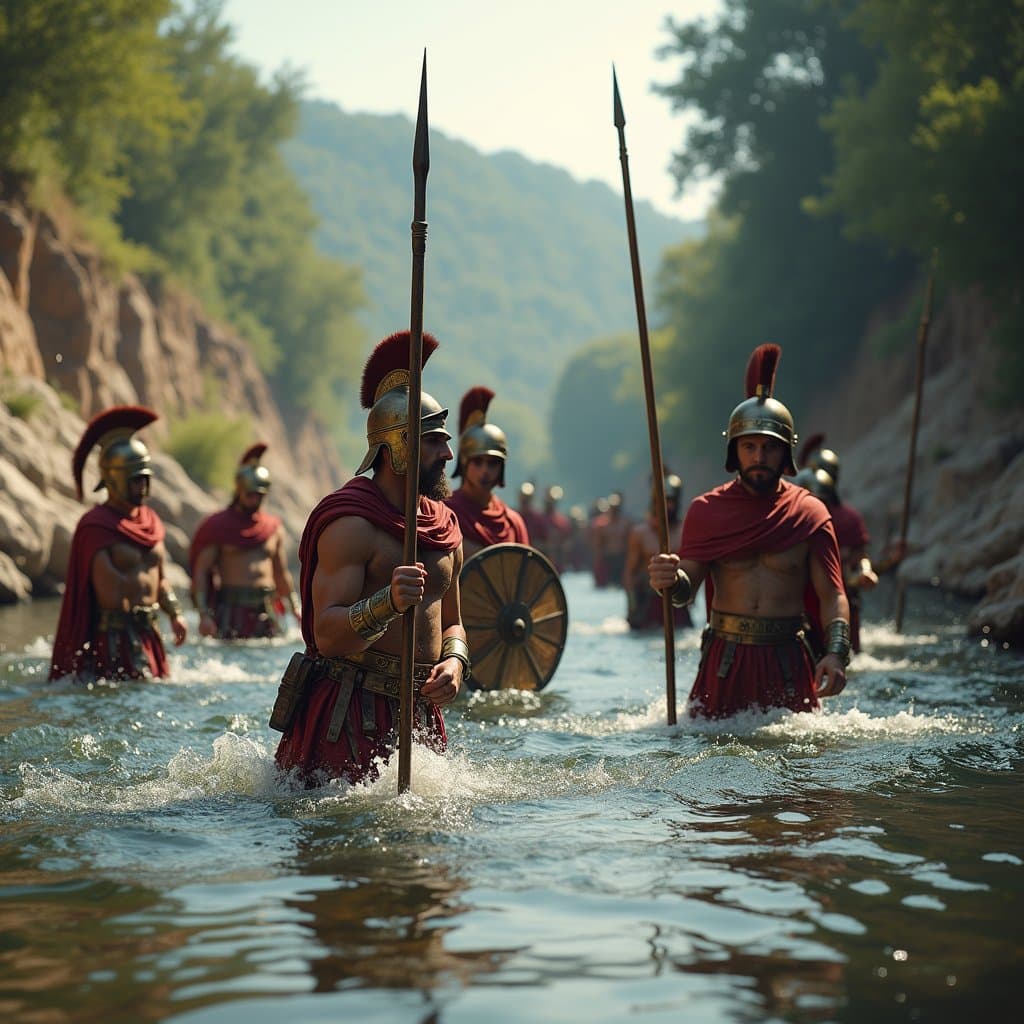
While early civilizations recognized swimming’s practical value, ancient Greece and Rome raised aquatic training to essential military doctrine during the period from 800 BCE to 300 CE.
You’ll find that Spartan youth underwent rigorous swimming drills in the Eurotas River as part of their agoge training system. By 500 BCE, the ability to swim became a defining characteristic of an educated Greek, captured in the phrase “neither swimming nor letters has he learned.”
Roman legionaries later formalized aquatic tactics, with soldiers regularly practicing river crossings while fully armed. Emperor Augustus established specialized swimming instructors called “natatore” for his military units. In Vegetius’s “De Re Militari,” you’ll notice swimming listed among the fundamental skills required of all recruits, alongside marching and weapon handling.
The Evolution of Recreational Swimming Through the Ages
Swimming’s transformation from survival necessity to leisure activity began in ancient Egypt around 2500 BCE, where noble families constructed large pools within their estates for both relaxation and entertainment. These early recreational swimmers developed historical techniques distinct from military swimming, focusing on enjoyment rather than efficiency.
| Period | Cultural Significance | Notable Developments |
|---|---|---|
| Roman | Public baths as social hubs | Initial heated pools |
| Middle Ages | Decline due to disease fears | Swimming associated with paganism |
| Victorian | Resurgence as health practice | Gender-segregated facilities |
The Birth of Competitive Swimming in 19th Century Britain
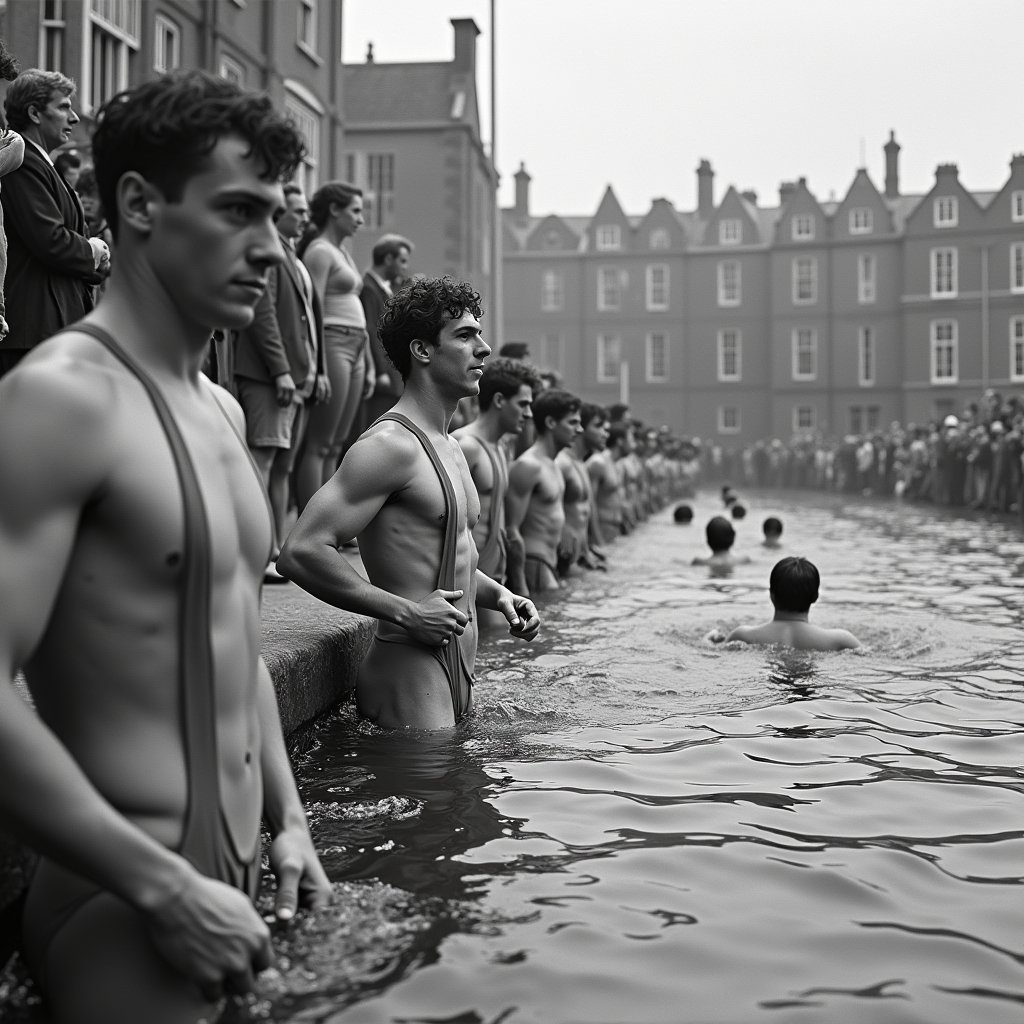
The transformation of swimming from a recreational pursuit to organized competition took root in nineteenth century Britain amid the Victorian revival of aquatic activities. You’ll find that the initial formal swimming clubs emerged in London during the 1830s, with the National Swimming Society established in 1837 specifically to promote competitive events.
By the 1840s, you could witness regular swimming galas attracting significant crowds. The prestigious Amateur Swimming Association, founded in 1869, standardized rules and formalized competition structures. These swimming clubs cultivated a new athletic culture, introducing stroke techniques that emphasized speed rather than mere survival.
The period between 1870-1900 saw Britain’s competitive swimming infrastructure expand dramatically, establishing championships, distance records, and professional coaching; foundational elements that would later shape modern Olympic competition.
Frequently Asked Questions
When Was the First Swimming Stroke Officially Documented?
The initial swimming stroke was officially documented in 1696 when Melchisédech Thévenot published “The Art of Swimming,” describing what you’d recognize as the breaststroke. However, ancient records from Assyrian reliefs (circa 850 BCE) show crude swimming motions. Stroke evolution began formally during this period, with the sidestroke emerging in the 1700s. Before Thévenot’s documentation, swimming techniques existed but weren’t codified with specific mechanics and form as they are today.
How Did Early Humans Learn to Swim Without Formal Instruction?
Early humans likely learned to swim through instinctive movement and observation. You’d see them initially thrashing in water, gradually developing efficient motions through trial and error. This natural adaptation evolved as they watched animals swim and mimicked their techniques. Communities living near water bodies passed these skills generationally through demonstration rather than formal teaching. Your ancestors’ swimming abilities developed organically through necessity, whether for crossing rivers, gathering food, or escaping predators; making swimming an essential survival skill throughout human evolution.
What Materials Were Used for the First Swimming Costumes?
Early swimming costumes evolved from practical necessity. You’d find that the earliest materials included wool, which dominated 18th-century swimwear despite becoming heavy when wet. By the 19th century, you’re seeing flannel and cotton enter the swimming materials environment. Women’s costumes featured bloomers with overdresses, while men wore full-body suits. The costume evolution continued into the 1900s when silk appeared, followed by revolutionary synthetic materials like rayon and nylon that transformed swimwear’s functionality and design forever.
When Did Swimming Become Part of Women’s Physical Education?
Swimming became part of women’s physical education during the late 19th century, coinciding with broader educational reforms and a push for gender inclusion. You’ll find that by the 1880s, many women’s colleges in America and Europe incorporated swimming into their curriculum. By the early 1900s, it was widely recognized as beneficial for women’s health and development. The progressive period’s emphasis on physical fitness further solidified swimming’s place in women’s educational programs across schools and universities worldwide.
How Did Swimming Techniques Differ Across Isolated Ancient Cultures?
You’ll find fascinating cultural variations in ancient swimming techniques across isolated civilizations. Egyptians used a primitive crawl stroke as evidenced in hieroglyphics from 2500 BCE. Meanwhile, Japanese swimmers developed unique sidestroke methods during the Feudal period. Ancient Greeks emphasized more military-oriented swimming techniques, while Polynesian cultures mastered efficient ocean navigation strokes. Indigenous Australian communities developed techniques specifically adapted to cross rivers and waterways. These distinctions emerged independently, reflecting each society’s environmental challenges and cultural priorities.