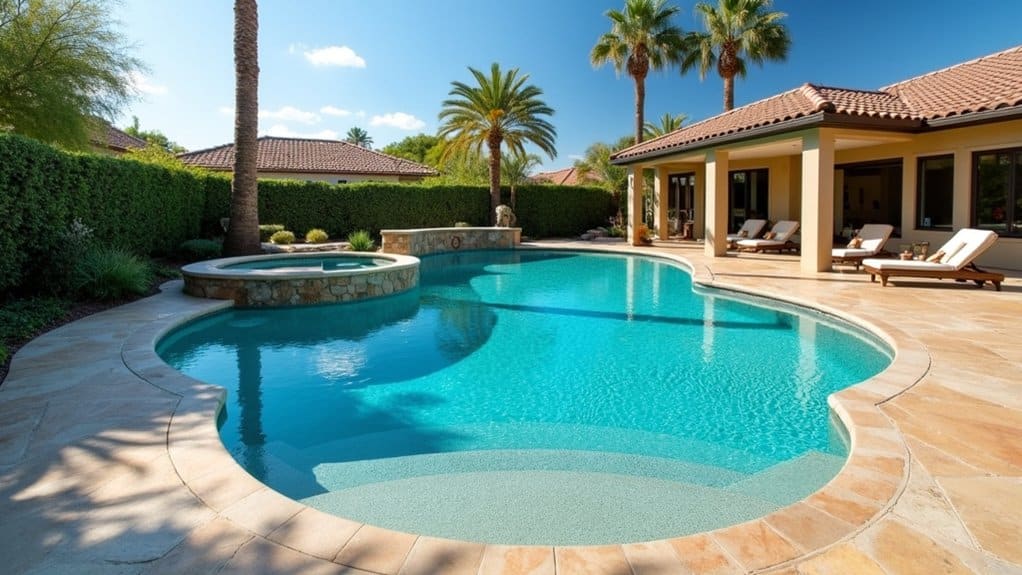
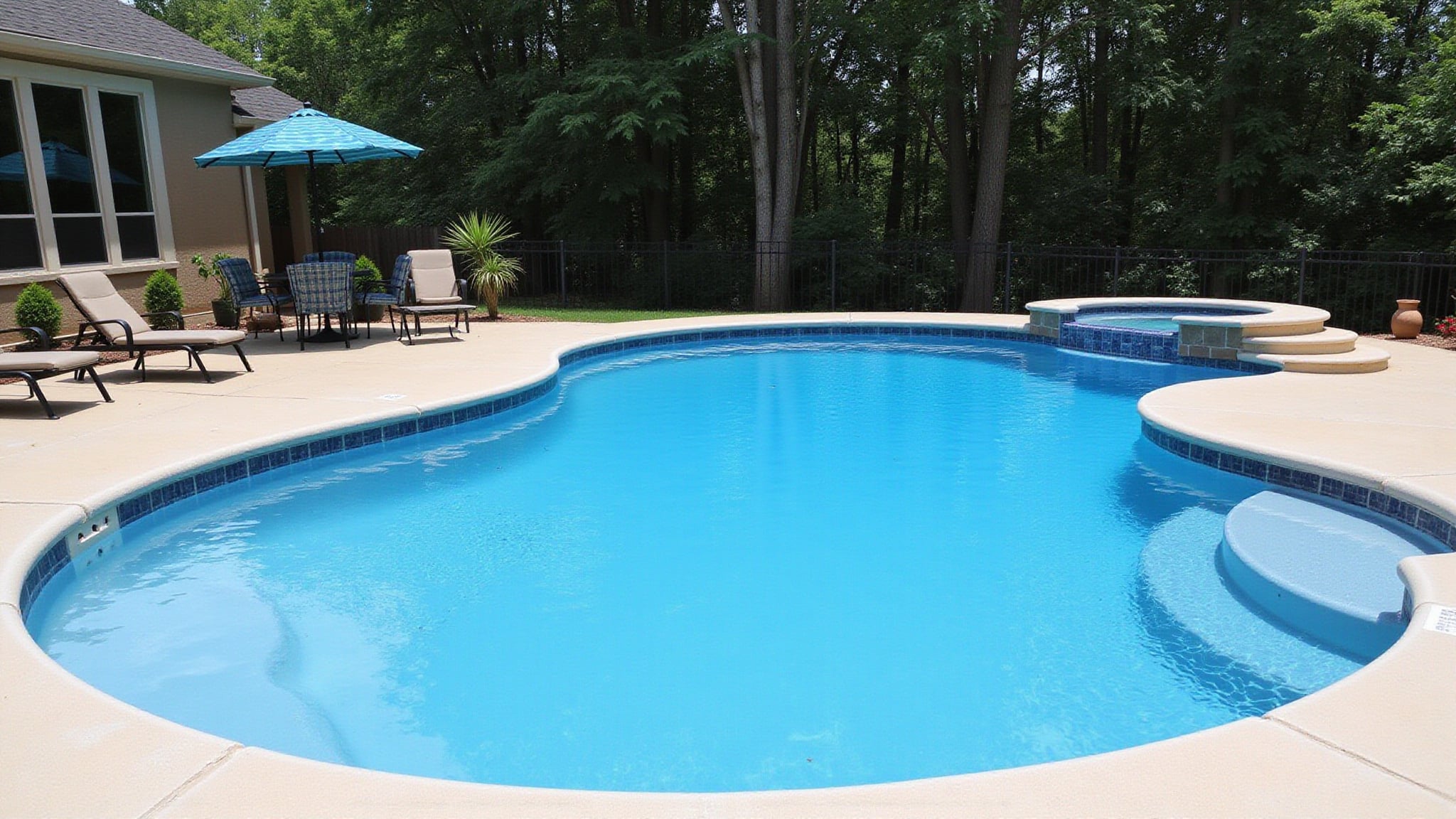
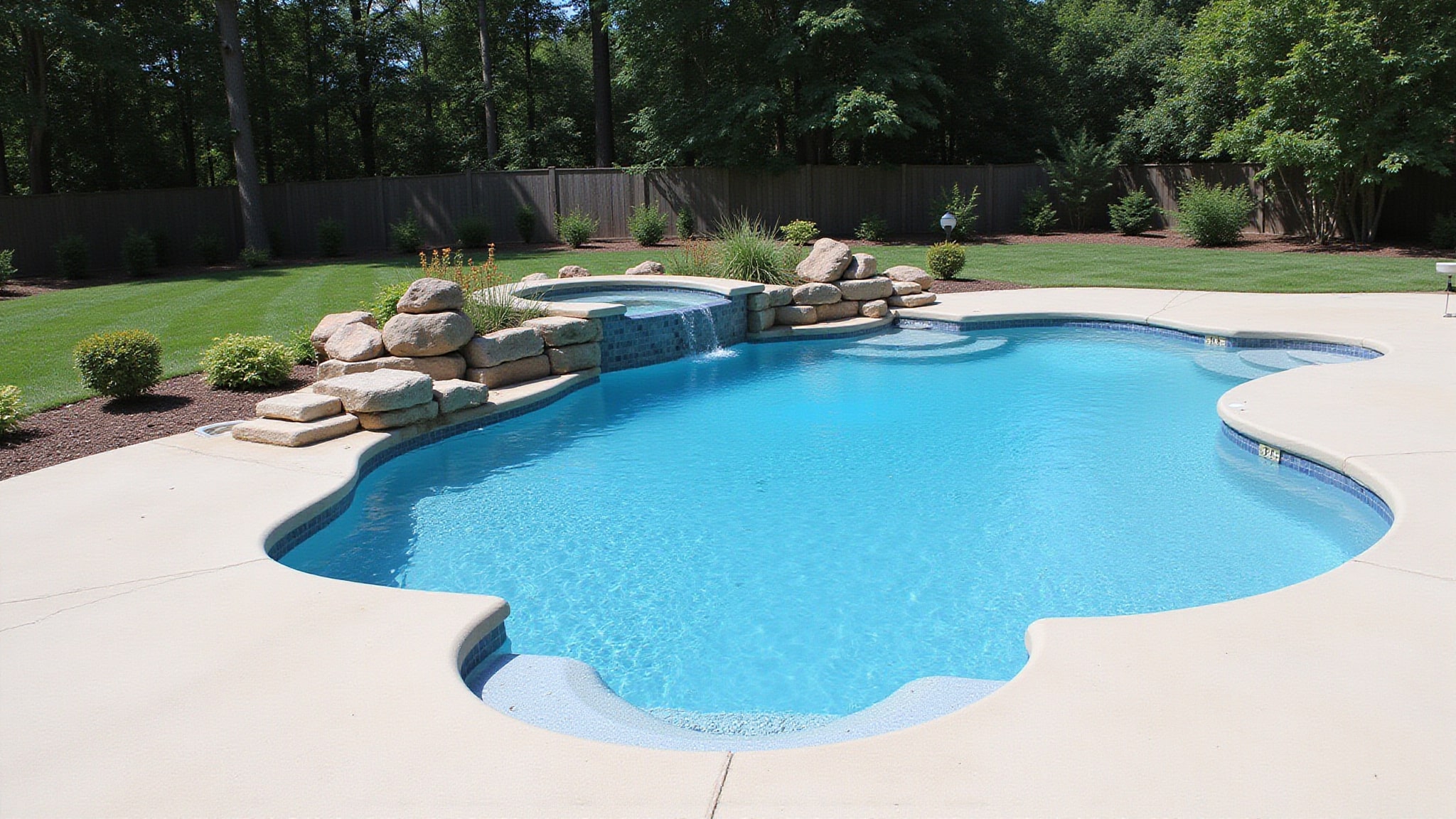
You’ll spend $20,000 to $40,000 on a fiberglass pool installed, while gunite runs $50,000 to $100,000, roughly three times more. Fiberglass shells drop into your excavated site within days; gunite demands 8 to 16 weeks of on-site spraying and curing. Maintenance favors fiberglass too, costing about $5,750 over a decade versus $20,000+ for gunite. But gunite lasts 50 to 100 years. Your ideal choice depends on factors worth unpacking below.
Key Takeaways
- Fiberglass pools cost roughly $20,000 to $40,000 installed, averaging $31,000, while gunite runs $50,000 to $100,000 due to custom on-site construction.
- Fiberglass shells drop in within days, but gunite installation requires 8 to 16 weeks of labor-intensive spraying and curing.
- Over a decade, fiberglass maintenance costs about $5,750 versus $20,000+ for gunite’s chemical-heavy, porous finish.
- Gunite lasts 50 to 100 years, while fiberglass averages 20 to 30 years before shell degradation.
- Fiberglass offers cheaper, faster value for shorter timelines; gunite delivers long-term value through longevity and custom design.
How do gunite and fiberglass pool costs compare
Fiberglass pools cost less upfront than gunite pools, typically running $20,000 to $40,000 including installation, while gunite pools land between $50,000 and $100,000 thanks to their custom, on-site construction. Average figures put fiberglass near $31,000 against $100,000 for gunite, making gunite roughly three times more expensive for similar sizes. This pool cost comparison shifts when you factor mid-range projects, where both types overlap between $45,000 and $65,000 depending on features and location.
The real gunite vs fiberglass cost picture emerges over time. Fiberglass 10-year maintenance runs about $5,750, while gunite exceeds $20,000. When you calculate long-term pool cost, gunite’s 50-to-100-year lifespan versus fiberglass’s 20-to-30 years affects your value equation, offsetting that steep initial investment through extended durability.
What does each pool cost to install
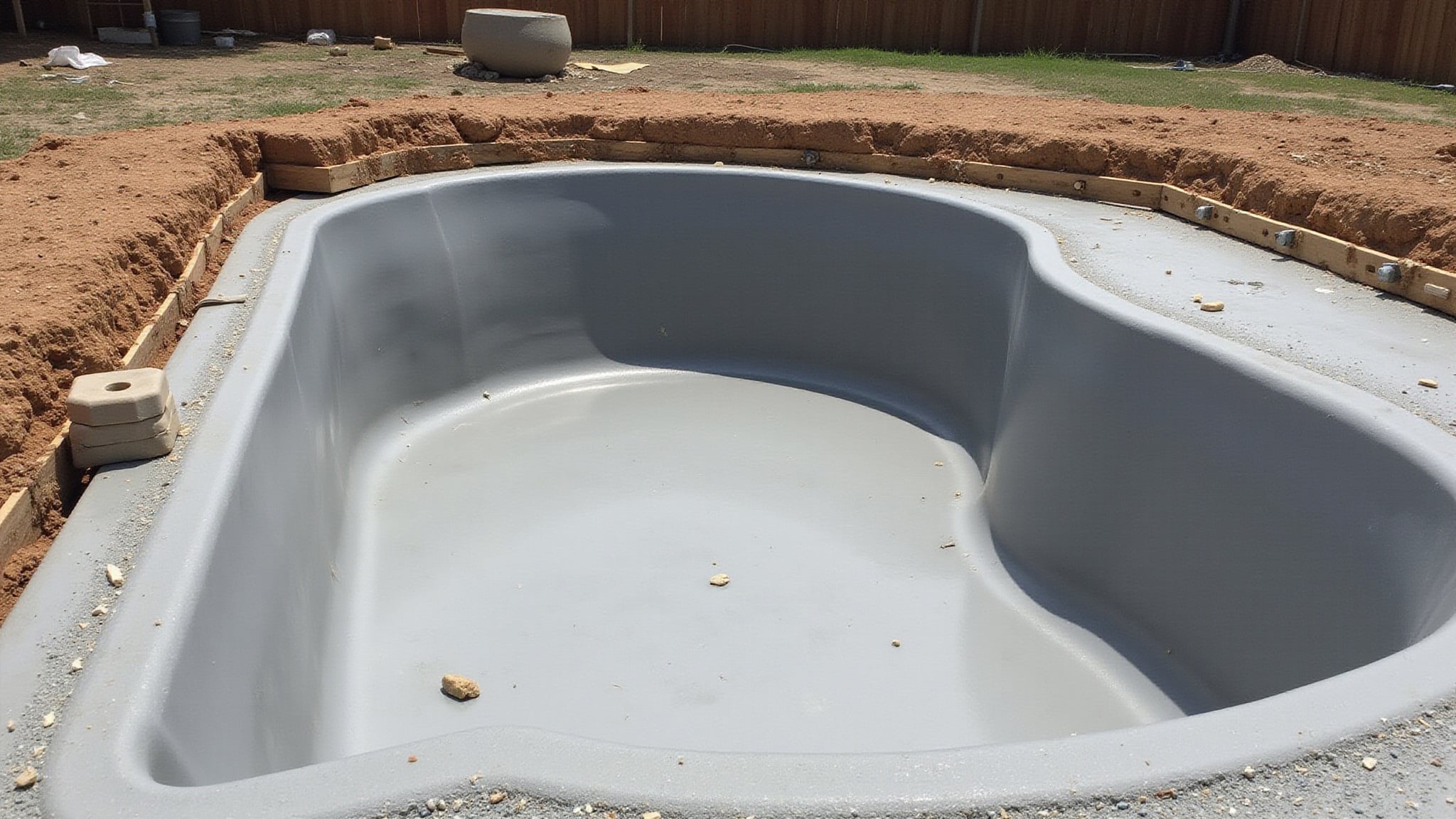
A fiberglass pool costs $20,000 to $40,000 to install, since the factory-molded shell drops into your excavated site within days. Gunite, built entirely on-site through labor-intensive spraying and curing, runs $50,000 to $100,000 and demands 8 to 16 weeks. Installation costs diverge sharply between the two, largely because of how each pool comes together on your property. When considering the significant investment of a new pool, many homeowners are looking for affordable pool financing solutions. These options can help spread out the cost over time, making it more manageable.
| Pool Type | Installed Cost |
|---|---|
| Fiberglass (average) | ~$31,000 |
| Fiberglass (large/heated) | $80,000 to $100,000 |
| Gunite (typical) | $50,000 to $100,000 |
| Gunite (full custom) | $80,000 to $135,000+ |
That upfront number isn’t the whole picture, though. Weighed over the lifetime cost, gunite’s higher outlay buys decades of durability. Fiberglass delivers faster pool value, letting you swim sooner while spending much less on the initial build. The impact on home value with gunite pools can be significant, as these durable installations often appeal to potential buyers. Homeowners may find that investing in a gunite pool enhances their property’s overall attractiveness and resale potential.
What does each pool cost to maintain over time
Over a decade, you’ll sink about $20,000 or more into a gunite pool versus roughly $5,750 for fiberglass. That gap comes from the surface. Gunite needs replastering every 8 to 20 years, and its porous finish demands more chemicals and scrubbing. You’ll spend 4 to 5 hours weekly maintaining it, fighting algae that grips the rough plaster. Fiberglass, by contrast, takes about an hour a week thanks to its smooth, non-porous gel coat. You’ll still refinish that coat and patch cracks every 7 to 10 years, but the labor’s minimal. If you’re weighing long-term effort and dollars, fiberglass wins the maintenance column decisively.
How long does each pool last for the money
Gunite lasts 50 to 100 years, potentially a full century with proper care, while fiberglass averages just 20 to 30 years before the shell degrades. That’s up to five times the structural longevity when you invest in gunite. Consider what this means for your money: a gunite pool built today can serve your grandchildren, provided you keep up with replastering every 8 to 20 years. Fiberglass, by contrast, becomes less viable after 25 years, when the gel coat weakens and cracks demand repairs every 7 to 10 years. You’re fundamentally buying a shorter service window with fiberglass. If you’re weighing long-term value, gunite’s durability justifies its higher upfront cost. But if you don’t plan to stay decades, fiberglass’s lifespan may suit you fine.
Which pool is cheaper in the long run
Fiberglass is cheaper in the long run for shorter timelines, while gunite wins over decades. Fiberglass wins on upkeep: you’re looking at roughly $5,750 over ten years versus $20,000 or more for gunite. That gap widens when you factor in weekly labor, one hour for fiberglass against four to five for gunite. But durability flips the equation. Your gunite shell lasts 50 to 100 years, while fiberglass typically taps out at 20 to 30, needing gel coat refinishing every 7 to 10 years. So if you’re planning to stay put for decades, gunite’s lower replacement frequency offsets its higher maintenance. For shorter horizons, fiberglass keeps more cash in your pocket. Match the pool to your timeline, and you’ll spend smarter.
Which pool gives better value for your needs
Fiberglass gives better value if you want speed and low cost, while gunite wins if you prioritize longevity and custom design. If you want a pool ready in days with minimal upkeep, fiberglass delivers, roughly $31,000 upfront, one hour of weekly maintenance, and about $5,750 over ten years. You’ll accept pre-set shapes and a 20-to-30-year lifespan. If you’re prioritizing longevity and custom design, gunite justifies its $50,000-to-$100,000 price. You’ll manage 4-to-5 hours weekly, $20,000-plus in decade maintenance, and replastering every 8 to 20 years, but you’ll get a structure lasting 50 to 100 years and complete design freedom. Ask yourself: are you optimizing for speed and low cost, or bespoke construction and generational durability? Your answer determines which investment actually returns value for your specific site, budget, and long-term ownership goals.
Gunite vs Fiberglass: Which Is Worth the Cost?
Fiberglass pools cost less upfront and install quickly, but they come in fixed shapes and sizes. Gunite costs more and takes longer to build, yet it can be formed to any design, supports features like infinity edges and custom depths, and tends to last for decades with proper care. If you plan to stay in the home for years and want a pool tailored to your yard, gunite usually justifies the higher price. For a simpler, budget-first project, fiberglass can be the practical choice.
Call Today and Get a Custom Pool Quote
From financing options to cost breakdowns, every step of the pool-building process should feel clear, straightforward, and stress-free. At Cristallo Pools in Palm Beach Gardens, FL, our skilled team delivers dependable New Pool Construction with honest pricing and quality craftsmanship. Call +1 (561) 766-0353 today and get started with confidence.
Frequently Asked Questions
Is gunite or fiberglass the better choice for a custom pool?
It depends on your priorities. Fiberglass is cheaper and faster to install but limited to factory shapes and sizes. Gunite costs more and takes longer, yet it can be built to any shape or depth and handles custom features fiberglass cannot. For a truly custom pool, gunite is the more flexible option.
What can gunite do that a fiberglass shell cannot?
Gunite is formed on site, so it can take almost any shape, depth, or size, and it supports features like vanishing edges, tanning ledges, and integrated spas. Fiberglass arrives as a pre-molded shell chosen from a catalog, which limits design freedom. That flexibility is the main reason owners pay more for gunite.
Are infinity edges and similar features possible with gunite?
Yes. Because gunite is shaped on site, dramatic features like infinity edges, perimeter overflow, grottos, and custom water features are all possible. These are among the clearest reasons owners accept the higher cost, since they are difficult or impossible with a pre-formed shell.
What interior finish options come with a custom gunite pool?
Gunite pools can be finished with plaster, aggregate finishes like pebble or quartz, or fully tiled interiors. Each option differs in look, texture, durability, and price, so the finish is a real lever on both appearance and budget. Higher-end finishes tend to last longer and resist staining better.
Does building in a country club or gated community complicate a gunite project?
It can add steps, since HOAs and country clubs often have design guidelines, approval processes, and access or scheduling rules. An experienced builder plans for these requirements up front so they do not stall the project. It is worth confirming the community’s rules before finalizing a design.
How can I see what a custom gunite design will look like before approving the cost?
Ask to see design renderings and a portfolio of completed builds, and look for video walkthroughs of finished pools. Seeing real projects alongside a visual of your own design helps you understand the scale and finish you are paying for before you commit.
Is gunite the right choice if I intend to stay in the home for decades?
Usually, yes. A well-built and maintained gunite pool can last for decades and be resurfaced or remodeled as tastes change, so it suits long-term owners. The higher upfront cost is easier to justify when it is spread over many years of use.